











The AI dilemma in luxury fashion

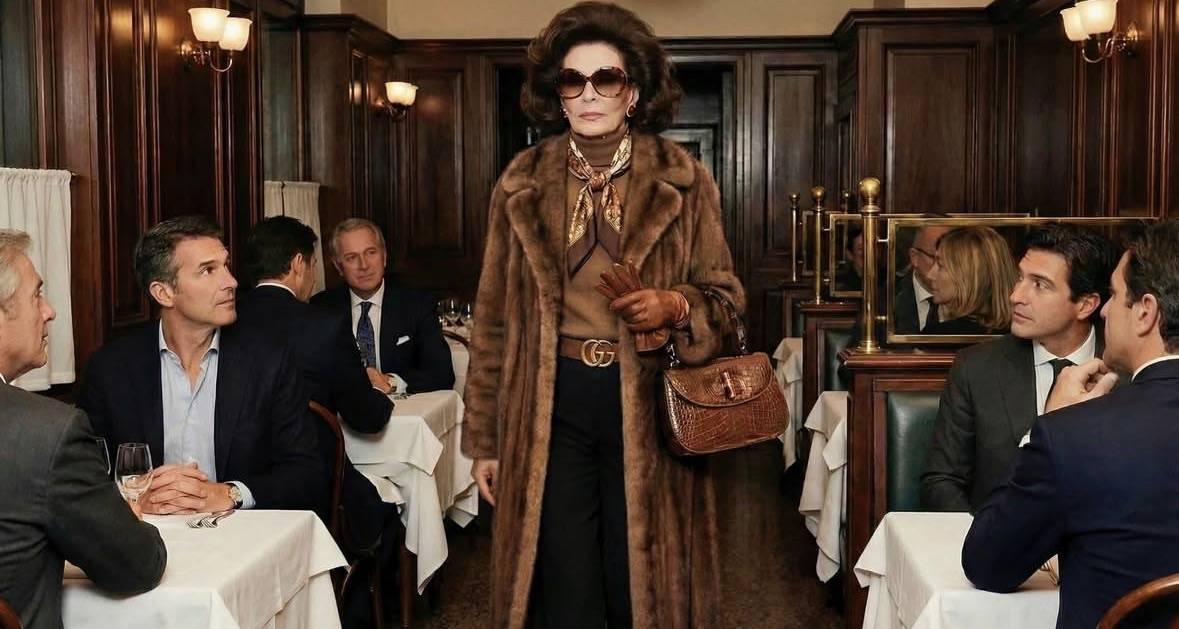
The integration of artificial intelligence (AI) into luxury fashion is accelerating at a structural level. What began as experimental predictive marketing tools has evolved into a foundational shift in how brands operate, market, and compete. While the possibilities are certainly interesting, there is a danger that luxury could lose the soul that justifies its price.
AI as a business tool in the fashion industry
According to the State of Fashion 2026 report by The Business of Fashion, fashion executives now regard AI as an essential professional skill embedded across business units. It informs merchandising, assortment planning, logistics, marketing, and strategic decision-making.
Rather than functioning as an experimental add-on, AI has become operational infrastructure.
Strategy teams are expected to understand how AI influences forecasting, margin optimization, and demand planning. Merchandisers and buyers utilize predictive analytics to anticipate consumer demand with greater precision, replacing manual data analysis with automated systems that can process vast datasets. Operations divisions apply AI to supply chain mapping, risk prediction, and cost control.
This shift extends to the consumer experience. AI-driven search platforms refine product discovery by integrating individual preferences into recommendation systems. Shopping agents monitor retail prices across digital marketplaces, allowing consumers to identify optimal purchase points. The act of shopping has become increasingly mediated by algorithms operating in the background.

The impact on luxury branding
However, the implications for luxury branding or marketing are more complex. Luxury pricing has historically been justified through visible labor, including time-intensive material research, artisanal construction, and elaborate campaign production that involves location shoots, custom-built sets, and large creative teams. The spectacle of production reinforced the value proposition and exclusivity.
And while AI does not replace the craftsmanship of the products themselves, it significantly diminishes the visual worlds and campaigns that brands rely on to convey their identity and heritage.

To everyone’s surprise, Gucci released a series of teaser visuals on Instagram for their upcoming Primavera show in Milan, offering a mood board of what to expect from the collection. The campaign blends real photography with AI-generated imagery, including a shot of worn Horsebit loafers and Michelangelo’s David, a 1979 Cadillac Seville referencing Aldo Gucci’s historic collaboration with the brand, and a couple perched on a car hood with palm trees and a glowing Gucci sign in the background. One image closely mirrors a GTA VI teaser, seemingly recreated in Midjourney, while another shows a woman in a red gown stepping out of a black car, appearing as if a stock photo had been run through AI to bypass licensing restrictions.
If you’re wondering whether Gucci was the first to use AI in campaigns, it wasn’t. Jil Sander, under Sybille de Saint Louvent, has experimented with AI, and Balenciaga has also leaned heavily on it. The difference is that, although Gucci clearly labeled the images as AI-generated, they deliberately recreated existing photos through AI.
That approach was disappointing, particularly from a brand long celebrated for its craftsmanship and originality.


Public reaction and broader implications
The images quickly drew criticism online, with some calling them “cheap” and “slop”—terms used to describe low-quality, AI-generated content.
A few viewers suggested there might be a deeper meaning or that Demna, the creative director of Gucci, was making a statement, given his background in psychology.
One Instagram user wrote, “If he’s using AI to make a statement on AI… his point is pointless… why not use practical sets and make it look like AI instead?” Another added, “It’s just so ugly. Even if it’s a commentary on AI, it cheapens the brand in one go.”
The timing of the campaign is notable. Parent company Kering reported that Gucci’s revenue fell by 23 percent in 2024 and a further 22 percent in 2025. Demna’s appointment in March 2025 was widely seen as an effort to reposition the brand after a prolonged slowdown. Given this financial context, it remains unclear whether the use of AI is primarily a creative strategy or a cost-saving measure.
The backlash also points to a broader issue for luxury fashion. If other brands continue to adopt AI to cut costs, the visible labor and craft that once justified high prices will disappear, leaving consumers to wonder where their money is going and what they are truly paying for.