











The bandage dress is making a comeback

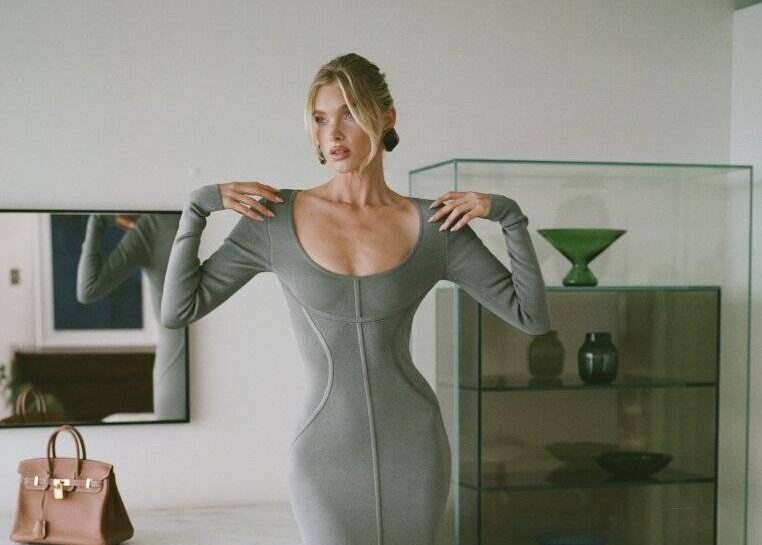
The 2010s is coming for us again, slipping back into our closets in the form of ballet flats and city bags, glossy blowouts with decisive side parts, and yes, the bandage dress. That unapologetic second skin that once ruled every red carpet, every birthday dinner, and every evening when being seen was the assignment.
In 1992, the original Hervé Léger bandage dress debuted as part of the brand’s ready-to-wear collection, worn by ’90s supermodels and constructed from dozens of bandage-like strips of viscose sewn together to sculpt the body, establishing a silhouette defined not by embellishment but by engineering.
By the late 2000s and early 2010s, it had moved from statement piece to standard issue, embraced across red carpets and nightlife alike, becoming shorthand for a certain kind of body-first dressing. Women like Kim Kardashian and Victoria Beckham wore it as proof that dressing up requires intention and, at times, a little discomfort.

Then fashion pivoted toward understatement, toward linen trousers, oversized blazers, and silk slips that suggested ease above all else, and the bandage dress, with its visible structure and unapologetic contouring, began to feel almost too deliberate for a mood that prized looking as though nothing had been considered too carefully.
But the bodycon dress never really disappeared; it simply softened, stretched, and adapted, waiting for the cultural pendulum to swing again, and this cycle it returns not as a relic of 2012 nightlife but as a considered silhouette worn with intention, almost as a rebuttal to years of oversized restraint.
The evolution is deliberate. “We’re modernizing the bandage with fresh proportions, new fabrications, and refined hardware details, expanding beyond the iconic mini into midi dresses, sculpted separates, and even daywear,” says Michelle Ochs, creative director of Hervé Léger.
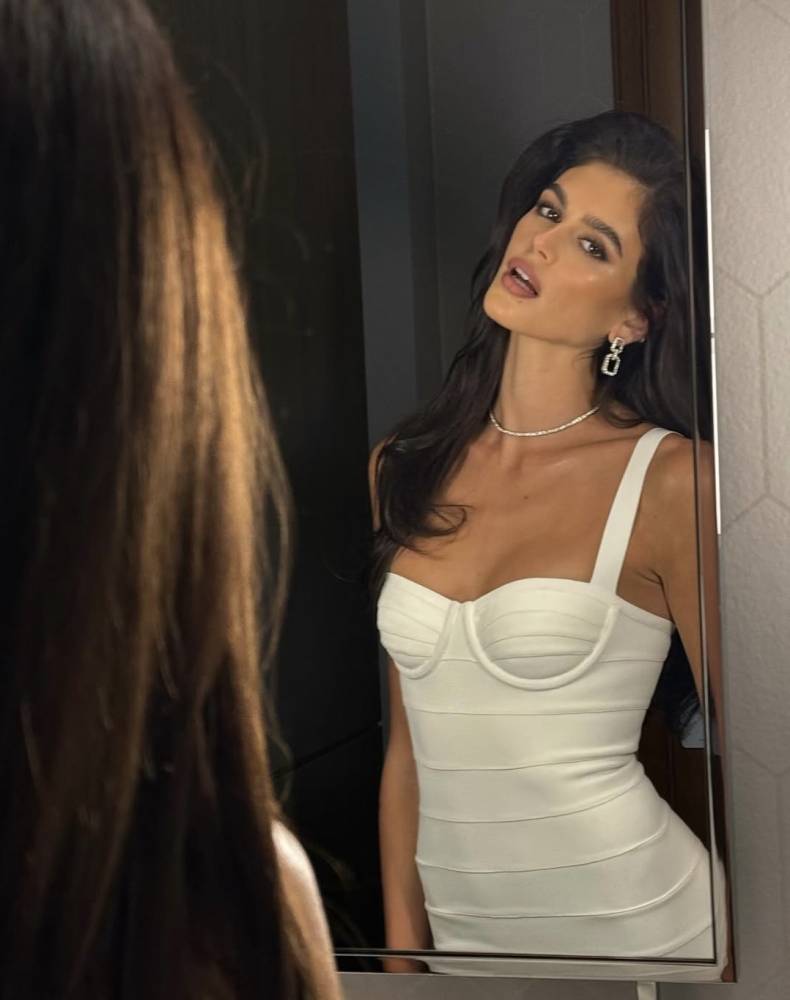
The bodycon of 2025 and 2026 is no longer confined to the micro-mini club dress; it appears in midi lengths, in ribbed knits and fluid satins, layered under blazers, paired with flats, worn in daylight rather than only at midnight, operating under new rules that depend entirely on how it is styled. The new iteration trades neon brights for espresso and bone, sky-high platforms for minimalist heels, and overt theatrics for clean lines.
At the same time, its return sits comfortably within the broader Y2K revival, resurfacing alongside low-rise denim and velour tracksuits, rediscovered by a generation that approaches it without the baggage of its first wave, treating the silhouette less as a symbol of perfection and more as a styling device to reinterpret.


But context matters. The early 2000s were defined by aggressive tabloid culture and unforgiving body standards that turned body-conscious dressing into a test rather than a choice, and while today’s landscape is different, social media has once again intensified conversations around shrinking waistlines and rapid weight loss.
If fitted dressing is back at the same time that online culture is celebrating smaller bodies again, it’s fair to ask whether we’re reclaiming definition on our own terms, or quietly drifting toward familiar pressures in a new form.
The silhouette may be the same, but the stakes feel more complicated, and that tension is what makes the bandage dress’ return feel less like simple nostalgia and more like a reflection of where fashion, and our relationship with our bodies, currently stands.