








The expansive sightlines of ALT Art 2026

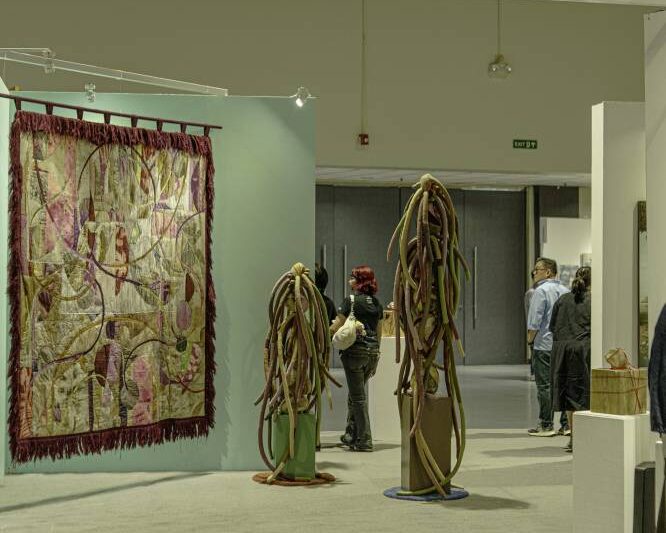
The first thing that strikes you when you walk into ALT Art 2026 is the space. The convention center ceilings are staggeringly high. Look straight ahead, and you won’t see booths but an unconventional grid, almost like a beehive, stretching across the soaring hall.
Walk forward, and you pass a video work by James Clar, the first-ever oil painting by Dennis Occeña, and windows by Pope Bacay that evoke the law school of the University of the Philippines Diliman (a space that has shaped contentious and celebrated figures alike, from Ferdinand Marcos, Sr. and Harry Roque to Antonio Carpio and Benigno Aquino, Jr.).
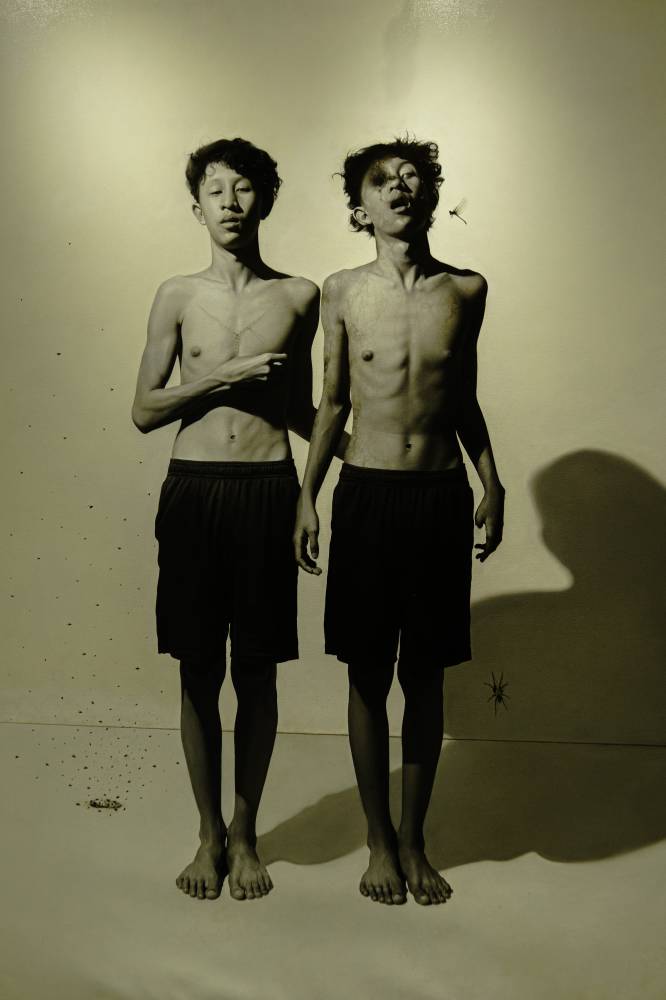
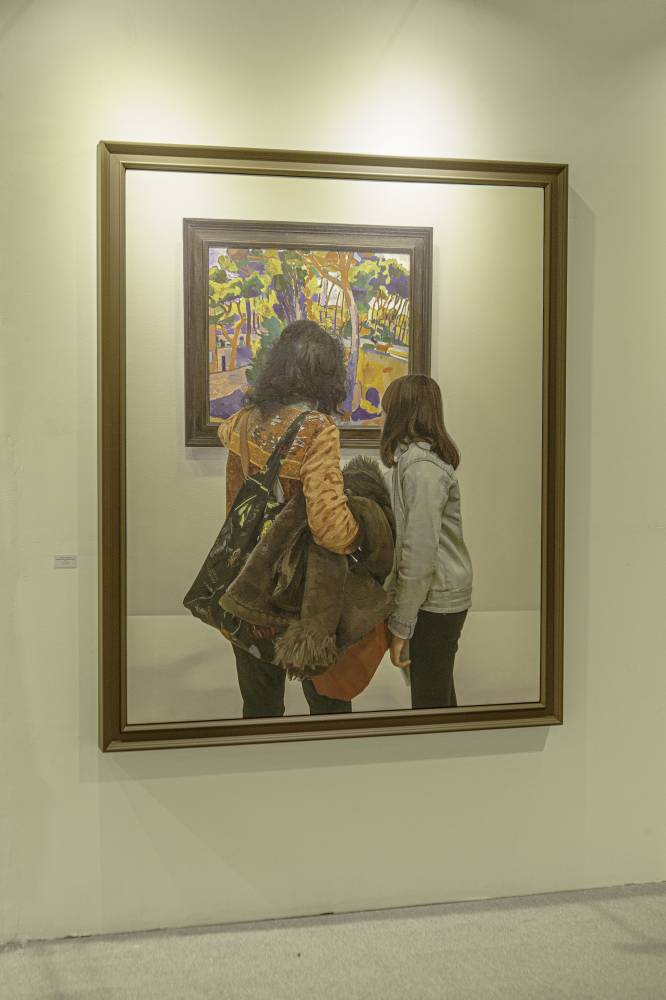
A few steps further, and you encounter the well-loved ceramic apples of Winnie Go with Artinformal. The hall is also expansive enough that you can step back to take in a placid, meditative work by Lao Lianben at Blanc Gallery. Or you can lean in closely to parse one of the meta-art historical paintings of Annie Cabigting at Finale Art File.
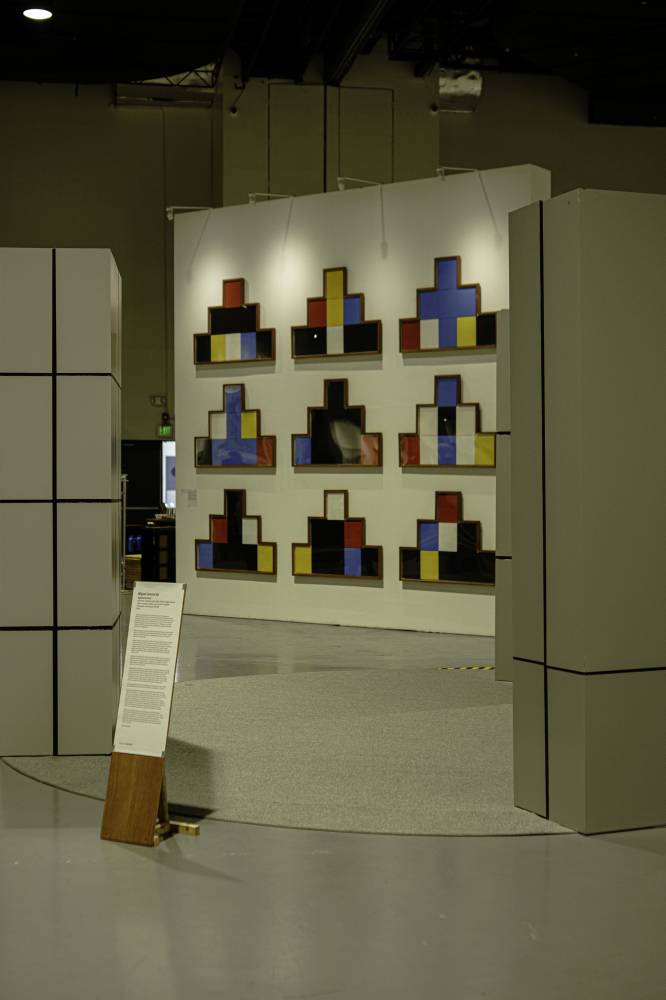
Among the monumental works to admire, crane your neck to absorb a massive nine-meter piece by Trek Valdizno at Galleria Duemila. Or stand still, counting the colored rectangles in multiple frames by Roberto Chabet.
Moving through the space, there is a breadth of political and social commentary, from Manuel Ocampo, Cian Dayrit, Kiri Dalena, and Julie Lluch to pop culture explorations by Pow Martinez and Bjorn Calleja, environmental reflections by Geraldine Javier, and international perspectives from Atuso Yamagata and Dudley Diaz.
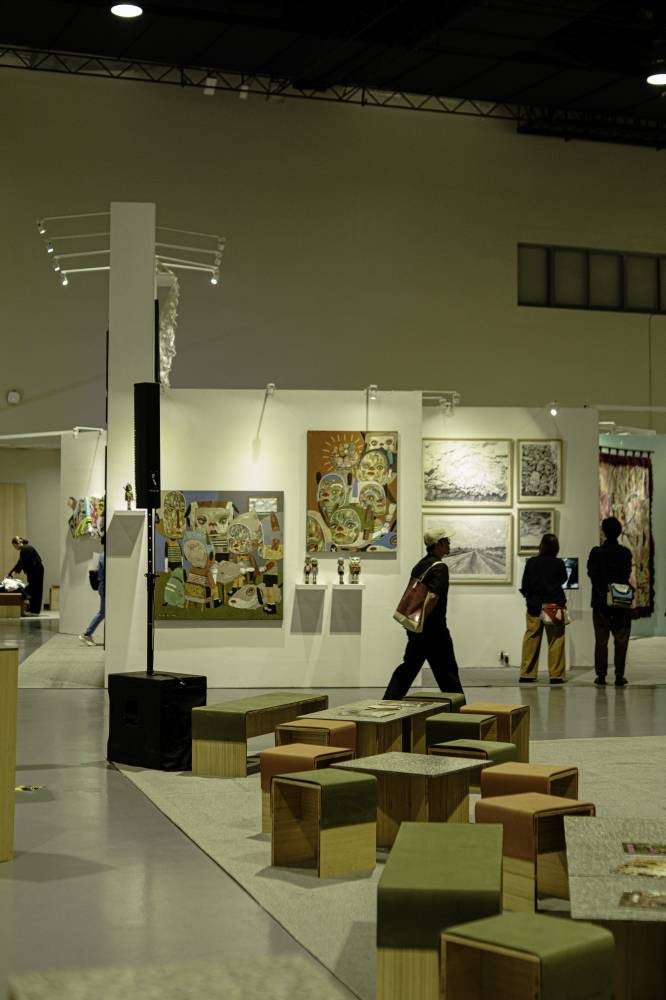
Once you’ve finished craning your neck, leaning in, stepping back, and circling around, you can sit at the center on artful, almost architectural yet comfortable chairs for a tipple or a nibble to exchange notes on the art around you.
Now this is the standard for art to breathe.
Last Feb. 13 to 15, inside SMX Manila Halls 1 & 2, ALT Art 2026 expanded across 5,000 square meters, as its largest and most ambitious edition yet. Now in its fourth year, the fair gathered over 300 artists under the stewardship of nine established galleries that have, collectively, shaped the trajectory of Philippine contemporary art for decades.
Not just another fair
“This group of presentations has jointly curated a range that encompasses inter-generations of artists, all of whom are very diverse in their expressions and ideas,” says Mawen Ong of MO_Space. “It generates a critical discourse on transforming the environment, yet it reinforces a very firm territorial focus.”
ALT has never positioned itself as just another fair, either. Jun Villalon of The Drawing Room describes its establishment “as a deliberate act of authorship… to allow nine galleries to present their programs with clarity and depth, to focus on their artists without compromise.”
He continues, “The value of this model is found not in claims of prominence, but in the quality of attention it affords to artists, to ideas, and to the experience of art itself.”
This value in experiencing art was palpable the moment you entered, largely thanks to exhibition design partner All At Once (AAO). “We created sightlines that are expansive… art embraces you at the entrance,” explains Baby Imperial of AAO. “We also created a convergence area for visitors to exchange thoughts with artists, galleries, and collectors. Art is meant for sharing and engaging.”
The nine galleries
This engagement is palpable in the space. As Tina Fernandez of Artinformal says, “Putting this together, for me, is an act of love by the galleries, and to the artist that we represent. We make sure that they are given the limelight. It’s not about us.”
The nine galleries came together not as a cluster of booths but more as an ecosystem. Moving through each booth, you can see the differences in each of their spaces’ history, temperament, and long-standing community of artists and collectors, as each of the nine brought a distinct sensibility into the shared hall.
Fernandez’s Artinformal traces its roots to a school and exhibition space in an old home in Greenhills, before establishing a space in Karrivin. That origin story still shapes its character as a gallery that’s super intimate, but also intellectual, polished but never cold, and known for identifying critical voices in the Philippines.
Blanc, under Jay Amante, maintained its signature restraint that reflects the gallerist himself, as minimalist, clean, and tonally quiet, with a range of both emerging and established artists that are presented with curatorial precision.
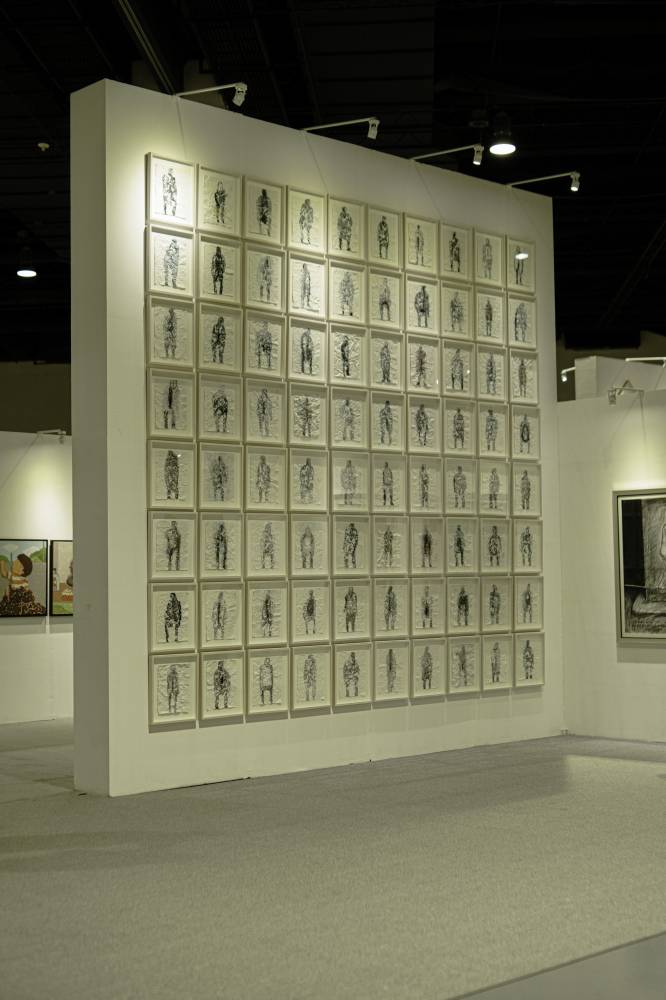
Maintaining long-standing relationships with their artists, The Drawing Room presents layered, conceptual works, often grounded in the Philippine experience, and demanding a closer look at all its layers.
Galleria Duemila, the oldest gallery of the bunch, marks its 50th year under Silvana Diaz, and continues to show monumental and Modernist works that hinge on legacy.
Meanwhile, Finale Art File, founded by Evita “Vita” Sarenas, carried the weight and confidence as one of the country’s oldest galleries that has been diverse in medium and expansive in vision.
MO_Space continues to be like a cerebral laboratory of contemporary art in the sense that the works they show are avant-garde, rigorous, and unafraid of intellectual density.
Underground, helmed by Manny de Castro in Makati Cinema Square, brought its edgy, grungy ethos into the fair that is risk-forward and always unapologetic.
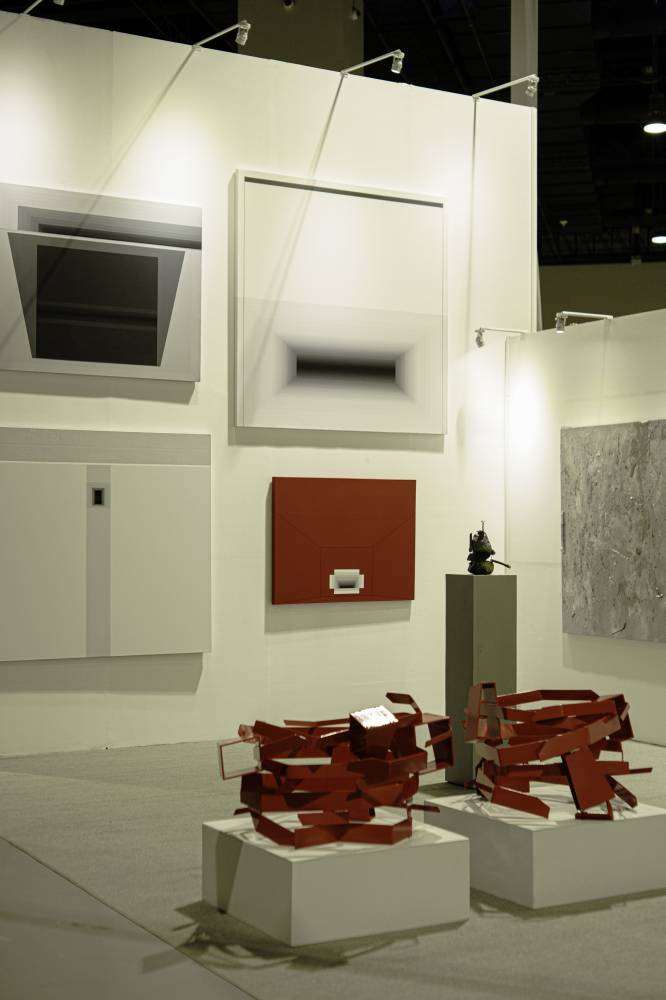
Vinyl on Vinyl, led by Gaby dela Merced, injected its vibrant energy, with its roots in street and pop art, yet matured into contemporary experimentation.

While West Gallery, guided by Soler Santos and the Santos family, continued its role as a bridge-builder, supporting artists from their emerging phases to critical acclaim with steadiness.
Together, their differences did not compete but expanded and interacted with one another, showing how contemporary Philippine art thrives in dialogue and not isolation.
Project, discoveries, spaces, and other immersions
A major highlight of ALT Art 2026 was its staple Project Spaces featuring works by Christina Quisumbing Ramilo, Buen Calubayan, Julie Lluch, Kiri Dalena and Ben Brixx, Raffy Napay, MM Yu, Kolown and Christina Lopez, Mauro Malang Santos, Lesley-Ann Cao, and Iwan Effendi.
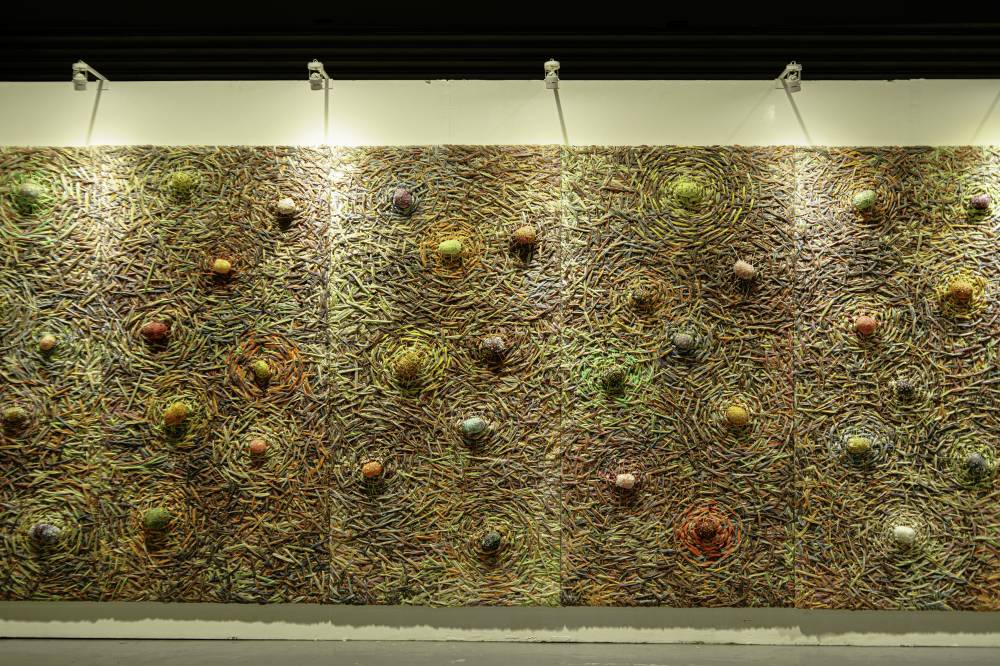
While new to this year of ALT Art 2026 was the inaugural Discoveries Section, spotlighting emerging artists JC Mariategue, Jomari T’leon, Joar Songcuya, Allyza Tresvalles, Eric Bico, Gelo Cinco, Joanolasco, Rhaz Oriente, and Marco Ortiga.
“These artists’ perspectives are very fresh,” says dela Merced of Vinyl on Vinyl. “You get to give them a very specific space, each like a solo exhibition…a glimpse of what they have to offer.”
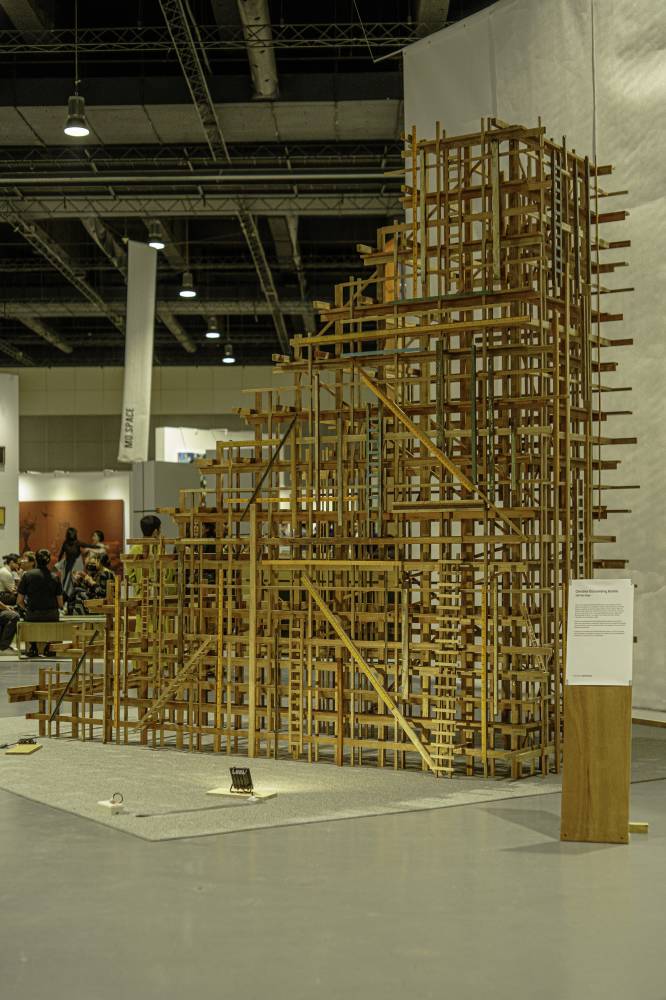
Admittedly, some works sat at the edges of the fair, outside the main sightlines and on the peripheries, requiring a bit of searching to encounter. Yet these very interventions sparked dialogue about what a fair could be, pushing beyond the usual commercial framework to embrace immersive, more intentional experiences.
The value of community
Isabel Santos, representing West Gallery, repeats the sentiment of how ALT Art 2026 focuses on community. “This event gives us more eyes on our artists… a really big group show allows them to reach a wider audience.”
Support from BDO Private Banking, Nagaraya, and “The Friends of ALT” enabled the collective to prioritize artistic vision over purely commercial constraints, while at the BDO Conversations Lounge, talks on legacy, collecting, sound art, performative works, and emerging practice tied the programs together.
With such wide visual corridors, the interactions of color, styles, and structural interventions create ruptures in the space, echoing the shifts and tensions that exist in contemporary art practices.
Undoubtedly, ALT Art 2026 showed how contemporary Philippine art thrives best on intention, relationships that have lasted decades, and galleries that have grown with their artists and collectors from the very beginning—as well as on expansive sightlines, both literal and metaphorical, that let us see how far horizons in art can reach.