










The illusion of January 1

Every year, millions of people celebrate the “New Year” on Jan. 1—making resolutions, gyms overflowing, people declaring fresh starts, and symbolically turning the page on life. Yet when viewed through the lens of nature, human biology, and ancient timekeeping systems, this date is less a true beginning and more an administrative marker.
I, for one, have never liked the New Year celebrations. The more I understood the natural flow of things, the more I understood why I didn’t enjoy it as much. I’ve always felt pressured by the New Year—time to fast, time to cleanse, time to make new promises and changes, and it all has to be done by midnight.
And the more I understood, the more I realized that the Western New Year is not aligned with the earth, the moon, or the body. It is aligned with a calendar designed for governance, taxation, and institutional order—not for ecological or human rhythm.
Ancient Western calendar: Bureaucratic and administrative
The modern Western calendar is based on the Gregorian calendar, introduced in 1582 by Pope Gregory XIII. Its primary purpose was to correct inaccuracies in the earlier Julian calendar—specifically, to realign the calendar with the solar year so that Christian holidays like Easter would not drift too far from the spring equinox.
While astronomically precise for tracking the sun, the Gregorian calendar was never intended to reflect human energy cycles or seasonal psychology. Months were fixed, uneven in length, detached from lunar phases, and standardized to support the empire, church authority, commerce, and bureaucracy. Time became linear, segmented, and uniform—ideal for administration, but disconnected from lived experience.
This model of time spread globally through colonization, gradually replacing indigenous calendars that were lunar, seasonal, agricultural, or cyclical in nature.
In the Northern Hemisphere, January falls during the most dormant phase of the year. Trees are bare, soil is resting, animals are conserving energy, and daylight is minimal. Nothing in nature suggests initiation or expansion. In the Philippines, it is traditionally the coolest time of year.
Yet modern culture demands motivation, productivity, discipline, and reinvention precisely at this low-energy point. This mismatch often leads to exhaustion, shame, and abandoned resolutions—not because people lack willpower, but because the timing is biologically wrong. Ancient societies understood that winter was for rest, storytelling, healing, and reflection, not forced transformation.
But when January hits, articles about new things to try (I am guilty of writing these too!), cleanses, and fasts inundate people, putting pressure to change for the new year.

Lunar New Year: Celestial movement, shifting festivals
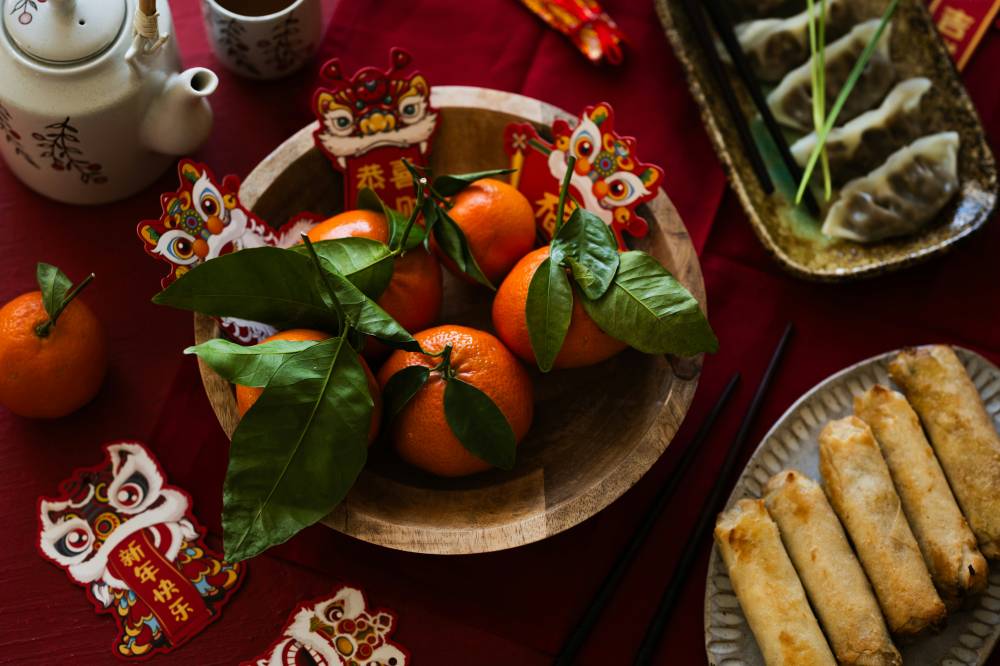
In contrast, Lunar New Year—celebrated across much of Asia and other cultures—is based on the moon’s cycles, typically falling between late January and mid-February. Rather than a fixed date, it responds to celestial movement.
Lunar calendars mirror natural rhythms more closely through months aligning with moon phases, shifting festivals. The lunar calendar is more cyclical than linear. It’s no wonder that I always felt that the Chinese New Year carried more of a feeling of change. The lunar calendar takes its cues from nature and therefore follows a more organic transition that respects our surroundings.
Lunar New Year arrives as winter begins to loosen its grip. Days are perceptibly lengthening. Energy is stirring beneath the surface, even if growth is not yet visible. This makes it a transitional threshold, not a forced reset. Celebrations emphasize cleansing, honoring ancestors, releasing the old, and preparing—not rushing—toward renewal.
Spring Equinox: A natural reset
One of the most natural resets occurs at the Spring Equinox, which falls around March 19 to 21 each year. On this day, light and darkness are equal—a moment of balance that marks the transition from inward to outward energy.
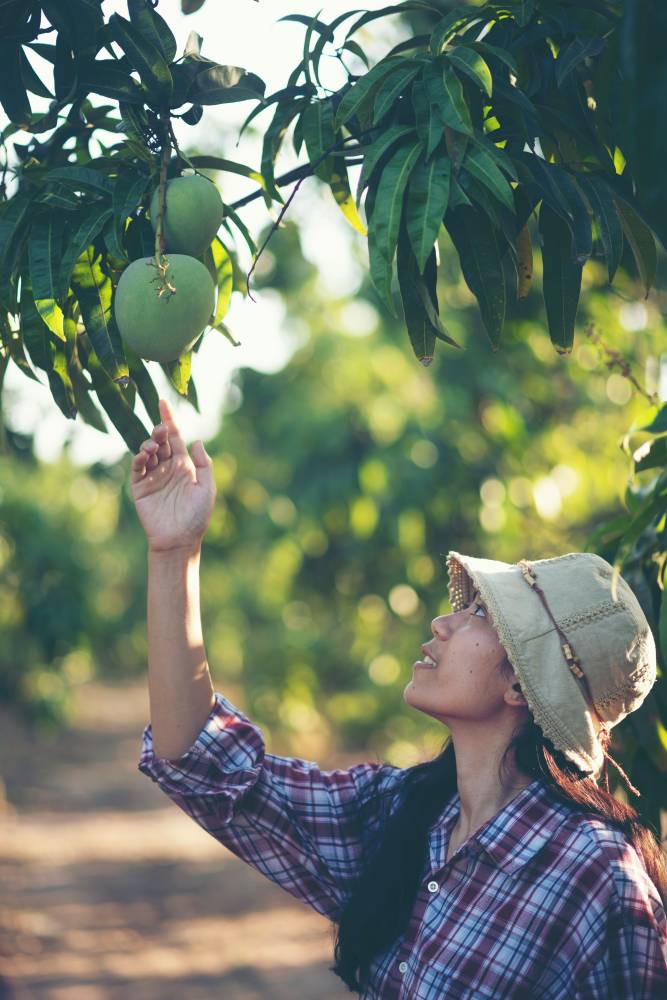
In the Philippines, March is the start of summer, when the sweetest fruits are in season—mangoes and avocados, watermelon, singkamas, melons, fruits, and vegetables that cleanse the body. Interestingly, appetite lightens, and digestion often becomes more efficient.
Coincidentally, this is when the body snaps back into shape after all the hard work at the start of the year. Libido and creativity increase, mirroring reproductive cycles seen throughout nature. From a physiological perspective, the equinox corresponds with noticeable changes in the body: Increased daylight reduces melatonin production, leading to more alertness. Cortisol rhythms stabilize, improving morning energy. Serotonin and dopamine rise, lifting mood and motivation.
This is why many people feel a spontaneous urge to clean, reorganize, move more, or start new projects in early spring. Motivation arises naturally—not through discipline, but through alignment. Historically, many cultures marked the new year at or near the equinox, recognizing it as the true beginning of the life cycle.
That said, resets in the body are felt, not demanded by the modern calendar.
January 1: Not wrong, but also not natural
Modern holidays are increasingly fixed around economic cycles rather than seasonal ones. Rest is scheduled, not needed. Celebration is marketed, not embodied. The result is a subtle but pervasive sense of disconnection—people moving through time without ever feeling in sync with it.
The calendar tells us when to begin, when to rest, when to celebrate, regardless of weather, light, or nervous system capacity. So January 1 is not wrong—but it is not natural. It is a social agreement, not a biological truth.
A more grounded approach is to let winter be winter: a time of slowing down, reflecting, and conserving energy. Let intention-setting happen quietly. Let action arise when the body signals readiness—often closer to spring. While we don’t formally have winter in the Philippines, we should acknowledge that it’s still a time of healing and resting, and that there’s no need to push ourselves to be more productive than we should be.
Nature does not reset overnight. It transitions, adjusts, and emerges in its own time. And when we stop forcing renewal and start listening for it, change becomes less exhausting—and far more sustainable.

Slow January shrimp pasta
In honor of this slow January, I am sharing a quick and easy recipe featuring the giant shrimps from my friends at Pacific Bay. The recipe is packed with protein from the shrimp and makes use of fresh herbs you happen to have on hand.

Delicious and healthy food doesn’t need many steps, or ingredients—the best food is made by a calm and unhurried heart. Enjoy your slow January with this big plate of pasta.
Ingredients
300g Pacific Bay peeled giant shrimp
5 cloves garlic, chopped
1/4 cup fresh herbs of your choice
Salt and pepper, to taste
Procedure
1. To reduce caloric intake, heat up a pan and add the shrimp without oil. Add a little water to melt if frozen.
2. Once the shrimps are pink, you can add a little oil before adding the garlic.
3. Cook the pasta and set it aside.
4. Add the pasta to the cooked shrimp and top with fresh herbs. Serve and enjoy!