










The only makeup brushes you truly need

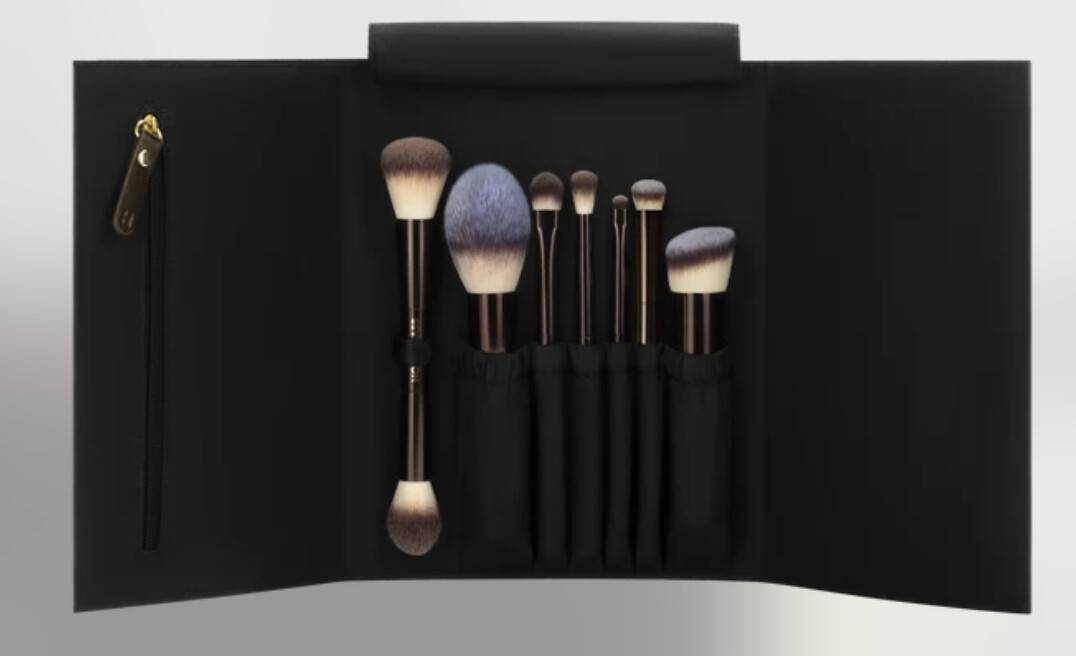
The beauty industry loves excess, but your brush collection does not have to reflect that. Rows of tools in every possible shape can make it seem like a professional kit is the baseline requirement for doing your own face. But in reality, a well-considered edit of essential brushes will do more for your makeup than an overflowing cup of rarely used ones.
Brushes are not about brand names or trends. They are about architecture, density, and movement. Each shape is engineered to control how the product sits on the skin, how much is deposited, how far it diffuses, and how seamlessly it blends.
And once you understand function, your routine becomes faster, cleaner, and far more refined.
1. Foundation brush to build your complexion
The foundation brush is responsible for how your skin looks overall, which makes it one of the most important tools in your kit.
Flat paddle style brushes lay down fuller coverage with precision, almost like painting the skin. Dense, rounded buffing brushes, on the other hand, work product into the complexion for a more seamless, skin-like finish.
The key difference is motion. Painting builds coverage while buffing perfects texture. A good foundation brush presses and blends rather than drags, preventing streaks and heaviness.
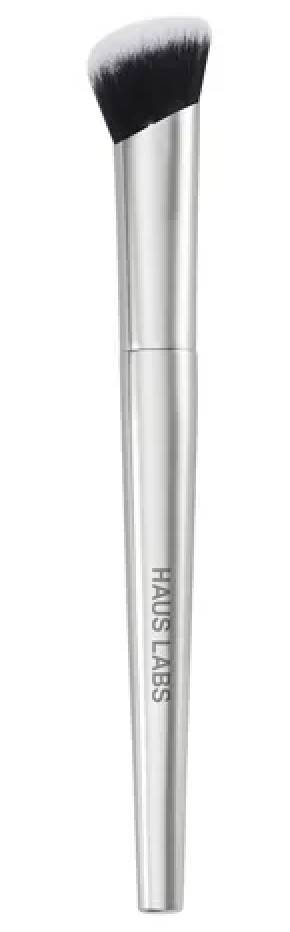
2. Concealer brush for precise details
Smaller, flatter, and slightly firm, the concealer brush is designed for targeted correction.
It reaches inner corners, around the nose, and over blemishes without disrupting surrounding makeup. A tapered edge is especially effective for under-eye work, allowing coverage exactly where shadow falls while keeping edges diffuse
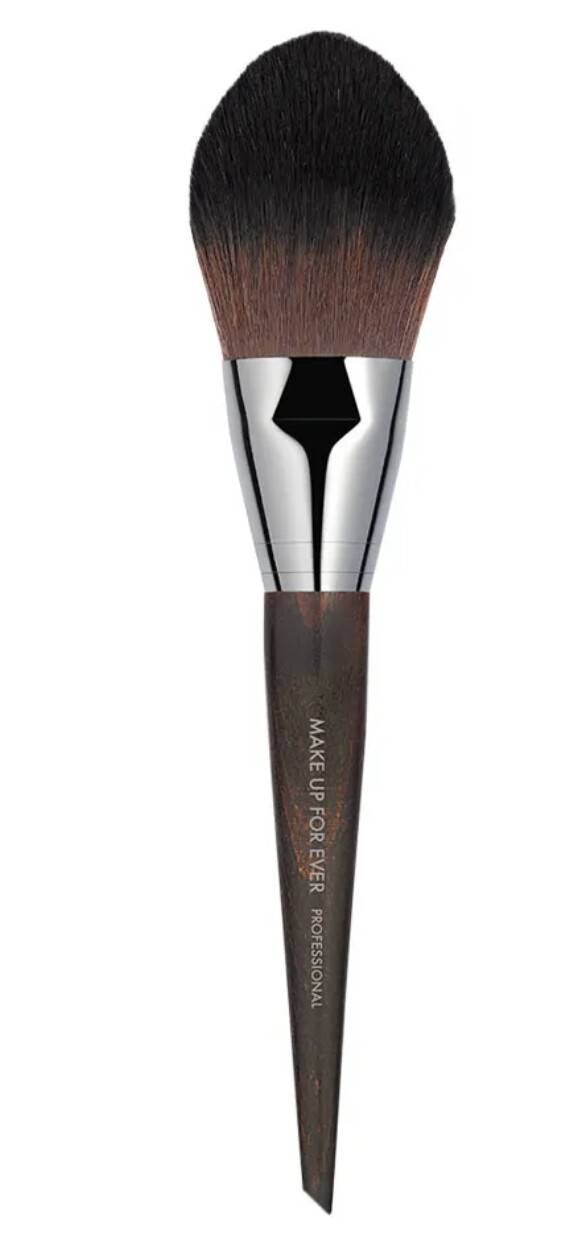
3. Powder brush to give soft focus
Large, airy, and flexible, a powder brush is meant to veil the skin, not blanket it. Its job is to set makeup and reduce shine while maintaining dimension.
Overly dense brushes deposit too much product and flatten the complexion, while a fluffy one distributes powder in sheer, light layers for a natural finish.
4. Blush brush to place color with control
Slightly smaller than a powder brush, a blush brush that I like to choose is one that’s a little smaller and fluffier for controlled placement.
The smaller size gives precision in where the color lands, while the fluffy texture ensures the pigment diffuses as it blends, so blush melts into the skin instead of sitting on top as a stripe.
5. Bronzer brush to diffuse warmth evenly
Fluffy yet substantial, the bronzer brush covers broader planes of the face, including the temples, cheeks, and jawline. It should blend warmth seamlessly into the skin so bronzer reads as dimension and sun-kissed depth, not surface pigment.
6. Contour brush to sculpt with control
More compact and often angled, find a brush that fits into natural shadows like the hollows of the cheeks. It allows sculpting shades to be placed with intention along structural points of the face.
Because of its controlled shape, it supports definition without spreading the product too far.
7. Highlighter brush to place with precision
A small, tapered brush that is still fluffy directs luminosity to specific high points, such as the tops of the cheekbones. The tapered tip controls placement, while the soft bristles prevent harsh edges.
8. Eyeshadow shader brush to pack on color

Flat and firm, this brush presses shadow onto the lids so pigment appears saturated and true to tone. It is especially useful when working with shimmer or bold shades that need a strong payoff. The firm structure helps keep color concentrated exactly where you want it.
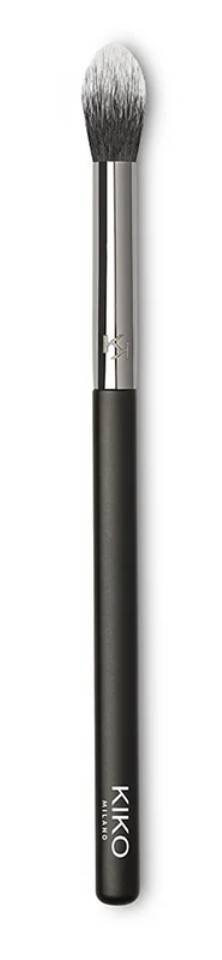
9. Blending brush to soften and seamlessly merge
This is one of the most important eyeshadow brushes in any kit. It is the tool that makes eye makeup look professionally done because blending is what removes harsh lines and visible edges between shades.
When used with light circular or sweeping motions, it helps shadows transition smoothly, so the final look appears cohesive and polished rather than patchy or segmented.
10. Crease brush to add depth and definition
Smaller and more tapered than a blending brush, a crease brush that fits directly into the eye socket is highly recommended, so it follows the natural contour of your eye.
It allows deeper shades to be placed with precision where natural depth occurs. This placement enhances eye shape and adds dimension without overwhelming the lid.
11. Smudge brush to create a smoky effect
Short and dense, this brush works very close to the lash line. It softens pencil or shadow so lines appear diffused rather than sharp.
However, many eyeliner pencils come with built-in smudgers—and even a small eyeshadow brush can do a similar job, which makes this more of a convenience brush than an absolute essential.
12. Angled brow brush to define brows and liner
The sharp slant of this brush creates controlled, hair-like strokes when filling in brows and can also trace the lash line with liner or shadow. That said, many brow products and liners already include an applicator that can handle basic shaping. This brush becomes more important for precision work, but for minimal routines, it is optional.