










‘The Silent Noise’ aims to give voice to a community often left unheard

During the pandemic, scriptwriter Tanya Bautista chanced upon “Coda,” a coming-of-age comedy-drama film about a girl who’s the only hearing member of her deaf family. As amazed as she was, it also had her thinking: Why aren’t we telling stories about the lives of the Filipino Deaf community?
“Ang dami nating puwedeng ikuwento tungkol sa kanila,” she tells Lifestyle Inquirer. “The world is a challenging place and everything moves so fast. Paano sila nakakasabay? How do they cope? Atras tayo nang konti kasi sarili lang natin madalas ang iniisip natin.”
These are questions that she hopes to answer—or at least address—in Prime Video and ABS-CBN Studios’ upcoming crime drama series, “The Silent Noise.”
Weapon and shield
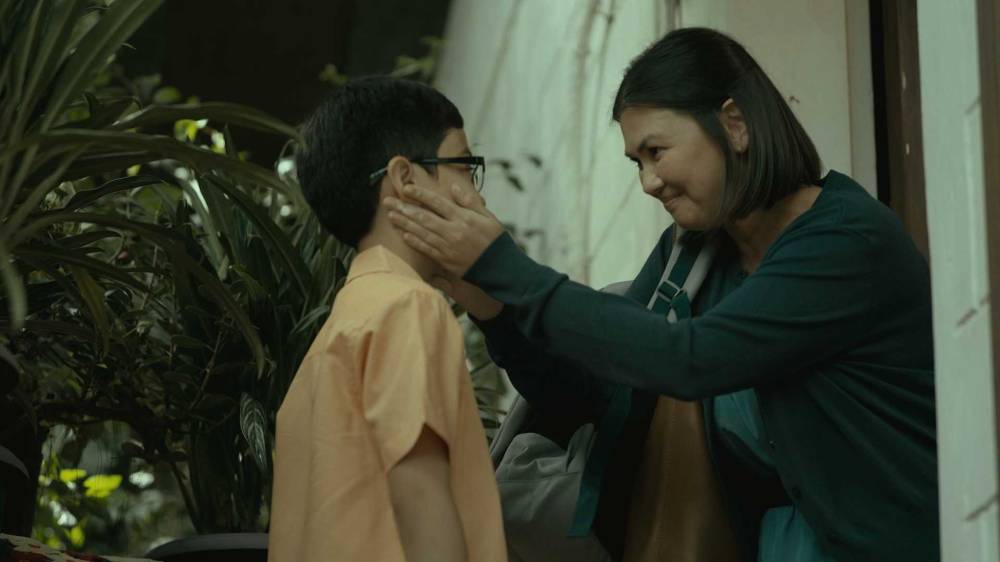
Premiering on March 20, the story follows Eli (KD Omalin), a deaf boy who supposedly holds the key to the death of his mother Jackie’s (Angelica Panganiban) sign language teacher. As the investigation uncovers his father Anton’s (Zanjoe Marudo) complicated past with the teacher, the family’s peace gets threatened. Along the way, the show highlights how love, loyalty, guilt, and the need to protect reputation dictate their choices.
Eli’s deafness is a weapon and a shield. Because he can’t hear, he isn’t distracted by lies and gossip. And while he can’t hear the truth, his heightened senses allow him to see through it. The family dynamics also underscore the irony that those who can hear are sometimes the ones who fail to listen.
While the story deals with conflict and mistrust, it’s balanced by lighthearted moments that give levity and show how a deaf child experiences the world that doesn’t always adjust to them.
“We want to show their journey from the smallest unit, which is their family, and how they have to adjust to each other’s sensitive needs,” says Bautista, creative head for ABS-CBN Studios. “A deaf person may feel he’s different when surrounded by family who can hear, but we hope to make the Deaf community feel that they matter, that they can be heard and understood.”

Verbal cues
Because of its unique premise, the challenges the cast faced were just as unique. Of course, they had to learn Filipino Sign Language (FSL) well enough to understand their own lines and those of their co-stars. In her scenes with Omalin, Panganiban realized just how much her acting relies on verbal cues and nuance.
“We actors rely on voice and delivery. May impact ‘yon. Minsan madadala ka sa sariling mong bitaw ng linya at gano’n rin sa mga katrabaho mo. Maiiyak o magagalit ka sa sinabi nila. But since we have to sign, we rely on eye expression and our connection with each other,” she says.
But as difficult as it was, she never once thought of—or even dared to show—any hint of frustration to the members of the FSL community on set.
“Ang kapal naman ng mukha ko if I give up. This series intends to champion Deaf people and be a voice for them,” she says. “So, you just do your best to understand them and convey what they want to say. I didn’t want to let them down.”
Voice-off
And she’s glad she did—if only for the new connections she has made and how they expanded her perspective. “You start to connect to them eventually,” Panganiban says of the members of the FSL community on set, who helped ensure that the portrayal of Deaf people is accurate and true to real life.
“At first, you only think their life is hard. But soon, you notice their happiness and how they carry themselves,” she says. “It’s a privilege to have seen their world.”
There were hiccups along the way, and understandably so—this kind of project is something rarely attempted, after all. As it turned out, you have to go voice-off when signing to Deaf people, meaning you don’t speak and sign at the same time as it may affect the clarity of the message. It was a teaching moment for the production team.

“They called our attention na hindi sila ganito,” Bautista says.
A step forward
But since they can’t go for long stretches without sound, the team had to strike a compromise in the name of cinematic license. The FSL community agreed to meet halfway. Ironically, details like this expose the fact that, even when seeking proper representation, productions may have no choice but to default to what’s convenient for the majority.
“Doon pa lang, iniisip na natin na alienating siya sa audience. Tayo pa rin ang iniisip,” Bautista says of the delicate balance between faithful representation and cinematic practicality. “If possible, susundin ko ‘yon, and let the audience feel how they really communicate.”
And while the production opened auditions to Deaf actors for the main roles, they ultimately decided that Omalin was the best fit to portray Eli. Still, all things considered, “The Silent Noise” is a step forward in representation, and the effort did not go unnoticed by the Deaf community.
At the press screening, a member expressed hope that one day a Deaf actor could take a lead role onscreen, while also appreciating the representation and chance to showcase how Deaf people live and thrive. “It makes me happy and proud to see the show support the community, involve the community, and promote equality and inclusion.”
******
Get real-time news updates: inqnews.net/inqviber