










The tangled webs we weave

The optimum hour for bed, health experts declare, is between nine and 10 at night, which allows both body and brain to rest and repair. Go to bed past two in the morning, and one would have apparently squandered the regenerative effects of sleep.
I have unfortunately not closed my eyes to settle into slumber before the decidedly ungodly hour of 3 a.m. every night this week. Not because I was partying away or deeply engrossed in a novel; nor was I scrolling absently on my phone or even bingeing on a TV series. And no, I did not, in a manic burst of energy, reorder my bookshelves or overhaul my closet.
The truth is, I found myself caught in a bind, metaphorically speaking, and I was held captive by my own sudden nocturnal preoccupations.
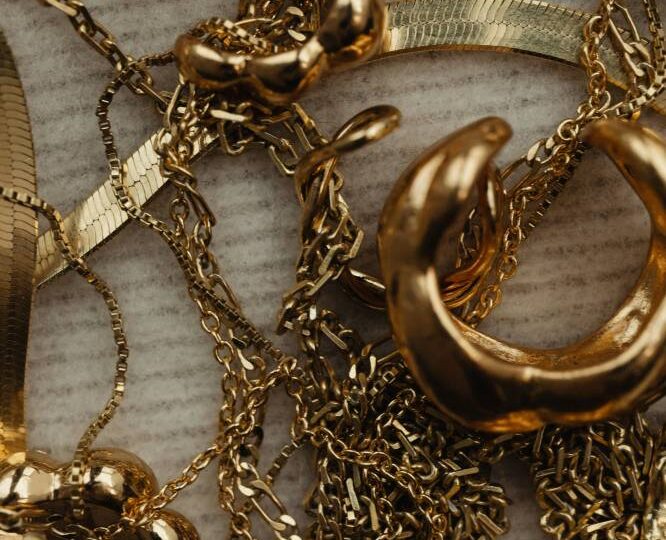
While rummaging through my accessories in search of a necklace to wear to an upcoming wedding, I fished out a necklace only to discover that it had become entangled with another set of chains. A rather apt instance of irony, a foreshadowing of the complexities of marriage, I thought to myself as I set about uncoupling the knotted strands.
What I thought would be a fairly straightforward task morphed into a full-scale obsession. Armed with sharp tweezers and a needle, I coaxed and picked and pulled throughout the night, as well as during random periods of free time during the day, strictly regulated by my alarm set to hard-stop times. Working by daylight didn’t make the mission any easier; without the long stretch of night before me, the brief 15- to 20-minute intervals I gave myself—and the disappointing pace of progress—put me in a mild state of panic.
Accompanying me on the first night of Mission: Disentanglement were episodes of “Law and Order: SVU.” It horrifies me, the comforting, almost narcotic, effect of violence in a police procedural TV show, but I suppose the inevitable predictability of crime and punishment is the point of such a series.
The second night of project unravelling had “The Night Manager” streaming on my laptop. This required a bit more engagement on my part, naturally, as Tom Hiddleston, Olivia Coleman, that sultry Colombian actress, and that dishy guy playing Teddy in the cast demanded more than cursory attention. In a way, it mirrored what I was doing; TV as metaphor, one might say. There were characters seduced, then trapped in each other’s webs. There were twisted motives and intertwined histories. People locked together, at an impasse, at least until the next episode.
The next night had me scrolling through TikTok for updates about a pathetically insecure man’s latest dick-measuring contest in West Asia, into which he has dragged the whole world, only to expose the flaccid state of a dying empire. The underdog had deftly ensnared the bullying narcissist into a web with serious geopolitical and economic reverberations throughout the world.
On the fourth and fifth nights, I continued to extricate the twisted metals in silence, save for the whir of an electric fan and the distant hum of cars on the road. It was unexpectedly meditative. There was no regular rhythm to this otherwise mundane undertaking—some motions were frantic, while others were painstakingly slow, yet I was soothed by the sense of equilibrium that enveloped me.
As loosened strands were strung across my fingers like glistening cobwebs, I thought of Julian Barnes’ description of marriage—as well as grief—through the eyes of one of his earliest protagonists, Geoffrey Braithwaite, the very English doctor who narrates “Flaubert’s Parrot,” arguably the novelist’s breakout book.

Braithwaite criss-crosses the Channel to fuel his obsession, on a mission to uncover Gustave Flaubert, the man behind the flawed genius, or perhaps the genius behind the flawed man, while at the same time dealing, in his very English way, with his own grief and perplexity at his wife’s suicide. His wife who has not always been faithful to him.
The language of bereavement is foolishly inadequate, he remarks. He distils the reality of his marriage into the most prosaic terms: “I loved her; we were happy; I miss her. She didn’t love me; we were unhappy; I miss her.”
My chains are locked together into a final, crucial, but stubborn knot, and neither side refuses to give. One more night, a part of me thinks. Do I soldier on in soothing silence, or do I solder at a later time what I have carelessly tangled together but might just as easily put asunder?
To quote Flaubert: “Is it splendid, or stupid, to take life seriously?”