










The un-proposal and how ‘Stranger Things’ broke Hollywood tradition

Forget the mistletoes and fireworks, ‘tis a “Stranger Things” holiday, and we’re venturing into the Upside Down one last time.
The hit show’s fifth and final season is undeniably the talk of the town. In fact, it shaped up to be quite the epic conclusion to the show that first aired in 2016—that is, if you ignore that it is the series’s lowest-rated season yet. But with all that’s happened in its fifth season, it’s not just Noah Schnapp’s character moment or Millie Bobby Brown’s lip filler that’s trending on social media, but moreso Nancy (Natalia Dyer) and Jonathan’s (Charlie Heaton) un-proposal.
It was a gut-wrenching heart-to-heart to say the least. Sadly, not everyone got it.
The un-proposal
Despite getting together as early as Season 2, the Nancy-Jonathan pairing has always had its cracks: their constant bickering in the third season; the distance they put between themselves in the fourth season; and the tension and almost passive aggression surrounding them throughout Season 5—it was almost as if we were simply waiting for them to implode but couldn’t given the severity of their situation.
As Joe Keery’s Steve put it in Volume 1 of “Stranger Things” Season 5: “Maybe if you stopped focusing on me, and started focusing on her, maybe then the two of you would finally be happy. Because right now, the only one who’s more miserable in that relationship than you is Nance.”
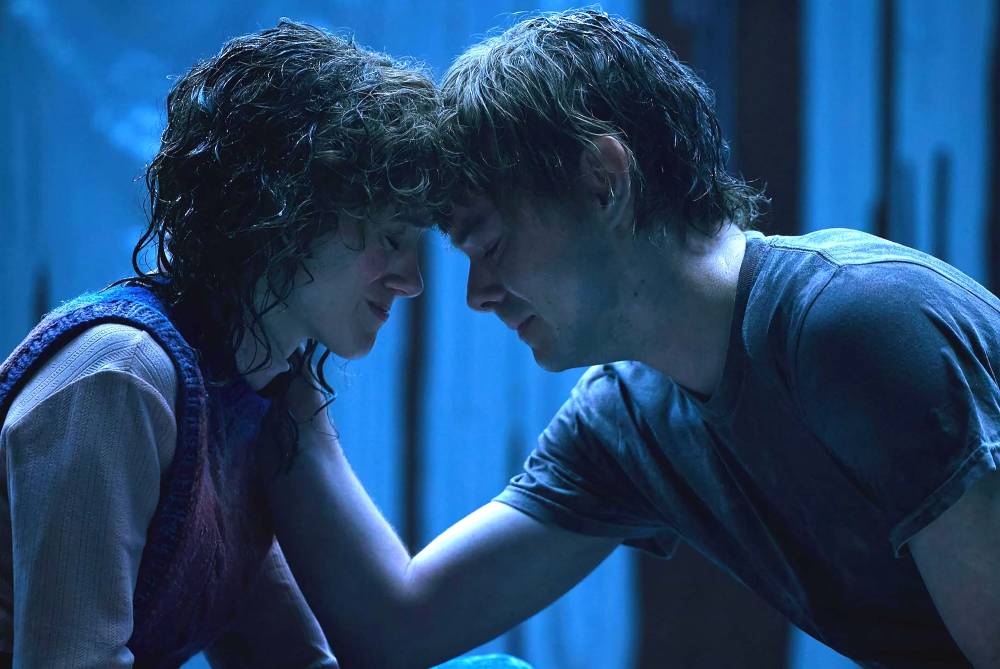
But, with their backs against the wall inside a melting Hawkins lab, and with certain death looming over their shoulders, Nancy and Jonathan finally address the elephant in the room. They talk about everything they dislike about each other, and go over how their shared trauma has kept them together but also inadvertently caused them to feel suffocated in their relationship.
But the biggest bombshell in this ill-timed heart-to-heart? “I’ve screwed up enough with you. It’d be nice to get something right for once in the end,” Jonathan says, handing a wedding ring kept inside a John Coltrane cassette. “Nancy Wheeler. Will you not marry me? I tried to convince myself that this would somehow fix everything. But it was just gonna make things worse. Which is why it has been sitting like a cannonball in my pocket for the last two days. So what do you say? Do you accept my un-proposal?”
To which Nancy says yes, and the two affirm their love for one another. “I love you, Nancy Wheeler. I love you, Jonathan Byers,” the pair says as they embrace.
The confusion
Between the makings of a breakup and arguably the first time the pair showed any kind of romance between them since Season 2, the un-proposal was met with mixed reactions—and understandably so.
“‘I really thought it was about them being seconds away from dying, but still choosing to express their love,” says @ssimmeej on X.
“I was so sad watching it. I knew it was a breakup. It was one of those, ‘I love you, but honestly, I was just pretending to like all this stuff for you to hold us together. We’ll always have our bond, but it’s time we move on.’ The un-proposal was Jonathan asking to break up,” says @FUCHSIASTARDUST.
Confusion scattered across social media. Did they actually break up? Wasn’t that a profession of love? So much so that the Duffer Brothers had to set the record straight. Yes. Jancy is no more.
“It’s hard to recall when exactly that idea came, but I think us—and the writers—all felt that Nancy needed to end up on her own and be independent and have an opportunity to find herself,” Matt Duffer shared with People.
But if you ask us, the writing was always on the wall. They were always headed toward a breakup. A ring wasn’t going to save it. A few “I love yous” weren’t going to change anything. They love each other, but they still acknowledge why it wouldn’t work.

It wasn’t some last-ditch effort to keep the flames alive but a weight removed from their chests.
Shared trauma and breaking Hollywood tradition
The Nancy-Jonathan un-proposal is more than just a “Stranger Things” highlight. It breaks free from established Hollywood conventions and proves that shared trauma isn’t enough to sustain a relationship.
Trauma and tragedy bring hearts together. Think “Speed” (1994) when Keanu Reeves and Sandra Bullock fall in love after surviving a deadly ride on a bus rigged with explosives; “Jurassic World” (2015) when Chris Pratt and Bryce Dallas Howard find mutual attraction after a day spent with carnivorous dinosaurs; every “Mission Impossible” and Bond film.
That is the rule. That is the law. And tens of hundreds of shows and films—action with a side of romance—have played to its tune.
The “Stranger Things” un-proposal shows that our heroes and heroines can find love and life outside their traumas. Their lives don’t have to revolve around those they were with for the mere fact that they can relate to the experience. Sure, it can be comforting to be with someone who understands and experienced what you went through.
But if anything, Nancy and Jonathan prove that you don’t have to be defined by your tragedy.