








The ‘witch hunt’ against women who rise

Society has always loved a woman on the rise—at least at first. There is a certain fascination in her emergence: her talent feels new, her persona compelling, her success well-earned. She is even praised as an inspiring and iconic figure.
But a woman’s success is rarely unconditional. As her visibility grows and as she becomes more influential, successful, or deliberate in shaping her image, the tone begins to shift. Confidence is reframed as arrogance. What once seemed effortless is now read as calculated.
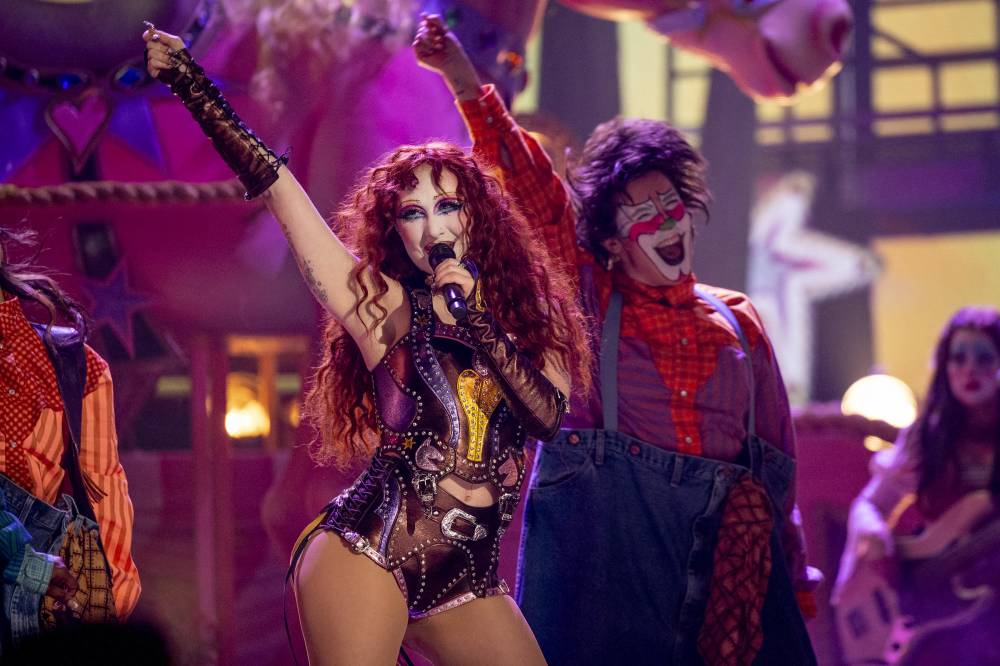
This is the inflection point where Chappell Roan now finds herself—one that many other women, inevitably, encounter as well.
Modern witch hunting
An alleged incident involving Roan—that she made a child cry while dining at a hotel—quickly gained traction, turning into a full-blown witch hunt on social media.
The encounter took place in March at a luxury hotel in São Paulo, Brazil, where Roan was staying ahead of her performance at Lollapalooza Brasil. At the same hotel was the family of Brazilian footballer Jorginho. His 11-year-old stepdaughter—reportedly a fan—noticed Roan during breakfast. And according to Jorginho’s account, the child simply walked past Roan’s table, smiled, and returned to her seat, excited to have seen an artist she admired.
What followed, however, escalated the situation. A security guard approached the child and her mother and allegedly aggressively confronted them, accusing them of harassment. Roan later clarified she had no awareness of the interaction, while the guard involved publicly stated he was not working for her and had not acted on her behalf.
Yet within a day, the narrative had already solidified.
Its spread was not entirely organic. A recent report indicated that more than 23 percent of posts and comments surrounding the controversy were generated by coordinated bot activity, accelerating outrage and reinforcing a single storyline—that Roan “hates children and her fans”—alongside calls for boycotts. But it remains unclear who funded such amplification.
The motive, however, is more apparent. Roan is at a peak moment in her career—a culturally influential artist with a distinct identity and a rapidly expanding platform. She is openly lesbian, politically vocal, publicly critical of institutions such as ICE, and pro-Palestinian. She has also demonstrated a willingness to cut ties with institutions she finds ethically compromised, including her decision to leave a talent agency linked to figures associated with Jeffrey Epstein.
Smear campaigns against women in positions of influence—particularly those who are outspoken, or outside traditional norms—have long been used to undermine credibility and reshape public perception. These campaigns often rely on partial truths, misattribution, and rapid digital amplification.
This pattern is not new. In the early 2000s, Britney Spears was one of the most powerful celebrities in the world, shaping music, fashion, and contemporary ideals of femininity. Then, almost overnight, her reputation shifted.
Attention shifted away from her record-breaking career to her relationships, her body, and her perceived instability. Continued paparazzi harassment—even when she was with her child—and the years of conservatorship followed. Questions about motherhood and “stability” replaced discussions of her artistry.
The double standard of likability
What makes Roan’s situation particularly revealing is the nature of her persona. Her work celebrates loud, glittery, queer femininity. Songs like “Femininomenon” embrace theatrical, exaggerated womanhood on her own terms. She is not attempting to be traditionally “relatable.”
And part of the discomfort lies in her boundary-setting. She has pushed back against aggressive photographers and paparazzi, responded directly to intrusive behavior from some fans, and asserted her right to privacy—even in highly public spaces.

In the middle of the backlash, a parallel moment in politics underscored the persistence of expectations. Kamala Harris was recently criticized for not being “humble,” a critique long directed at women in positions of power. She responded publicly, rejecting the premise altogether, describing it as a dated expectation placed disproportionately on women.
“To every woman and girl who refuses to shrink herself to fit someone else’s expectations—keep going. Dream with ambition, lead with conviction, and never apologize for either,” she wrote in an Instagram post.
Society tends to accept women only when they remain grateful, soft-spoken, and endlessly accessible. Women, after all, are still conditioned to be liked and to be “nice.” When they set boundaries or direct attention on their own terms, those boundaries are seen. This creates a form of emotional labor disproportionately imposed on women.
The contrast with male figures is telling. Actors such as Cillian Murphy are praised for their reserved, “no-nonsense” demeanor; their distance is read as mystique. Tobey Maguire, despite well-documented tensions with the paparazzi, is largely understood to be protecting his privacy.
The hate and scrutiny surrounding Roan reveal a persistent discomfort with female autonomy—particularly when it is expressed without apology. If a woman remains contingent on traditional expectations of likability, and autonomy continues to be recast as excess, then such cycles will persist.
Ultimately, the question is not whether individual women meet these expectations—but why those expectations remain so firmly in place, and who they serve.
Until society stops demanding conformity from women, the hunt will not end—it will simply find its next target.