








The world already stepped in, and that still wasn’t enough


Rather than showcasing the talent of our national athletes at this year’s Asian Games, recent events have showcased added proof on the the lack of support that continues to hold back our international representatives.
After the opening loss of the Alas Pilipinas men’s volleyball team to South Korea, captain Bryan Bagunas lamented the government’s lack of financial support for their Asian Games campaign.
A (blatant) lack of support
According to the Japanese SV.League import, members of the national team haven’t received their allowances since July, which proved to be especially difficult for the student-athletes on the team who do not yet have access to living wages.
“Some players have even started borrowing money from their teammates or other people just to get to training or go home,” Bagunas shares in Filipino during an interview following a close defeat to South Korea. “Sometimes, only seven or eight of us [were] able to attend because some players [couldn’t] make it.”
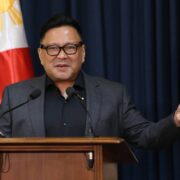
Following the viral exposé, President Ferdinand R. Marcos Jr. ordered an internal probe to identify those responsible. “The president does not want those representing our country to be the ones suffering because it appears that the government is not responding to their needs,” shares Palace press officer Claire Castro.
That’s all well and good—as they should. Still, it’s not like this was new. In fact earlier this year, members of the Alas Pilipinas women’s team spoke out regarding similar concerns of delayed salaries and mounting training expenses.
At the time, team captain Jia De Guzman wrote via Instagram:
“I believe athletes should be in an environment where they can continue to grow, compete, and be supported—without being put in a position where they have to choose between the national team and their careers in the league.”
Internationally-recognized incompetence
Earlier this year, the Fédération Internationale de Volleyball (FIVB)—the governing body responsible for regulating and developing the sport on a global level—suspended the Philippine National Volleyball Federation (PNVF) for multiple violations of the FIVB Code of Ethics.
“Despite continued diplomatic efforts by the FIVB to find a sustainable path forward for Philippine volleyball, the suspension was deemed necessary to safeguard the sport, ensure athletes are prioritized, and uphold the long-term development commitments made for volleyball in the Philippines,” shares the FIVB in a statement.
Amid the suspension, the FIVB installed an ad hoc committee meant to “support the participation of Philippine national team athletes in upcoming international competitions.”
Though, as recently seen, even international intervention is clearly not working out.
A work in progress—but at a personal cost
Amid the Asian Games hitch, PNVF President Frank Lao (who was only formally elected this August) took responsibility for the issue while also sharing the current state of the federation since his takeover.
According to Lao, he inherited roughly P25 million in liabilities and outstanding payables, which he and the rest of the PNVF are currently auditing and addressing.
“I’m the one asking for your patience because we fell short. But give us a chance to make it up to you. Just give me some time. This is on me as president of the PNVF. I take responsibility. I’m sorry,” shares Lao in a statement following Bagunas’ revelations.

But it’s not all press releases and empty words. In fact, according to the PNVF, Lao himself has been digging into his own personal resources to settle federation debts, unpaid coaching salaries, and foreign travel expenses.
Bagunas also shares that Lao has maintained open communication with the national team, while shouldering added expenses, including P20,000 allowances for both the players and coaches.
The privilege to think of nothing but the sport
But while working conditions of the national athletes are being improved, the job is clearly far from over.
From where we’re standing, national athletes train, prepare, and compete—fueled only by the love for their country—while constantly worrying about their day-to-day lives.
Until our national athletes are afforded the privilege of solely focusing on their game, they will always be operating at an inherent disadvantage compared to their peers.
Inherent talent won’t matter on the world’s stage. Because sport will always come second when you’re constantly worrying about how you will eat.
Our national athletes deserve much better.


