








There is hope

February 1, 2026 – Fourth Sunday in Ordinary Time
Readings: Zephaniah 2:3; 3:12-13; Psalm 146, R. Blessed are the poor in spirit; the kingdom of heaven is theirs!; 1 Corinthians 1:26-31; Gospel – Matthew 5: 21a
This Sunday, I will digress a bit from our usual reflections on the Gospel. I will open with reflections on the Beatitudes and go back to the Pastoral Letter of the Catholic Bishops’ Conference of the Philippines (CBCP) almost a year ago, Feb. 2, 2025, at the Feast of the Presentation of Our Lord.
The Beatitudes from the Sermon on the Mount can be likened to an inaugural address of a President, setting the vision and general direction of his/her term in office. This will be our first point for reflection. Our second point is how the Beatitudes can be considered as a summary of the vision of the Paschal Mystery and how it leads towards Christian Joy.
And the third and last point for reflection will be the CBCP 2025 Pastoral Letter for the Jubilee Year of Hope, “May Pag-Asa Pa Ba?”
The Christian paradox
“Blessed are the poor in spirit, for theirs is the kingdom of heaven.” This opening line defined the nature of the beatitudes as both a series of blessings and a Christian paradox.
It sets Christian joy as the horizon of our faith journey. This is best described by Fr. Hans Kung, that while we do not plan for suffering, inevitably, we will suffer for our beliefs and commitments. But the final word for us Christians is joy because of the Resurrection.
The Beatitudes are expressions of this Christian paradox, which God blesses. This is the source of our joy, that we are blessed. And throughout his three-year ministry, the Lord lived out this Christian paradox. It is also the same pattern of life that we are invited to live as our way of following Jesus as his disciples.
Jesus’ three-year ministry began and ended with the Christian paradox. The Father declared Jesus as his Beloved Son in whom he is well pleased at the beginning of Jesus’ public life in his baptism. At the end of his ministry and fulfillment of his mission, the most powerful and definitive expression of this paradox is what we saw in the Cross and Resurrection.
It ended, ends, and will always end in joy.
Rediscovering hope
All that Jesus did, as God-with-us, the perfect summary of this is the Paschal Mystery, where the Cross exalted Jesus as the Beloved Son and the Resurrection revealed how well pleased the Father was.
Our faith is a faith of joy, and Jesus’ victory over sin and death is definitive. This then is the firm foundation of our hope. Months before the State of the Nation address in July 2025, almost six months, the CBCP already addressed what we have been struggling with for the past six months. It was a prophetic voice that, at times, I feel we might have forgotten.
Please allow me to quote parts of the letter to help us remember: “Hoping against hope, like Abraham in the letters of St. Paul, we, Christians, examine ourselves and allow our faith in God to engage the situation that afflicts our nation.”
“In trying to understand the reality around us, we experience frustration and anguish in the face of [challenges that beset]… the sphere of morality… ecology… the area of economy… the political realm… the area of security and international concerns… the field of communications… in the area of governance.”

“As we reflect on these situations, we realize that the first thing we need to do is to examine ourselves and pursue the path of personal, institutional, and ecclesial conversion in order to rediscover hope. This is the opportunity that the Jubilee Year provides us. Thus, we too make ourselves accountable before the Lord.”
“Hopelessness can lead to despair. Yet to hope is not to be overcome by fear and despair. Hopelessness can paralyze and enslave us. Yet hope gives us courage and freedom. We pray for courage, so that we may always freely stand up for truth, and uphold the good and the rule of law, as we protect democratic institutions and processes.”
“Let us hold power to accountability. Let us continue to build on what we have accomplished. May we have the courage and perseverance to walk the path of conversion to change for the better, and relentlessly pursue the good of all, over personal interests. May we never tire of caring for the most vulnerable members of our society: specifically the unborn and the children, the elderly and the sick, the poor and the marginalized, the weak, the voiceless and powerless. May we not give up on one another and our country, for God does not give up on us.”
“There is hope! May pag-asa! And St. Paul counsels us: “And let us not grow weary of doing good, for in due season we will reap if we do not give up” (Galatians 6:9).”
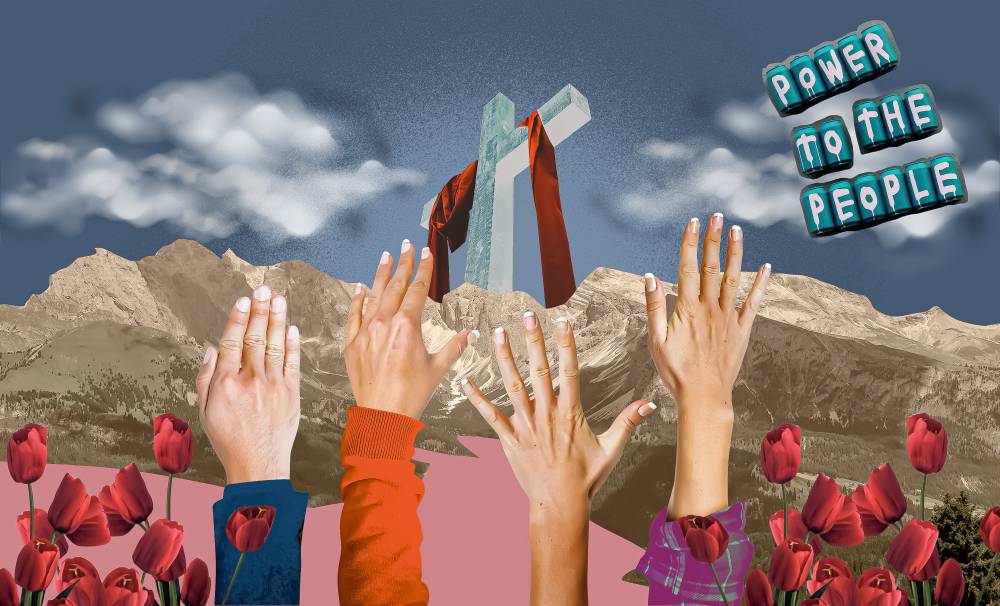
As we prepare for the 40th Anniversary of People Power, let us go back to these thoughts. These, I firmly believe, are God talking to us through our bishops.
I end by reiterating what has helped me through 2025: “May we not give up on one another and our country, for God does not give up on us. There is hope! May pag-asa! And St. Paul counsels us: ‘And let us not grow weary of doing good, for in due season we will reap if we do not give up.’ (Galatians 6:9)”