











Treks between past and present

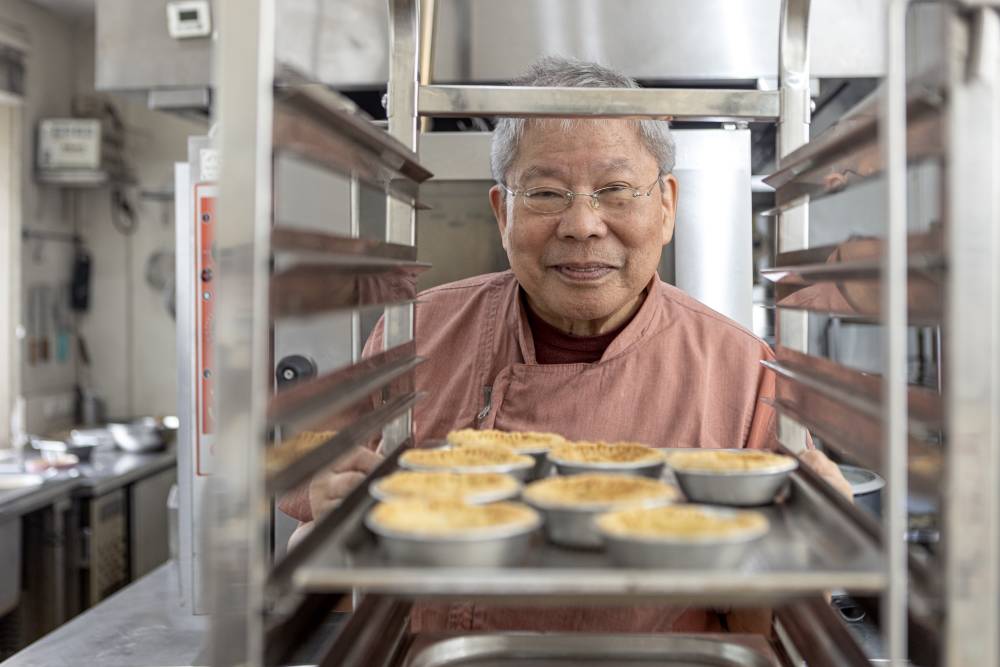
Chef Romy Dorotan is akin to an encyclopedia—he sits there quietly until you open him up. After which, he is just brimming with stories, factoids, and honest perspectives.
His solo visit to the Philippines in late 2025 included his participation in Terra Madre—the biggest, sustainable gastronomy event in Asia and the Pacific—a visit to a coconut vinegar factory in Sorsogon, and an exploration of expanding Purple Yam MNL’s offerings.
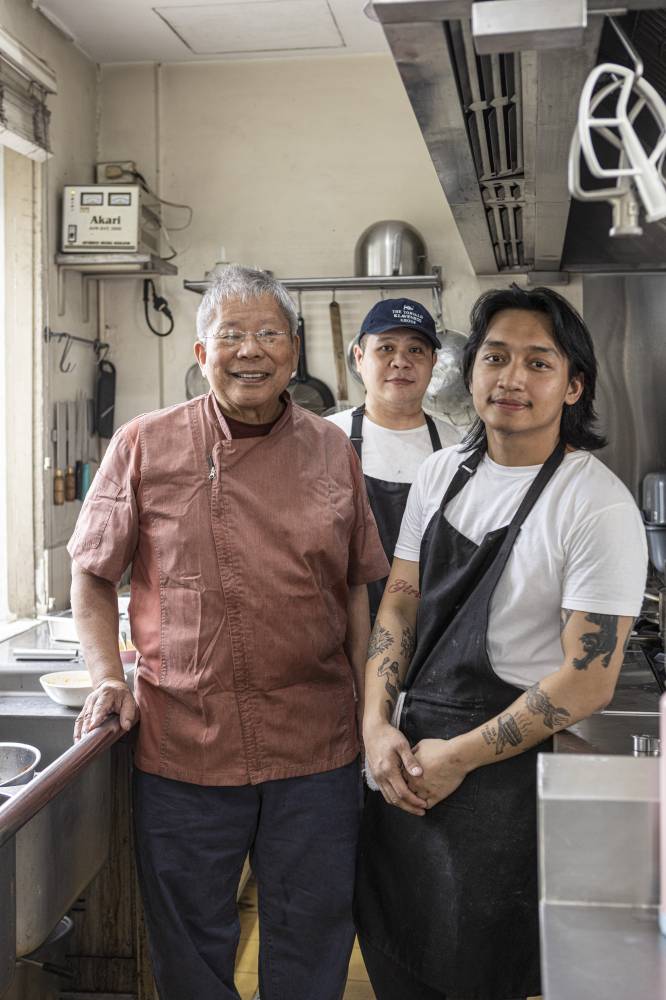
Unexpected flavors and bold combinations
At Terra Madre in Bacolod, the tasting dish he prepared was of a grouper fish. “I roasted it in coffee and cacao beans. I found out about criollo—a variety of cacao that’s quite rare, from what I understand. It’s not bitter and less acidic, and kind of nutty and fruity in terms of flavors. Creamy also,” Dorotan says.
“The coffee beans we used were robusta, which is more common in Negros,” he adds.
The fish was then laid on banana leaves with the coffee and cacao beans, releasing an aroma just like mocha. He basted the fish with atsuete oil and proceeded to make a sauce out of all the beans with coconut milk. “I added a little more tablea without sugar and ground coffee beans to intensify the flavor, together with lemongrass, shallots, and garlic. And then calamansi, of course,” he recounts.
When asked how he comes up with such unexpected flavor combinations, he refers back to when he worked in Key West, Florida, back in the ’80s. Arriving at Key West reminded him so much of the Philippines, with blossoming tamarind trees and a bounty of seafood.
“My training in food was all Western, but it was a juncture that I started to turn differently in terms of what I saw in the environment,” he says. “I asked myself: ‘What can I do with what is here? What is the product that I can use?’ There was red snapper, there were banana leaves, and there were coffee beans.”
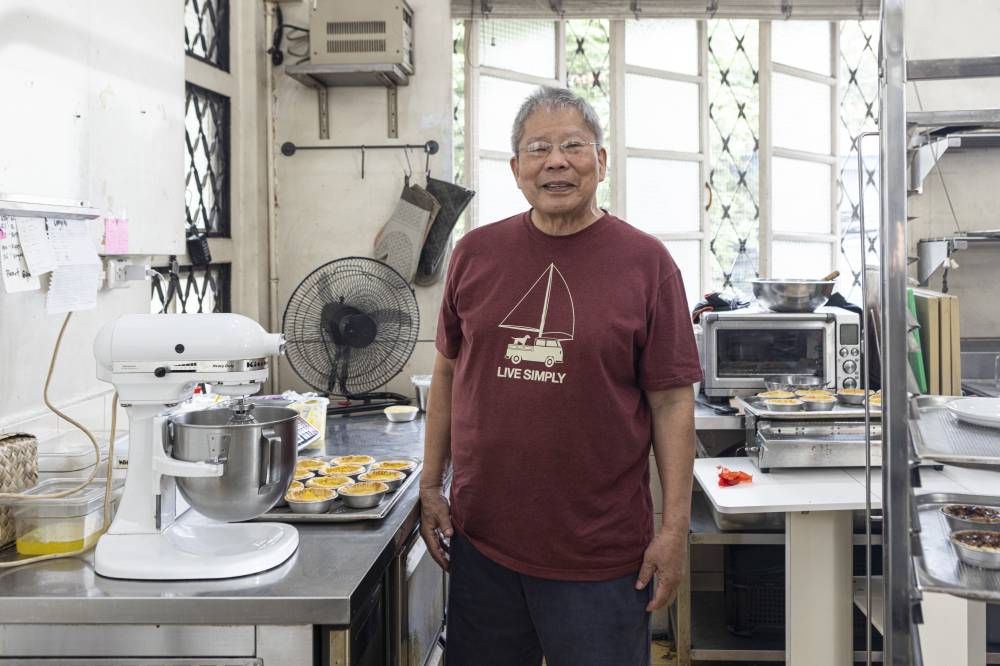
Combined synergy
His Western training has allowed him to be open to a little more creativity when capturing the tastes of Filipino food. Which is why when he met Amy Besa and when they started Cendrillon in SoHo in August 1995, their synergy was an absolute force.
“We synchronize and we kind of—most of the time—agree or disagree on what to do or what a dish should taste like. My formation came from a very Western background in terms of cooking. So when we opened Cendrillon, I had to rely a lot on Amy’s view, taste, and perspective about Filipino food,” he explains.
In the award-winning book “Memories of Philippine Kitchens” authored by Besa and Dorotan, Besa reiterates this sentiment:
“Romy and I also share our personal recipes, which took us years to develop and refine. Each and every one was hard fought, sometimes bitterly dividing us, simply because our memories of how some food tasted and what its texture should be were devastatingly different. I lean more toward what I remember; Romy is usually guided by what he thinks is the right texture and balance of flavors. It is in this nuance of compromises and elaborations that the future of Philippine food should be brought forth.”
An unvarnished tour
During Dorotan’s visits to the local markets here in the Philippines, he observed a dearth of vegetable variety. “I was in the saud—like a farmer’s market—in Irosin, Sorsogon, and there were not many vegetables. It’s basically the repetitive kind of things, the same products: root crops like kamote, cassava, taro, and common vegetables like eggplants and amplaya. I had to insist, ‘Can we have this or that?’”
“Before, it was always a given. Now, unless you demand it, they will put vegetables there,” he adds. “Maybe it’s not just the economy? Maybe it’s the preferences also. This is from what I’ve seen. I visited some restaurants also, and vegetables are palpably missing from the plates. I think it’s a big concern for me.”

One thing he couldn’t find, though, was anyone selling galangal, locally known as lengkuas. “I particularly remember that because it’s part of kuyog or fermented small fish.”
He also cooked suman when he found out his sister-in-law had some black and red rice, which sent him on a nostalgic trip. “I toasted the ground rice together, and it had this aroma that smelled like espasol in Quezon. We used to ride the Bicol Express,” he says, referring to the train that inspired the name of the spicy coconut milk dish of Bicol.
“What I particularly remember about that train is that you know where you are, depending on what kakanin the vendors were selling at each stop. You’d know you were in Quezon if the vendors were selling espasol,” he continues.
While in Sorsogon, Dorotan visited the factory of Lola Conching Coconut Vinegar, which is made of organic, fermented coconut sap. “It’s so delicious. The acidity from this vinegar comes much later. When you taste the vinegar, at first it’s more fruity and nutty. Then you get hit by the acid, like boom! Although I usually don’t use vinegar to make kinilaw, I used this because the coconut vinegar was more gentle,” he says.
Leaving a legacy
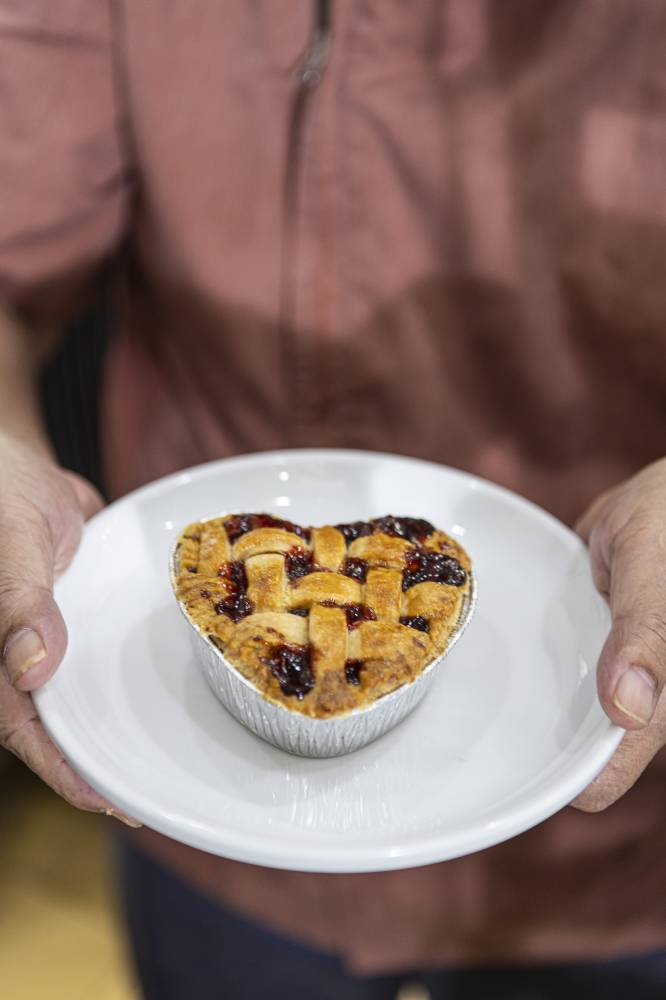
One of his missions in this trip was to possibly expand Purple Yam MNL’s offerings beyond pies and pastries. Many of those people who have dined at Besa’s ancestral house in Nakpil and Bocobo street in Manila fondly remember their popular savory dishes such as the ukoy—a fritter packed with cabbage, carrots, leeks, beansprouts and shrimp—or their bibingka that uses indigenous rice.
He was also able to dine at some restaurants such as Automat, Lagrima, Dominion Cellars, Greenlight Burgers by Alvin Cailan, and Josh Boutwood’s The Test Kitchen. “I don’t know enough about the Philippine food scene to make general observations. But the little I’ve seen and tasted is very encouraging.”
In 2024, the couple closed Purple Yam in Brooklyn. Dorotan and Besa continue to share their food in pop-ups (which is at a more leisurely pace than running a full restaurant), such as the one they did with Heritage Foods USA in New York. “With Purple Yam, we built a small base of people who joined us in this pursuit of good food. There’s this feeling of being part of a community, which was Amy’s big advocacy,” he shares.
“We hope to have left a legacy of embracing and loving everything about our food and ingredients,” he adds.