








Unsung food heroes

Behind every enduring food tradition is someone who refuses to let it fade—someone who cooks, remembers, and passes things on. They are the quiet keepers of culture. Isi Laureano is one of them.
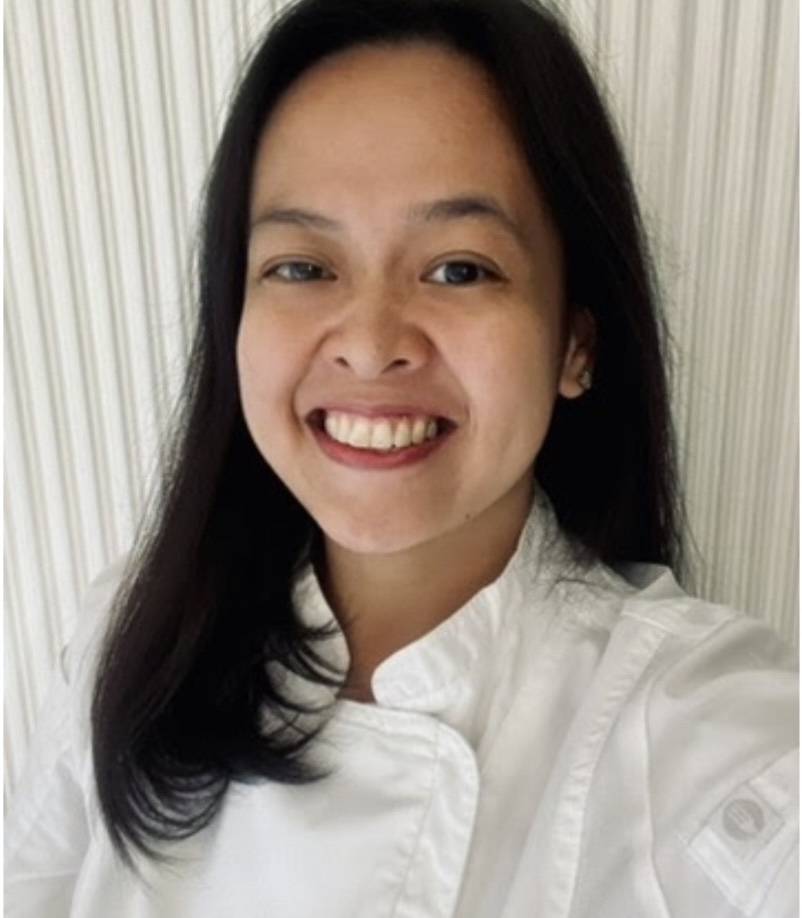
A Malabon-born chef and cultural advocate, Laureano’s work is rooted in home kitchens, palengkes, and everyday food makers. Through food tourism, she helps preserve Malabon’s heirloom dishes so they do not disappear.
When I ask her about Malabon, she pauses, sighs, and says softly: “Ang aking Malabon.” Then, she begins to tell her story. I listen in awe.
A simple way of life
1983. Laureano was born and raised on Trias Street, Hulong Duhat, Malabon—surrounded by generations of women who cooked, not as a profession, but as a way of life. Food was always freshly made, never stored—the palengke was part of daily living. There were no malls or fast food, only family-run stalls, bakeries, and neighbors who fed one another.
Her grandparents, Lolo Virgilio “Pido” Laureano and Lola Concordia, owned sari-sari stores at the Hulong Duhat market, where they sold bread and sweets, household goods, nuts, and freshly cooked fish and shrimp crackers.
Food was labor, memory, and survival. Everything was made from scratch. They lived simply. Ingredients were bought daily, and they bought only what was needed.
As a coastal city, Malabon’s table revolved around seafood—tinapa, tuyo, daing, rellenong isda, halabos na mga lamang-dagat, sugpo sinigang, torta, adobo, and sarciado. Coconut milk was rare; fish soups were everyday fare. One dish her lola served often was tapang kabayo—and it was only later that she realized it was horse meat.
Structured around food and community
Laureano’s days were structured around food. Breakfast was at 5 a.m., cooked by Nanay Cordia before her parents left for work, and she headed to St. Theresa’s College. Lunch was always home-cooked. Dinner was prepared by Tatay Pido.
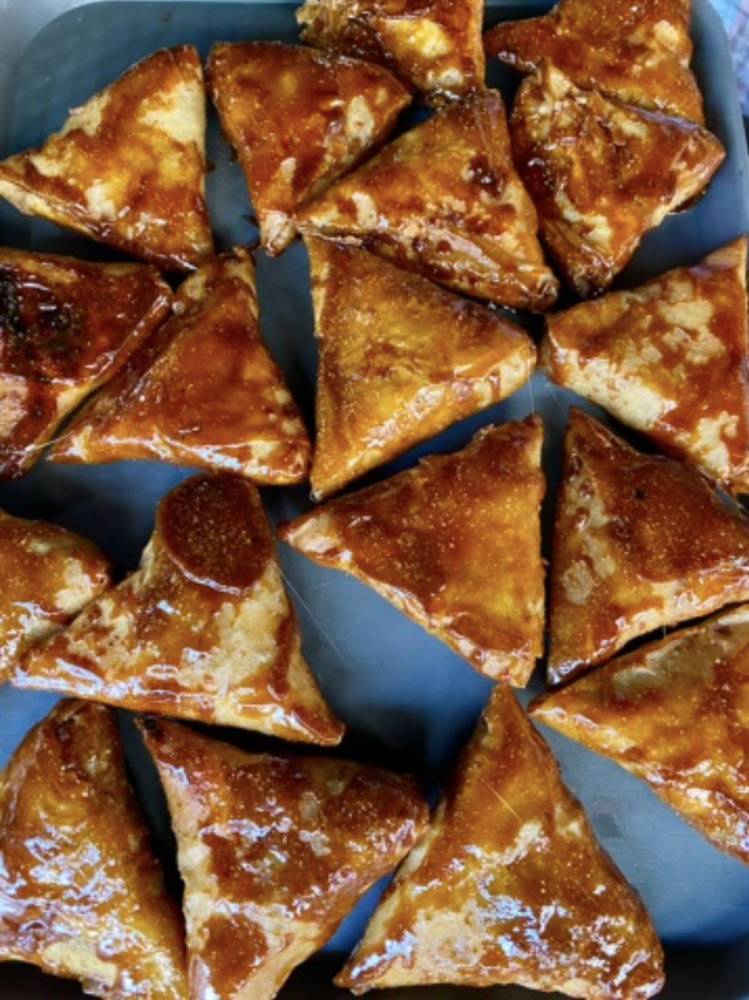
But merienda was sacred: Valencia (triangle-shaped turon with pinipig and langka filling) from Aling Tessie on Flores Street, pancit of every kind, and the champorado made by Nanay—Lola Cordia—still unmatched, where no other version ever came close.
Neighbors were an extension of the family kitchen. Mother Helen and Ate Virgie’s carinderia fed them for years. Aling Mely’s still does. Their food mirrors what her grandparents cooked, which is why it still feels like home, even now that her elders are gone.
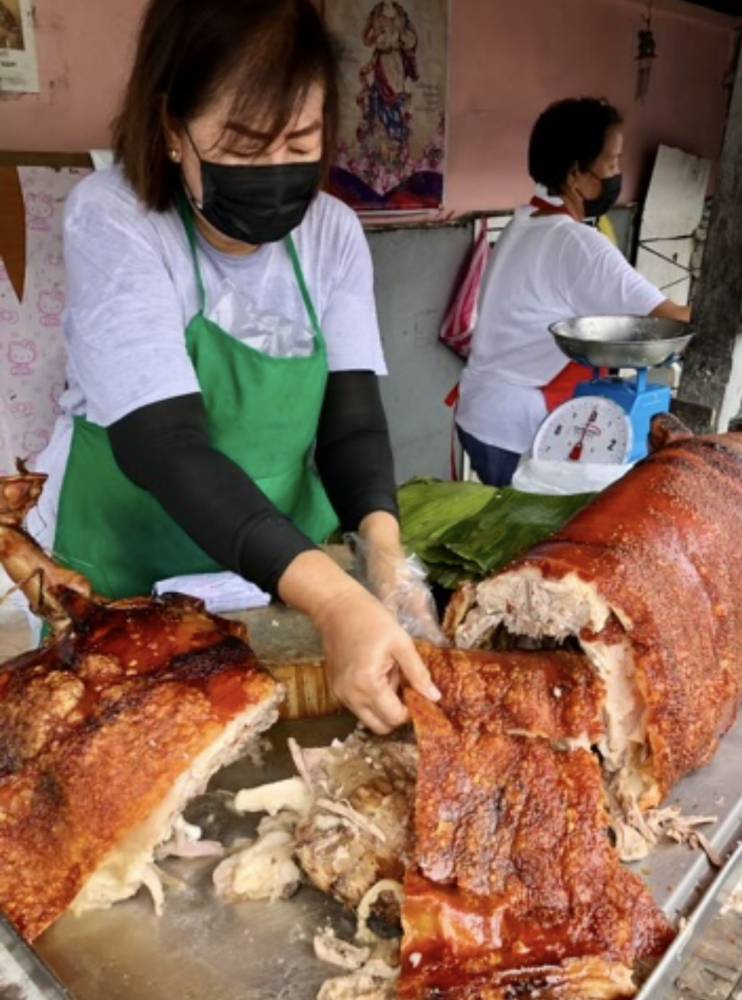
Weekends were feasts. Her Lola’s barbecue, pork chops, talaba, prawns, crabs, inihaw na bangus stuffed with tomatoes and onions, paired with sago’t gulaman or fresh melon juice. Sundays meant Malabon lechon—not as a luxury, but as practical rest-day food, short-ordered at the palengke and sold out before lunch.
“This was my food education,” Laureano says. “My gauge of taste.”
More than just Pancit Malabon
Malabon was then known for floods, but people adapted. It was also famous for Pancit Malabon, Rufina patis, and sapin-sapin. Food was everywhere.
Betsy’s Cakeshop, founded by her grandaunt Mama Bella Serna and later run by her aunt, Tita Betsy, was their second home—where birthdays and milestones were celebrated. Mama Bella invented the soft broas with buttercream, something you had to go to Malabon to taste. There were no deliveries, no cameras. Everything Laureano carries now is memory.
On her mother’s side, her uncle Tito Bong Guillen of Dampalit remains the best cook she knows. His mechado is now a recipe they sell. Lugaw was breakfast in Malabon long before trends. Her maternal grandparents were seafood dealers, which meant the best fish and shellfish always reached their table.
This is why Malabon food is distinct. It offers not just Pancit Malabon and sapin-sapin but everyday cuisine shaped by water, markets, preservation, and community. Tortang alimasag, rellenong bangus, mechado, tapang kabayo, kikiam, tinapa, bagoong, sukang Paombong, sawsawan culture, and endless kakanin… all these have become what Malabon is known for.

Food tourism, the Malabon way
Food has always been Laureano’s language. In 2015, she opened her home through Traveling Spoon—not as a restaurant, but as a living Malabon kitchen. She later created a Malabon Food Tour rooted in memory.
When the local government unit tour program did not resume after the pandemic, she started her own in 2022 with her aunt, Tita Betsy, using e-tricycles to visit churches, ancestral streets, markets, and the food makers of her childhood. What began as a school fundraiser grew through trust and community support and is now also available on Traveling Spoon.
The tour remains simple. Guests start early, move by e-trike, and are reminded: huwag kayong mag-almusal. The goal is not spectacle, but understanding—to eat, remember, and support.
The Malabon Food Tour today
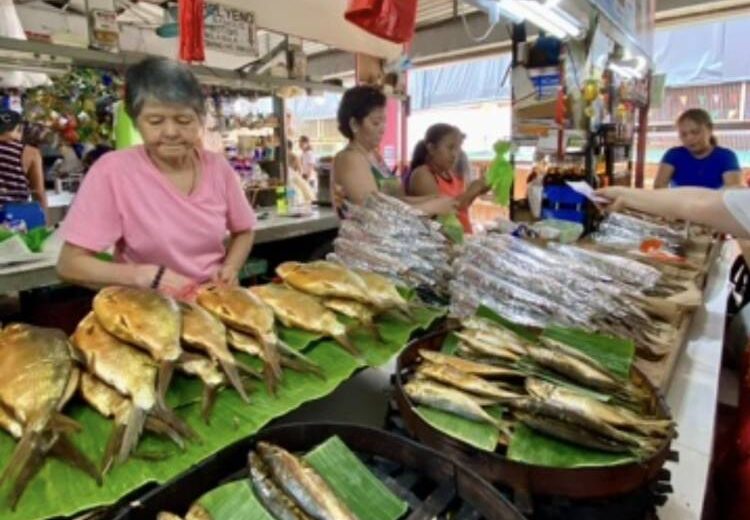
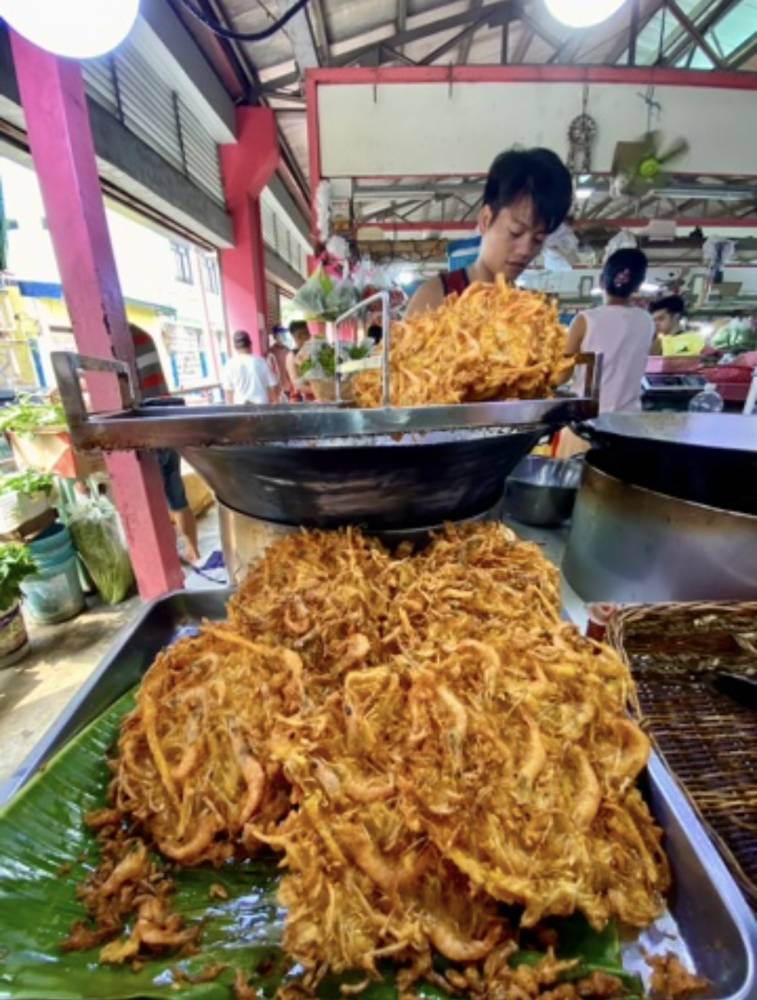
Built entirely on childhood memory and community trust, the tour traces the places and food makers that shaped Laureano’s Malabon. Stops include San Bartolome Church; Concepcion Market for okoy, tinapa, rellenong bangus, and tapang kabayo; the pianono bakery; a kikiam stall near Rufina Patis; Belen’s Kitchenette for Pancit Malabon; Aling Mely’s Carinderia; Aling Tessie’s Valencia alongside Judy Ann’s crispy pata, Dolor’s sapin-sapin, and Hazel’s puto pao; Arny and Dading’s pichi-pichi; and Betsy’s Cakeshop for Pancit Malabon, soft broas, and pastries.
Laureano considers herself a quiet ambassador of Filipino cuisine. Through Eat Matters and Traveling Spoon, she honors everyday cooks and preserves food heritage before it disappears.
Malabon shaped her. This tour is her way of giving back.
Listening to Laureano made my mouth water. Her stories brought me to a time back then—of happier, simpler days. And on a deeper level, she made me understand that some people do not just remember food—they carry it, so others may taste where they come from… and understand why it matters.
Book Malabon tours through @eatmattersph @travelingspoons