



Vice Ganda and Krystel Go made history—but it shouldn’t end here

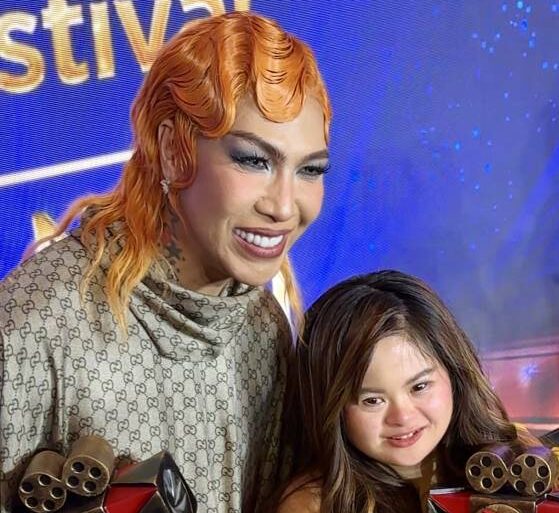
For the first time in the history of the Metro Manila Film Festival (MMFF), the Best Actor wore a gown, and the Best Actress was a first-time performer with Down syndrome. These wins by Vice Ganda and Krystel Go were landmark moments—not just for the annual event, but also for Philippine cinema as a whole.
It was a development that even long-time industry pillars and movers couldn’t have predicted.
“Masaya ako na mas nagiging inclusive at mas lumalawak ang mga napapasama sa pelikula tayo through the years. Hindi lang mga gender issues ang kinikilala, kundi pati ngayon ay ang mga people with Down syndrome,” National Artist for Film and Broadcast Arts Ricky Lee tells Lifestyle Inquirer at the recent Gabi ng Parangal.
“I hadn’t even imagined that a film featuring a love team of actors with Down syndrome would be produced. That’s a big thing.”
The night they felt seen
It was, indeed—as Vice Ganda says so himself—a night of being seen. While he had been a fixture in the MMFF for more than a decade, his presence was defined not by his acting but by his record-breaking box-office numbers. In fact, he had grown so accustomed to being snubbed that he had resigned himself to attending ceremonies without expectations or prepared speeches.
But this time, at last, Vice Ganda—for once at a loss for words—didn’t have to settle.
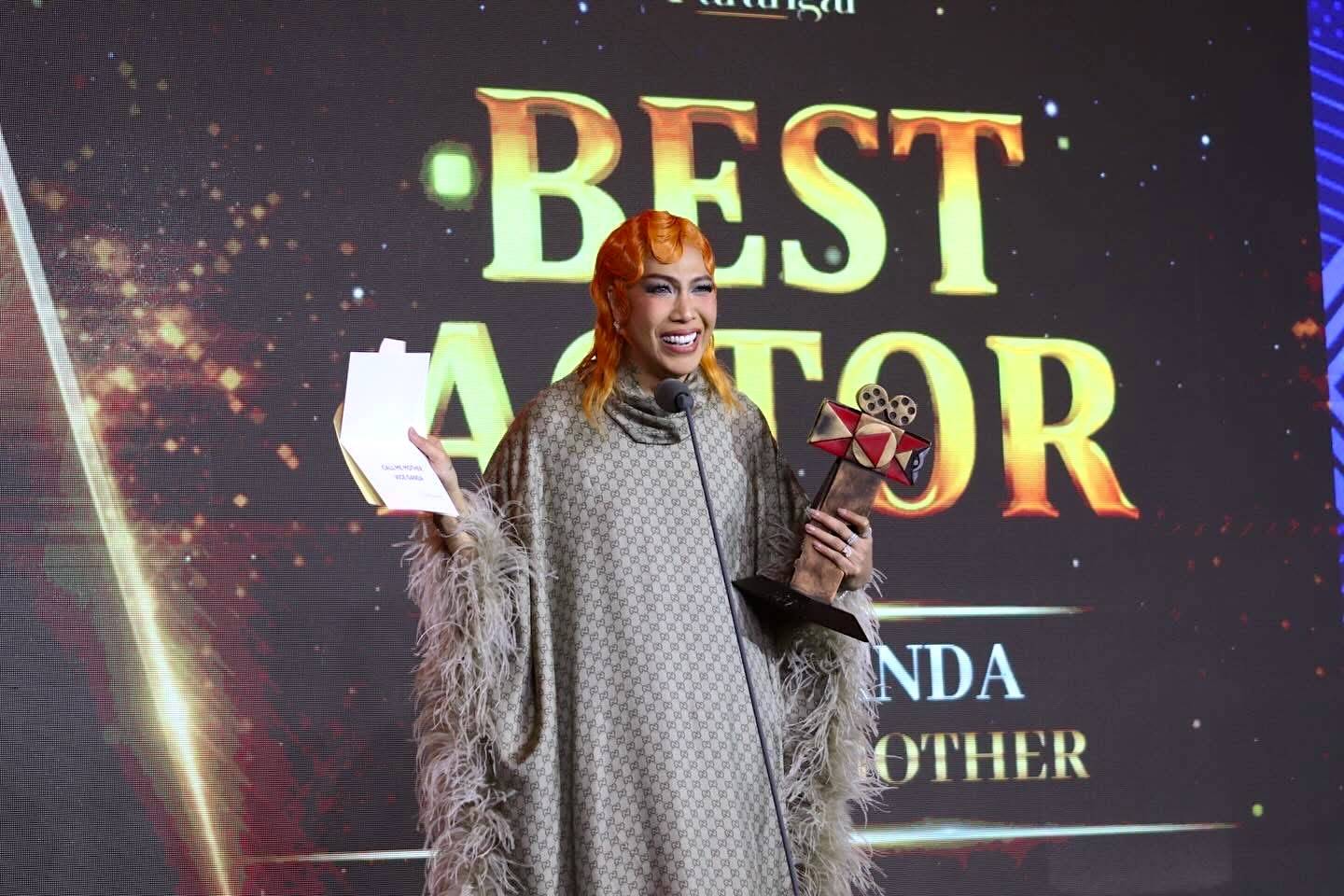
“Mas ini-expect ko na hindi nakikita—’yung nagugustuhan pero ’di pinipili,” he says as he accepted the Best Actor trophy for his performance in “Call Me Mother.” “It really is 2025. It’s possible, and it’s real. Queer people can be Best Actors. A queer person in a gown can be Best Actor.”
Meanwhile, Go’s win was a realization of a long-held childhood dream. It also proved that disability isn’t a hindrance to turning in a fine performance that merits the same space as other more established and acclaimed actresses like Angelica Panganiban and Nadine Lustre.
“Maraming salamat po sa pagkakataon, para mabigyan kami ng boses at maipakita namin na kaya rin naming umarte,” says Go, lead star of “I’mPerfect.”
The bare minimum
While their personal milestones are also wins for representation within LGBTQIA+ and disability communities, they also reveal gaps between recognition and inclusion. If there’s one thing to be gleaned from Vice Ganda’s and Go’s respective stories, it’s that recognition doesn’t automatically mean inclusion, nor does inclusion always guarantee recognition.
As such, these victories shouldn’t be seen as finish lines, but as springboards for the work that still remains.
For decades, queer actors were often relegated to the sidekick—the shrieking parlorista or the loyal best friend whose primary function is to provide comic relief. Recognition was almost always limited to the creatives behind the scenes. But this dynamic has started to change.
Vice Ganda’s MMFF win—and his FAMAS Best Actor win for “And the Bread Winner Is…” earlier this year—builds on the path blazed by the likes of Paolo Ballesteros (2016 MMFF and Tokyo International Film Festival Best Actor for “Die Beautiful”), Iyah Mina (2018 Cinema One Originals Film Festival Best Actress for “Mamu; And a Mother Too”), and Jervi Wrightson (2023 Summer MMFF Best Supporting Actress for “Here Comes the Groom”).
While these milestones reinforce queer actors’ rightful place in the spotlight, there remain markers that imply gender inclusivity in showbiz is still more of an advocacy than the norm.
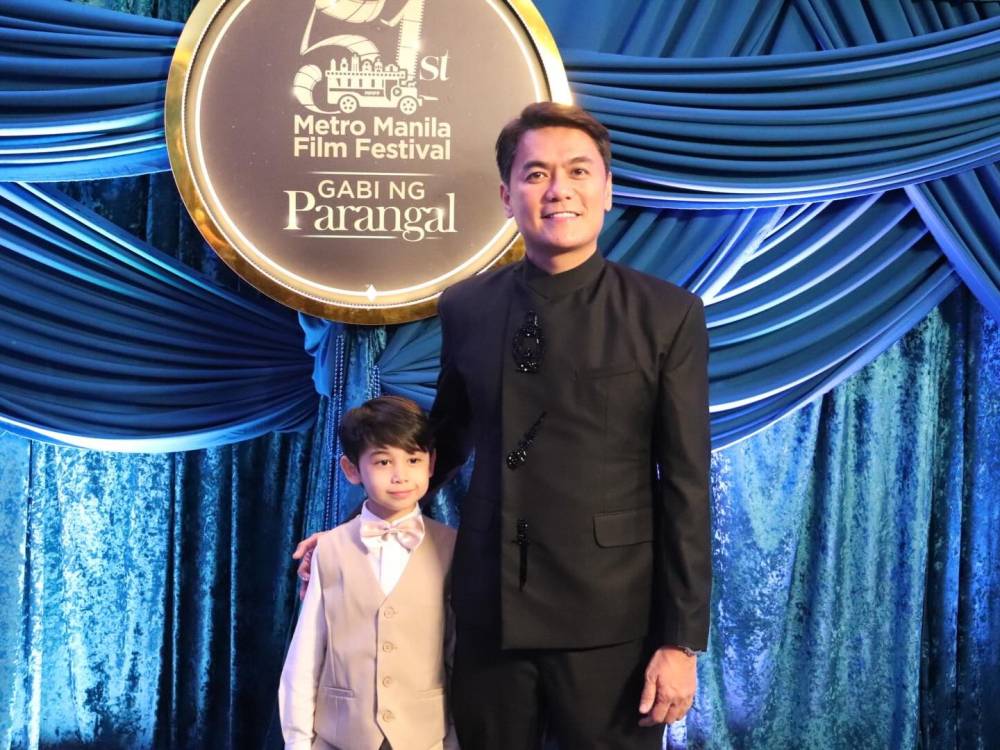
For instance, the Gender Sensitivity Award—a recognition first given by the MMFF in 2003—was created to pull the industry away from using queer roles as punchlines and to promote awareness of gender equality concerns in film. More than two decades later, director Jun Robles Lana had already won two of those trophies (four if you count similar awards from other bodies), and at this point, he’s wondering why he needs to get another one, when gender sensitivity should by now be the “bare minimum” for storytellers.
Accepting the citation for “Call Me Mother” (also hailed Third Best Picture with “Manila’s Finest”), Lana expressed gratitude for the award—he takes it seriously, he says, even if it’s often seen as a consolation prize. “But I hope that one day, we won’t have to give out this award anymore.”
From an advocacy to a movement
The gap to bridge is much wider in Go’s case. Her Best Actress win is significant, but whether her trophy becomes a mere souvenir or a ticket to a full-fledged career remains to be seen. While queer inclusion in film is comparatively more progressive, representation of people with disabilities remains virtually nonexistent—a void that “I’mPerfect,” which also won Best Picture and the Special Jury Prize for Best Ensemble, aims to address.

The film is the first of its kind—and quite frankly, a gamble. It took a decade of pitching before it found a producer in Nathan Studios. In the current climate, producing a film—even with marquee names—doesn’t guarantee a profit. What more for one that stars first-time actors with Down syndrome?
But through her film, director Sigrid Andrea Bernardo hopes she was able to convincingly show that people with Down syndrome can be capable actors and that their performances can inspire trust among future producers. If not, she would like to think she has shaken up the industry—or at the very least, nudged it ever so slightly.
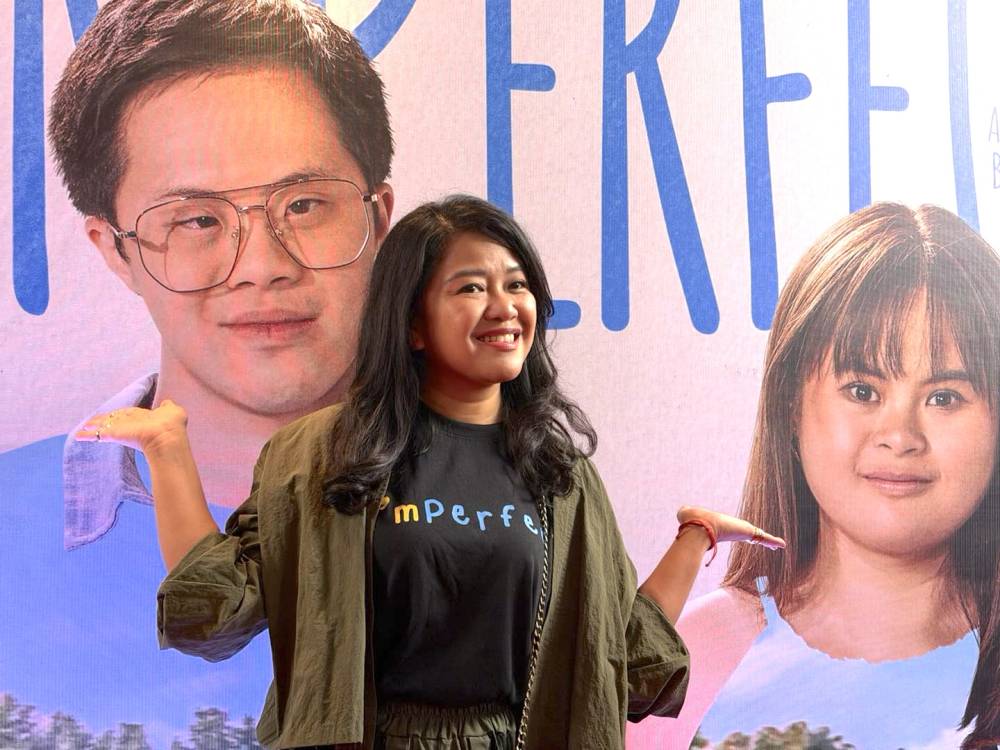
“It’s always seen as an advocacy. Now it’s time to treat it as a movement. Andito na tayo. Dapat kasama na talaga sila. Let’s not stop here,” Bernardo tells Lifestyle Inquirer. “Let’s give them work—and not just as actors.”
Embracing changes
What Vice Ganda and Go achieved was historic. But unless the industry acts and is willing to make meaningful changes, their wins will remain just that—entries of firsts in the record books.
For queer actors, this means more varied and prominent roles, recognition and criticism that focus on their craft, and, perhaps most crucially, increased visibility for lesbians, trans men, and other underrepresented identities within the community.
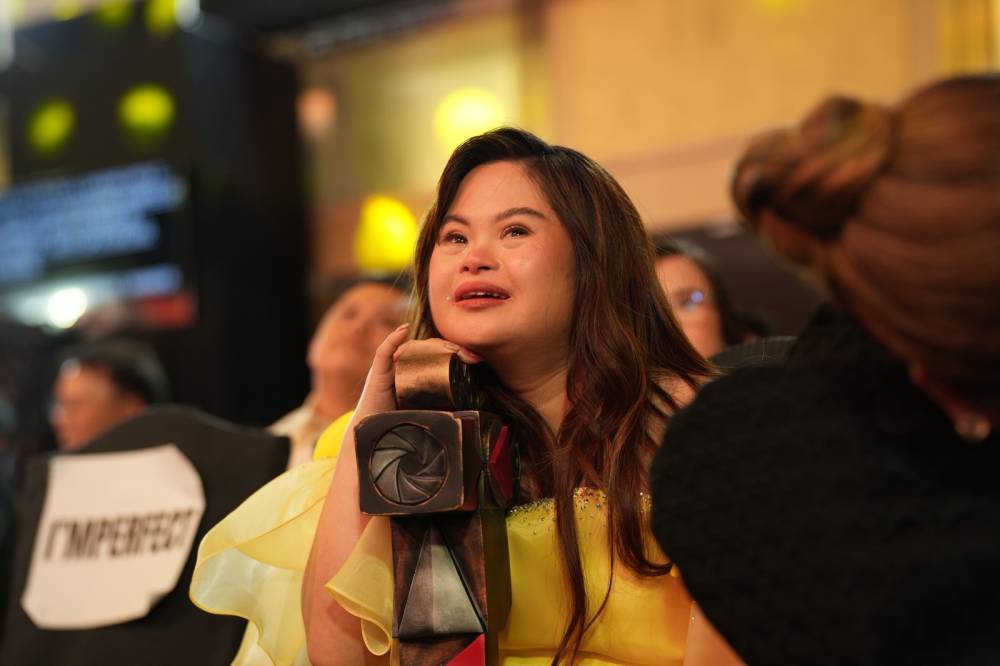
For actors with Down syndrome or other disabilities, this entails more inclusive production environments, casting opportunities, and roles that aren’t defined by their conditions or reduced to cheap sob stories. Because if drive were ever in question, Go certainly isn’t lacking it. “I want to work,” she says.
In the end, true progress will not be measured by trophies, but by what the industry makes of them. As Lee points out, the boundaries have been pushed. But Lana and Bernardo stress that we should also strive for a world where there’s no longer any need for special awards or novelty participation.
“It’s not every day the industry rewards queer actors and, now, an actor with Down syndrome. I hope Filipinos realize that what happened is part of history,” Bernardo says. “Nagbago na ang takbo ng mundo. We have to adapt to these changes.”