










Volunteering with children can build character and create lasting family memories

When Cami Teacoach’s son turned three, she set out to find volunteer opportunities they could do together. He made Valentine cards for senior citizens. They hiked and picked up trash. He helped harvest produce at community gardens and made seed balls out of mud, throwing them into the forest to promote wildflower growth.
Teacoach had reached out to many organizations looking for volunteer projects that she could do with her young child, but most places said no, so she came up with her own. “Everyone was like, ‘A 3-year-old can’t do that,’” Teacoach says. “And I was like, ‘No, I swear, he really can if you would just give him a chance.’”
Volunteering with children can instill confidence in youngsters, teach social and problem-solving skills, and provide unique ways for families to bond. During the holiday season, many people seek such opportunities, looking for ways to give back. But often nonprofits seek helpers who are at least 18 years old. Finding volunteer work to do as a family with young children can be challenging, but there are opportunities if you persist.
“In a turbulent time in our world, families—and parents in particular—are very interested in showing their kids how they can help out and how they can give back,” says Polly Lagana, executive director of Volunteer New York!, which connects people with service opportunities.
Children excel at activities such as sorting coats, packing groceries, and following through on tasks, says Sapreet Saluja, executive director of New York Cares, which works with organizations to develop volunteer programs in New York City.
Here are some other ways to involve little ones in projects that help the community.
Provide choices
Children prefer to have agency and information to make a decision, so include them when you’re choosing an activity, Lagana says.
“Let them know what problem you’re trying to fix in your community, and maybe one or two options of how that problem can be fixed,” Lagana says.
Consider volunteering for a mission that you can explain to your child, such as cleaning up litter at a park.
“Kids are unbelievably curious. They ask questions about what they’re doing, what they’re seeing, what they’re feeling, what they’re hearing, and it opens up a dialogue,” Saluja says. “It helps you see even at a young age some of the challenges that society is facing, and it gives you agency to know that you can be a part of the solution.”
Sharing food
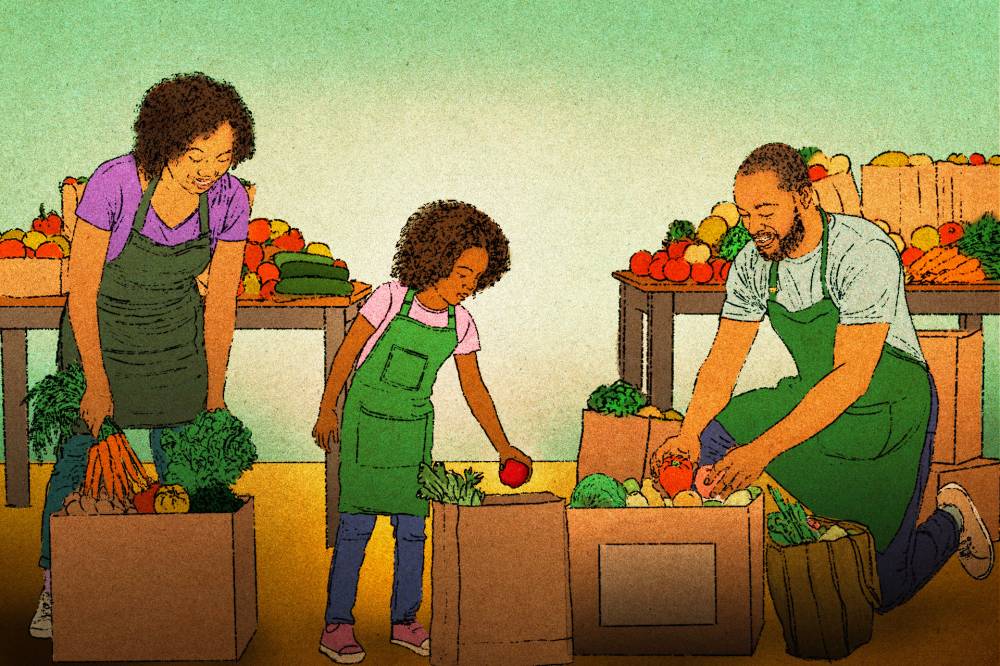
Children understand hunger, and they can help alleviate the problem. They can sort grocery boxes at a food pantry or help deliver sustenance to home-bound individuals.
Aviva Davis was about eight years old when she and her brother Brendan began helping her parents deliver Meals on Wheels to senior citizens and medically frail individuals in Denver. Initially, they rode in the car with their parents and helped bring food to the door. When they were older, they took turns driving.

“It definitely opened my eyes to what the world is like outside of our bubble. We saw all sorts of different things, and I saw [that] not everyone lives the same way,” says Davis, now 17. “But even at such a young age, I could realize it’s amazing what we’re doing that we could help people who aren’t as lucky as we were.”
Davis became a resource at school for fellow students looking to volunteer. She still does monthly meal deliveries with her parents. “It’s a great chance for us to catch up as a family,” says her father, Seth Davis. “When we’re not all on our phones, you get some pretty cool quality time.”
Her brother is now in college, but when he’s home, they do deliveries together. “The older they get, the harder it is to get that time together,” says their mother, Bonnie Davis, who found the Meals on Wheels opportunity after extensive research.
Create your own opportunities
When Teacoach couldn’t find organizations willing to accept her toddler, she started a group in Pittsburgh called VolunTOTs, which creates service opportunities for children as young as three. The children and their parents pack 500 boxes of groceries to distribute to families in need, play bingo with seniors in nursing homes, and make dog treats for an animal rescue center, among other projects.
Friends make it fun
Children can be more willing to try new activities with a buddy, so consider signing up with people you know. You can also connect with a nonprofit in need of a service and invite other families over to do a project together.
“It’s a win for everybody. You get quality time, you’re raising your children with what feels like good values, and people benefit,” says Bonnie Davis, who organized a drive for menstrual supplies.