








What food tells us about Filipino psychology

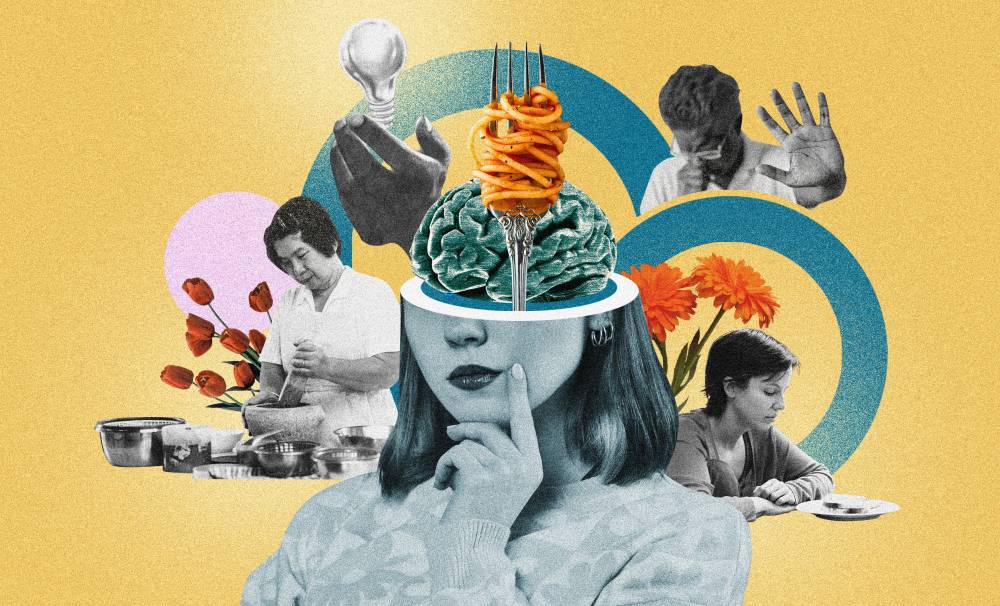
I love Filipino spaghetti. It has a strange, sweet sauce made from banana ketchup and whatever meat was left over—hotdogs, maybe canned corned beef. Filipino spaghetti is present in every handaan, for whatever occasion. You can tell that it is such a staple Filipino food with the fact that international fast food chains in the Philippines have to offer spaghetti on their menus. In fact, go anywhere else around the world, and you will see how the same restaurants will have at least one dish that is popular locally. For us, apparently, it is Filipino spaghetti.
It is a misconception that the spaghetti we enjoy is a corruption of the original Italian. Our spaghetti is a Filipinized version of the American-style spaghetti, which they got from the Italians who immigrated there. In fact, the Italians may have gotten the idea for noodles from the ancient Chinese! So, aside from the Filipino spaghetti we so enjoy, we also have all types of pancit—also from the Chinese.
Pancit is so popular that each town will have their own spin on it, depending on whatever they have for sahog. Coastal towns will likely have seafood in their pancit, whereas other places may have pork or chicken. There is also pancit that you put in soup, such as mami. But, actually, the word “pancit” does not mean noodles; Gloria Chan-Yap points out that it comes from the Hokkien for “something that is easy to cook.”
Most, if not all, of what we currently enjoy and celebrate as traditional Filipino dishes are stuff we have developed across time, as a form of adaptation (like sisig, which originated from discarded pig heads near military bases) or as a way of assimilating foreign practices (like adobo, which is actually a Latin American way of preparing meat; the soy sauce was a Chinese addition). So what makes it “Filipino”? Actually, it is the fact that we adapt it to our particular tastes, and that we enjoy it together.
The culinary arts have so much influence on our language and customs. This has been explored by food writers such as Doreen Fernandez. When we are deeply immersed in something, such as in a hobby or activity, we say we are “babad”—that is, marinated. We used to say that being on the telephone a lot, or watching too much television, was “telebabad.” When we feel that a sports game, pageant, or raffle was manipulated in any way, we say that there was some “luto” involved—literally, that it was cooked by someone. If we feel like someone is not yet ready to be given some responsibility, we say that they are still raw, “hilaw.” What I am doing in this essay, by taking apart and investigating different aspects of our culture, is like carefully slicing meat or peeling off skin—that is, “paghimay.”
The stomach is valued in our folklore because we believe that it is where the soul resides. When someone gets bruised or wounded, we say, “Huwag ka mag-alala. Malayo sa bituka!” When we meet someone, and we want to get to know them, we invite them to eat with us: “Tara, kain tayo!” Baylan across the country offer food and wine to spirits whenever they need to talk to them, either to ask for blessings or cures. It is almost like a lunch meeting!

We know that a person is sick or feeling down when they do not have a healthy appetite. We notice this in children, friends, and even our pets. We say, “Wala yata siyang gana,” and we might start to worry. According to psychologist Violeta Bautista, gana is an important aspect of our holistic well-being, or “ginhawa.” When we cannot take something anymore, we say that we cannot stomach it: “Hindi ko na masikmura!”
So, let us be mindful of what we put into our bodies—this is true for nourishing food, but it is also true about the kind or hurtful words people might say about us as well as the stress we willingly accept at work. Remember: Good food is food that is shared, and there should always be an extra seat on the table for our kapwa.