
What happened in 1966?

Like a horse boldly galloping across the field, the Year of the Fire Horse invites you to take the bull by its horns—to chase after your dreams and aspirations without hesitation. 2026 is even said to be a year of breakthroughs, with prior efforts finally bearing fruit.
With the horse being associated with the fire element, a double fire year is quite rare in the Chinese Zodiac, so much so that the year of the Fire Horse only occurs once every 60 years. Double fire years also indicate periods of rapid change. This may entail moments of widespread uncertainty, from changes in regimes to the onset of wars.
In fact, the last year of the Fire Horse was in 1966—marked by moments that defined a turbulent chapter in history. It also begs the question: Will 2026 follow the same path?
One of the worst fires in Philippine history
On Feb. 7, 1966, a fire originating from a lumberyard quickly spread and ravaged at least 12 blocks of commercial and residential establishments in Iloilo City, leading to around P50 million in property damage. According to the Iloilo City Government, this tragedy led to the establishment of the Iloilo Filipino Chinese Fire Prevention Association Incorporated (now known as Federation Fire) to further improve the city’s fire prevention and fire management.
At this time, the national government also passed Republic Act No. 4774, or better known as “An Act Appropriating Five Million Pesos For Relief And Aid To The Fire Victims In Iloilo City And Roxas City.”
How a dog saved the World Cup
Just months before the 1966 World Cup, the Jules Rimet trophy was stolen from its display case in Westminster Central Hall. Edward Betchley, a former soldier, claimed the heist and demanded £15,000 in exchange for the trophy—though he was later arrested, but without the trophy in sight.
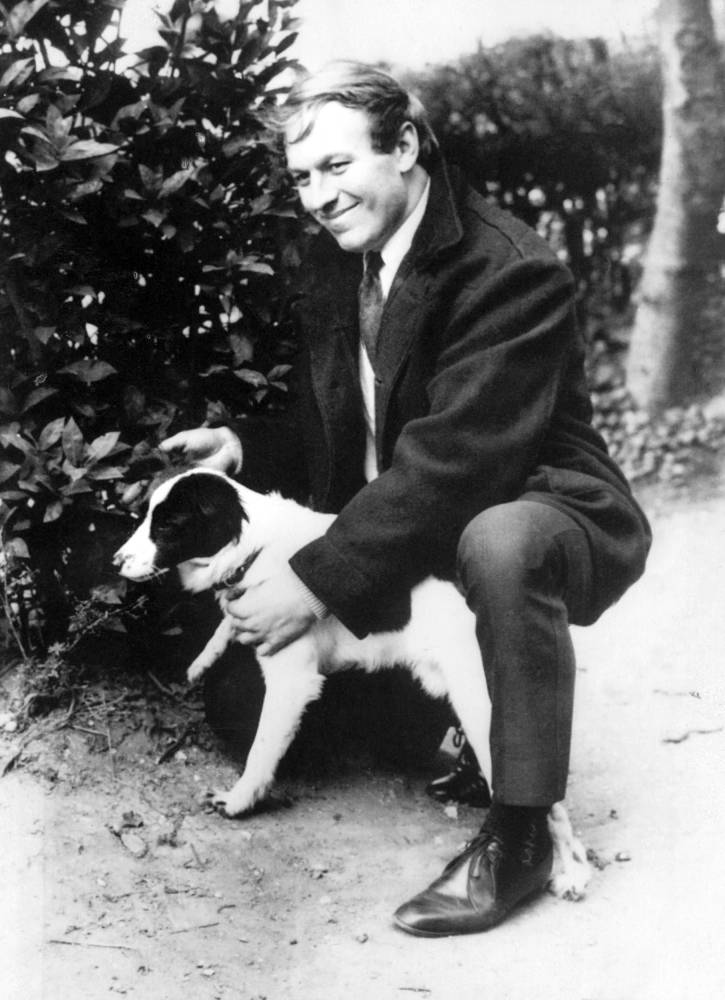
On March 27, 1966, Dave Corbett took his dog Pickles for a walk, who would, later on, find the missing trophy wrapped in newspaper.
Pickles was awarded a medal by the National Canine Defence League, while Corbett earned around £5,000 for the discovery. He later passed away and is now buried in Corbett’s garden in Lingfield.
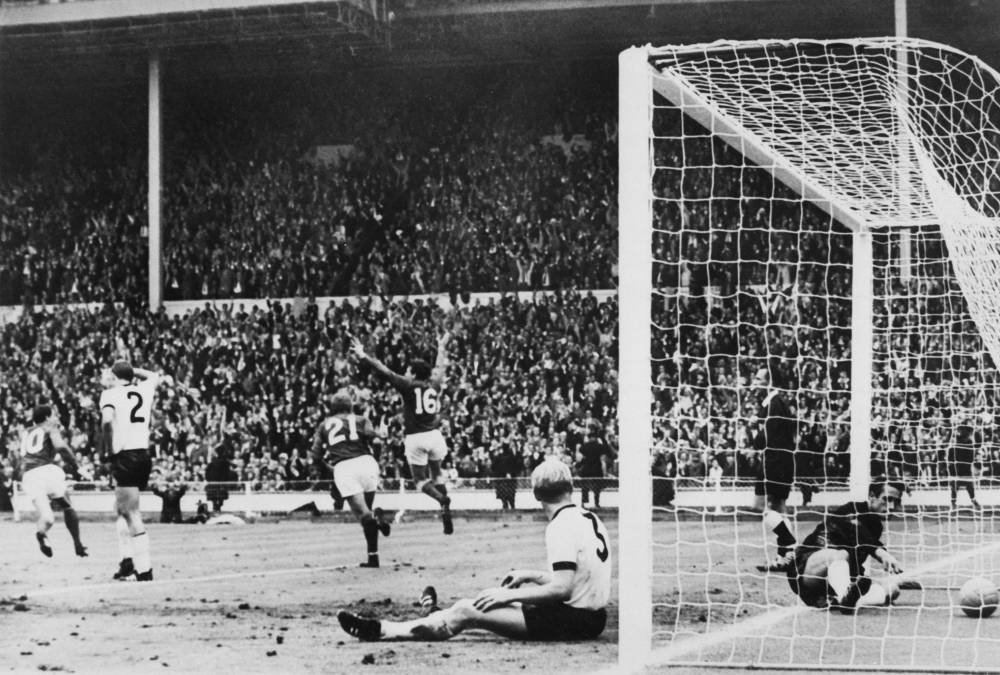
Following England’s 4-2 victory over West Germany at Wembley Stadium, this also marked the country’s only World Cup title to date.
The height of the Vietnam War
Roughly two years after the United States formally entered the Vietnam War, 1966 saw President Lyndon Baines Johnson further escalate military activity in the country. Several operations and bombings resulted in over 6,000 American and 61,000 Vietcong deaths. By the end of the year, there were around 400,000 US troops stationed in Vietnam.
We hosted the Manila Summit Conference
Attended by President Lyndon Johnson, President Ferdinand Marcos, Sr. of the Philippines, Chief of State Nguyen Van Thieu and Prime Minister Nguyen Cao Ky of Vietnam, President Chung Hee Park of Korea, and Prime Ministers Harold Holt of Australia, Keith Holyoake of New Zealand, and Thanom Kittikachorn of Thailand, the Manila Summit Conference discussed how Allied forces would withdraw from South Vietnam, on account of North Vietnam being the first to reduce their forces in the area.
But North Vietnam rejected these conditions, continuing the war until the communist victory in 1976.
Around this time, former President Marcos formally established the Philippine Civic Action Group – Vietnam (PHILCAG–V) to support both American and South Vietnamese forces.
The Cold War endures
Between the launch of Luna 10, the Soviets’ first man-made probe to orbit the Moon, and their provision of military support to North Vietnam forces, the Cold War in 1966 was mild to say the least—especially when compared with the heightened hostilities that reached their peak in 1962’s Cuban Missile Crisis.

The Beatles and a tale of Philippine hospitality
The Beatles officially retired from touring in 1966. While part of it was due to the band’s disdain for technical issues and the increasing difficulty of performing in large crowds, their infamous experience in the Philippines certainly didn’t help.
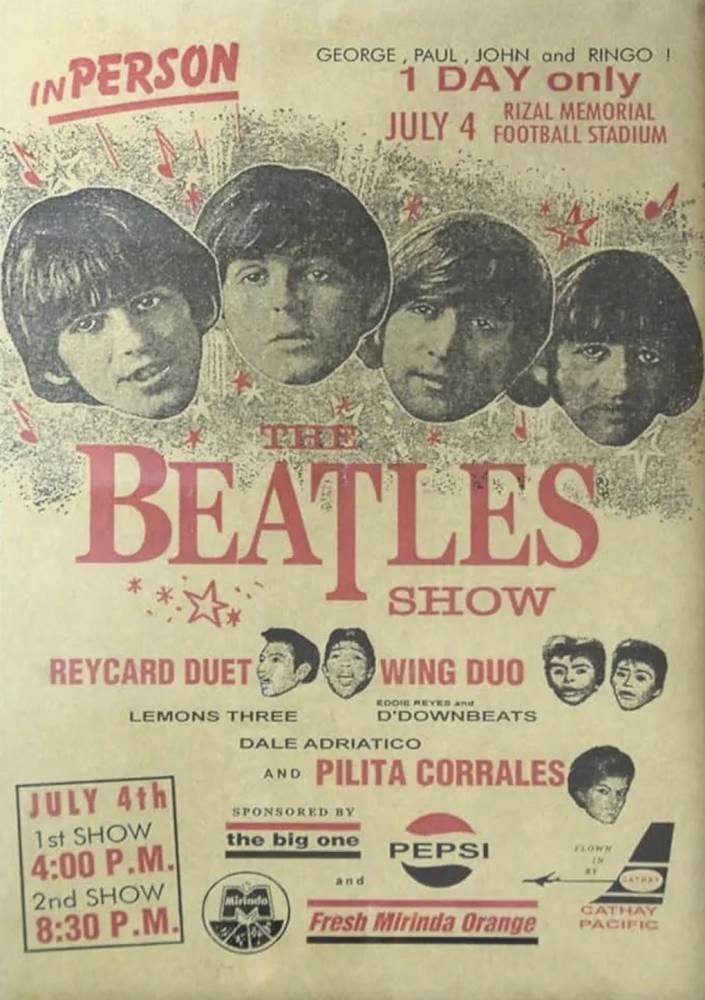
During their visit to the Philippines in July 1966, an arrangement was made for The Beatles to join the first family in Malacañang—an invitation the band was only made aware of in the morning. While their performances at the Rizal Memorial Stadium went off without a hitch, their departure was marked by pettiness and a complete absence of Philippine hospitality, all because the First Lady took offense to the band’s absence from her party.
Just how bad was it? The band’s security escort was missing; escalators were turned off, forcing The Beatles to carry their own luggage; angry mobs harassed the band; and their concert earnings were suddenly taxed by the Bureau of Internal Revenue (BIR).
Mao begins the Great Proletarian Cultural Revolution
In 1966, then CCP chairman Mao Zedong launched the Great Proletarian Cultural Revolution, which was aimed at preserving Chinese communism by purging all forms of capitalism and traditional values from Chinese society.
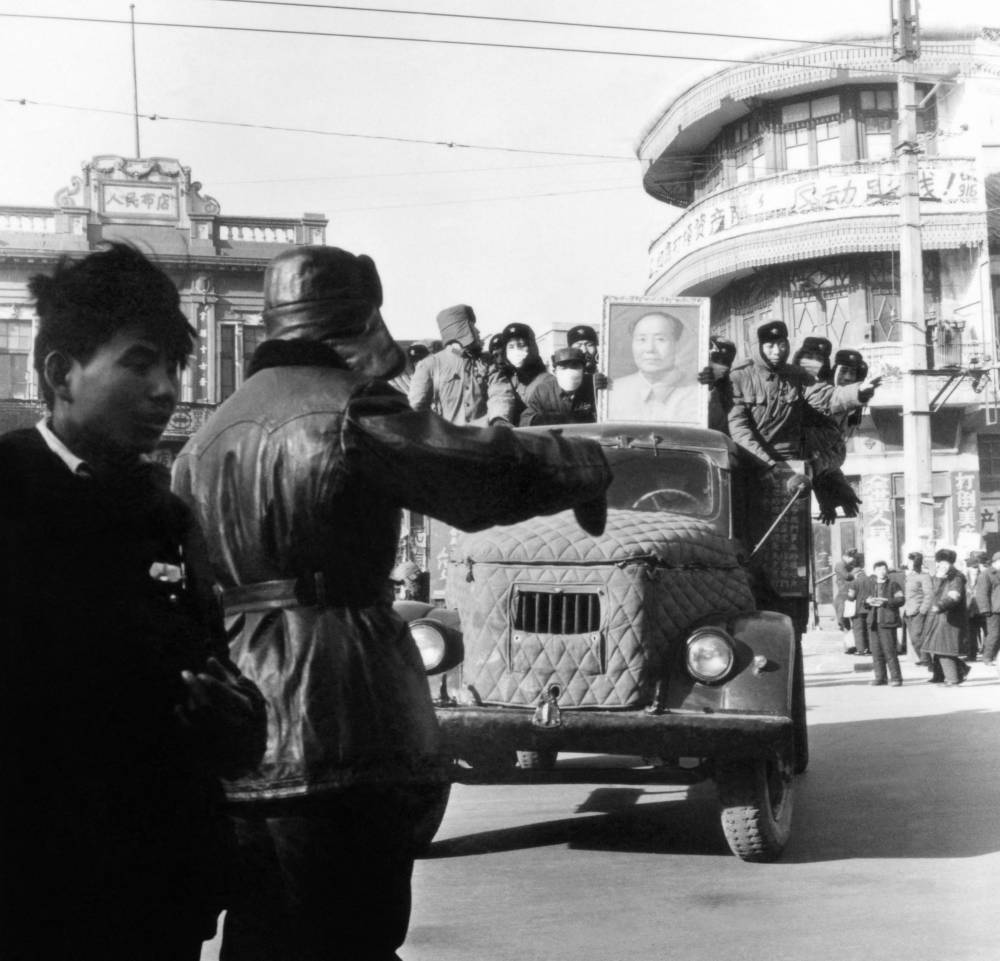
At this time, both the elderly and forward-thinking intellectuals were under attack from Mao’s Red Guard, a student-led paramilitary group, under the guise of removing “bourgeois” infiltrators.
Outside ideological reasoning, it is also believed that Mao launched the revolution in a desperate attempt to reclaim power and favor following the failure of his Great Leap Forward, where his effort to industrialize China resulted in around 45 million deaths due to famine and economic depression.