










When seating sets the tone

In fashion’s most compelling runway moments, chairs do more than seat the audience. They establish scale, dictate atmosphere, and quietly instruct viewers on how to read the clothes. The coolest chairs aren’t defined by comfort or luxury alone, but by how seamlessly they fold into the show design and become part of the narrative rather than a backdrop.
Across seasons and cities, these seats reveal how deeply fashion and space are intertwined.
Bottega Veneta Spring/Summer 2026 — Milan
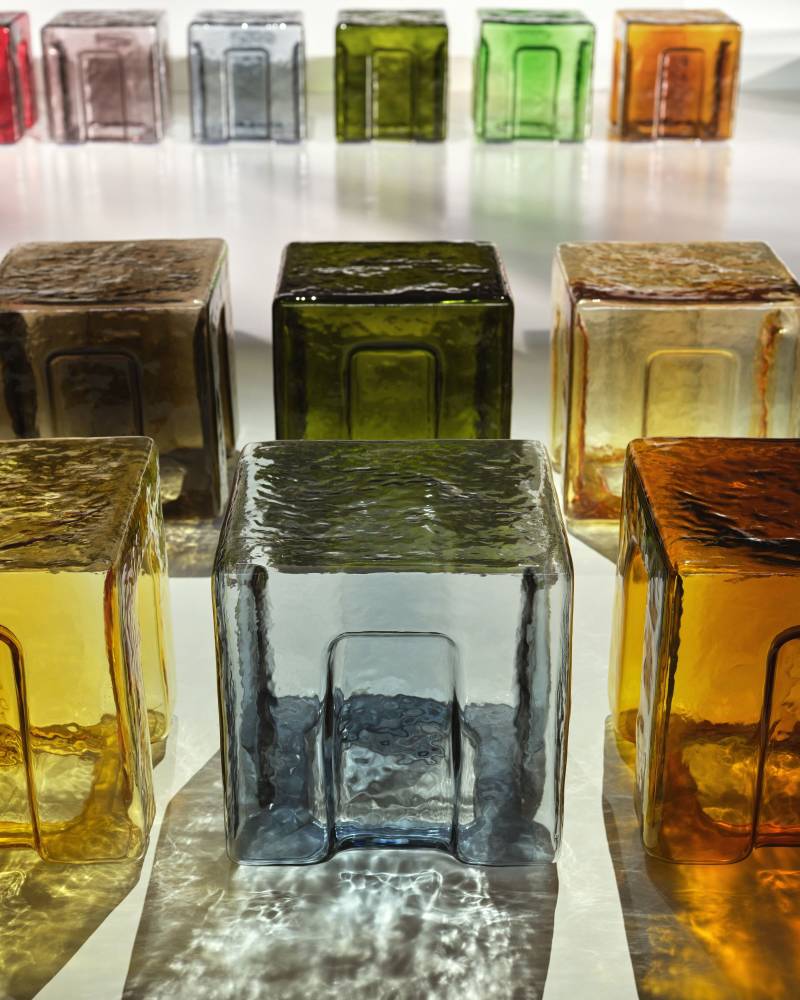
For Summer 2026, Bottega Veneta introduced translucent Murano blown-glass stools designed by 6:AM, scattered across the runway like fragments of water. Each glass cube balanced architectural solidity with organic imperfection, its surface catching light and shadow as models moved through the space.
The seating echoed the collection’s exploration of fluidity and tactility. Transparency, weight, and motion were already present in the room before the clothes appeared, reinforcing a vision of luxury that felt elemental and sensorial.
Louis Vuitton Cruise 2026 — Avignon
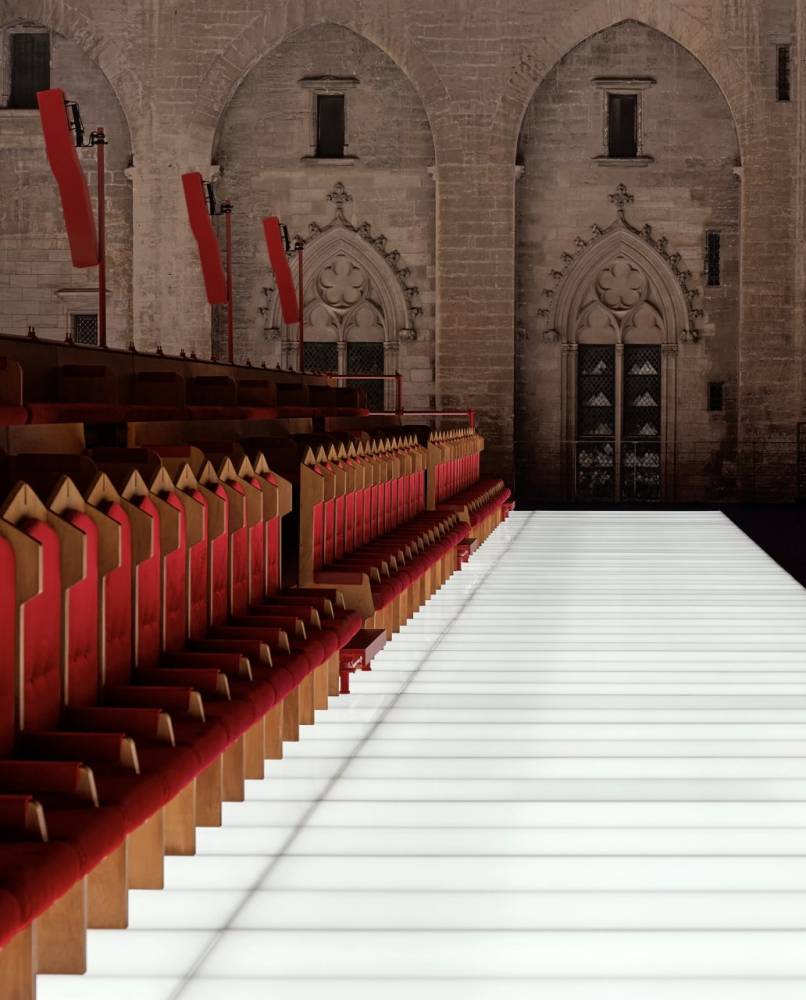
Set inside the Palais des Papes, Louis Vuitton’s Cruise 2026 show was framed by rows of empty red velvet theater seats glowing in the background. The audience was instead placed on restrained wood-and-velvet chairs reminiscent of ecclesiastical furniture.
This contrast heightened the collection’s gothic and medieval undertones. Seating became part of the architecture, reinforcing themes of ritual, power, and history that ran through Nicolas Ghesquière’s silhouettes.
Lacoste Spring/Summer 2026 — Paris
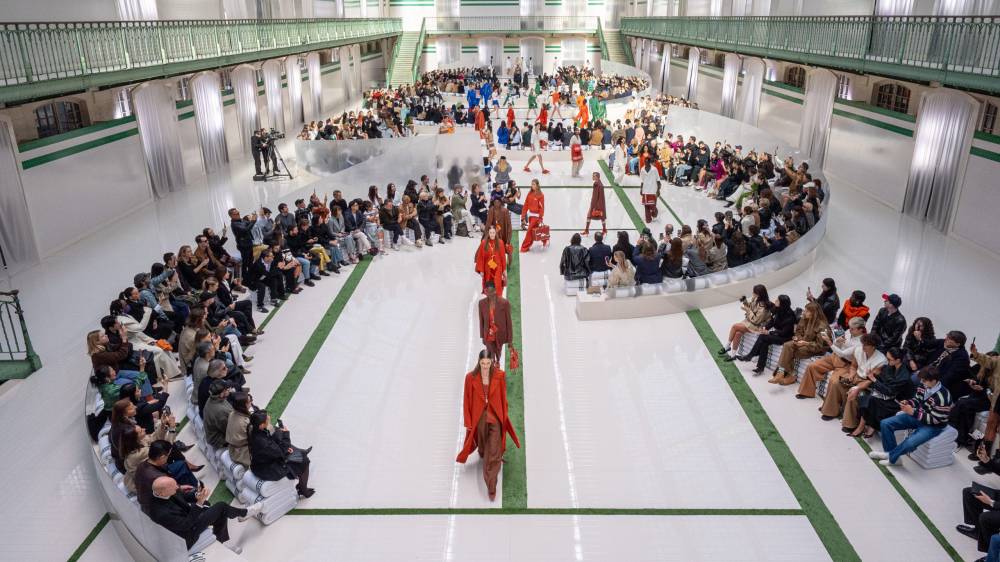
At the Hall Eiffel, Lacoste transformed the space into a stylized locker room. Bench-like seating followed the logic of sport, echoing the curved platforms and green court markings etched across the white floor.
The chairs reinforced the collection’s focus on performance and athletic DNA. Everything felt engineered for movement, mirroring Lacoste’s enduring balance between athletic function and modern polish.
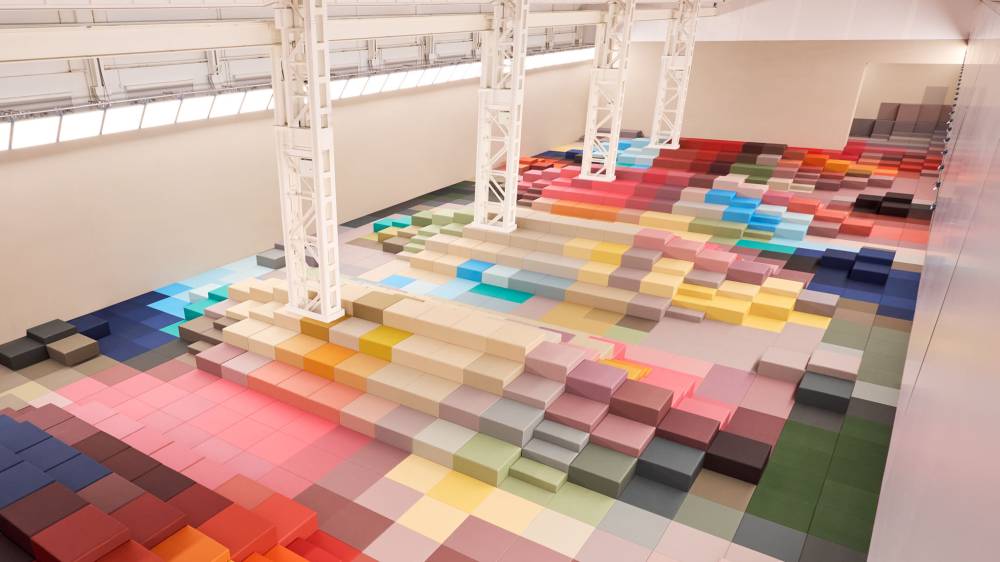
Fendi Spring/Summer 2026 — Milan
Marc Newson’s set for Fendi SS26 featured vibrant seating cubes stacked at varying heights inside Palazzo Fendi. Inspired by quilts and floral compositions, the pixel-like forms doubled as seats and sculptural elements.
Their shifting colors and modular arrangement reflected the collection’s emphasis on hue and texture. Guests were seated within a living composition, blurring the boundary between audience and set.
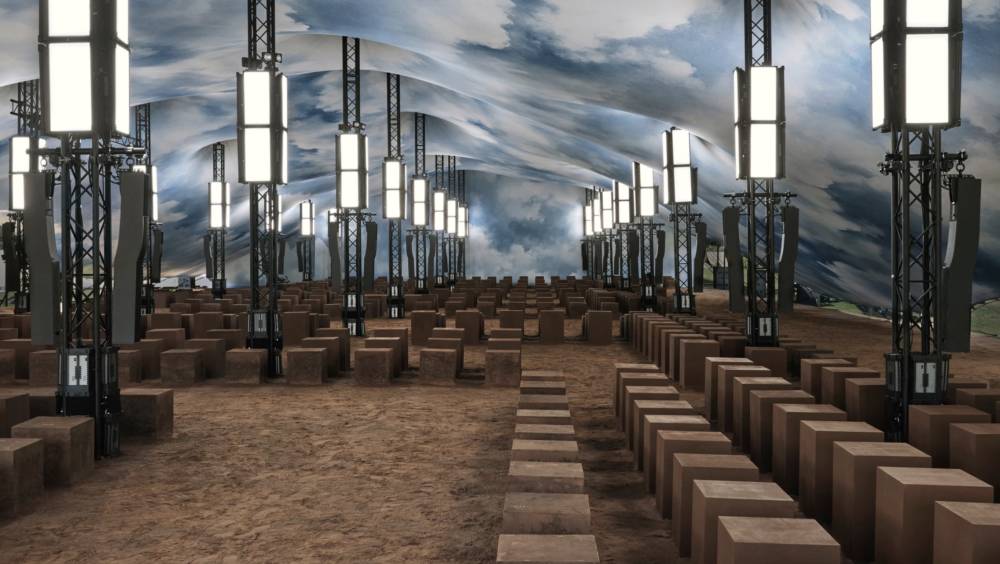
Burberry Spring/Summer 2026 — London
Burberry staged its SS26 show inside a custom tent designed to evoke a British summer music festival. Cube-shaped seats in earth tones lined the runway beneath a cloud-printed canopy.
The seating grounded the collection in nostalgia and outdoor culture. Informal and communal, the chairs echoed the brand’s exploration of British identity, weather, and lived-in elegance.
Bottega Veneta Spring/Summer 2025 — Milan
For SS25, Bottega Veneta seated guests on animal-shaped leather beanbag chairs known as The Ark. Plush and playful, the seating transformed the runway into an immersive, almost childlike landscape.
The chairs mirrored the collection’s warmth and curiosity. Rendered in exquisite leather craftsmanship, they softened traditional runway hierarchy while reinforcing a narrative rooted in emotion.
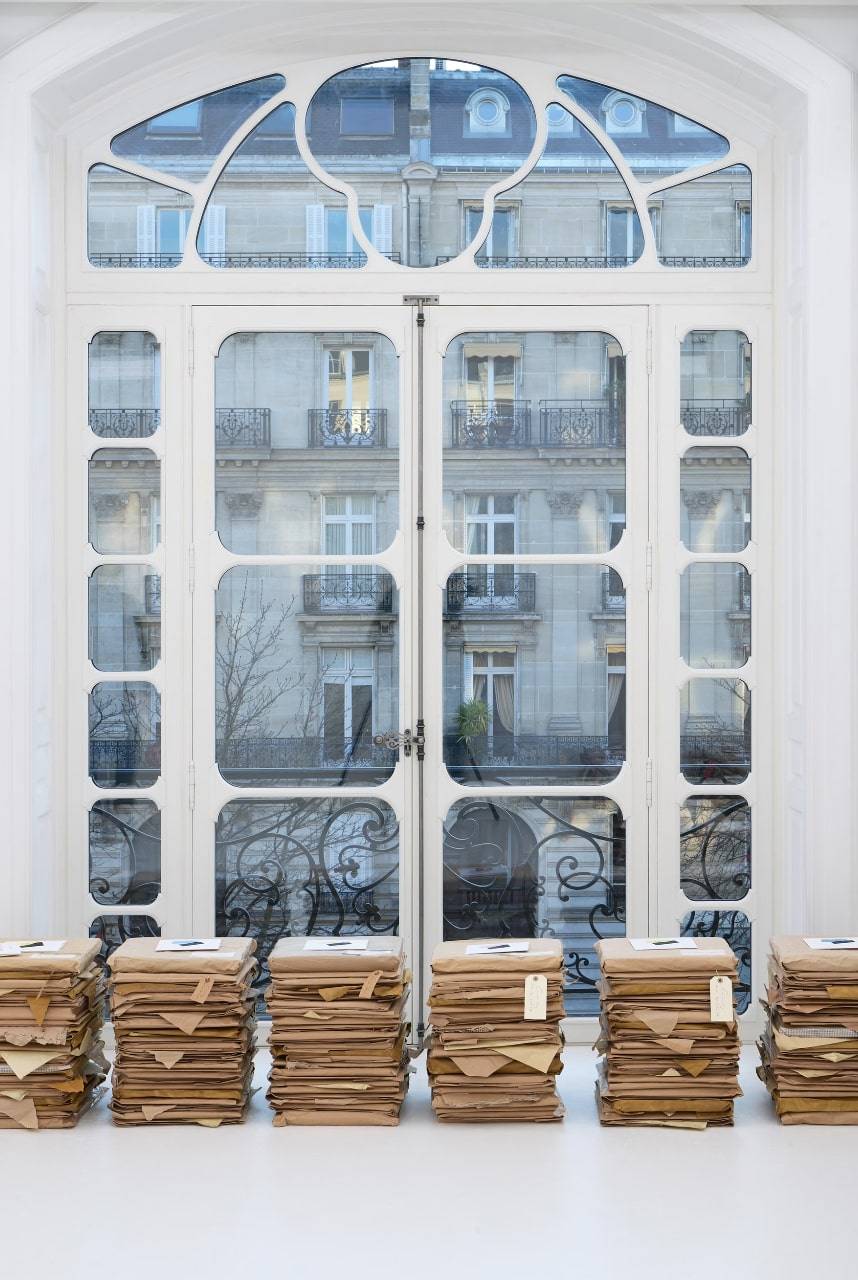
Givenchy Fall/Winter 2025 — Paris
Sarah Burton’s debut for Givenchy drew from newly discovered archival paper patterns from Hubert de Givenchy’s early years. Seating reflected this history, referencing the texture and tone of pattern envelopes and atelier materials.

The effect was intimate and reflective. Guests were seated within the language of process and heritage, aligning with a collection focused on couture foundations and rediscovery.
Jacquemus Fall/Winter 2024 — Capri
At Casa Malaparte, Jacquemus limited the audience to just 40 guests. Seating was minimal and architectural, allowing the modernist villa and surrounding landscape to dominate the experience. This restraint mirrored the collection’s focus on intimacy, place, and proportion. Chairs existed to frame the moment rather than compete with it.
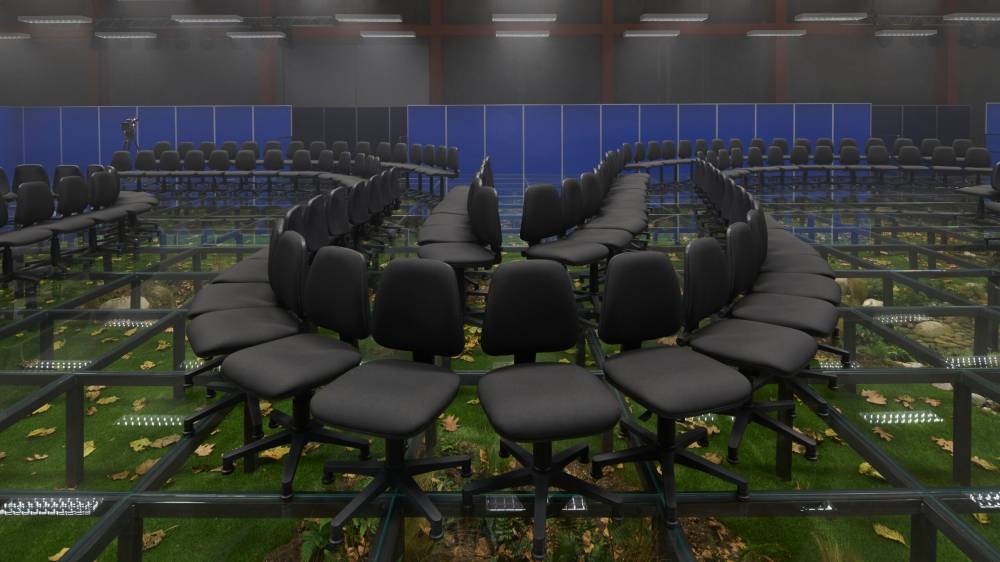
Prada Fall/Winter 2024 Menswear — Milan
For FW24 menswear, Prada lined the runway with ordinary office chairs, set against a backdrop that merged interior spaces with natural landscapes. The familiar seating underscored the collection’s central tension between routine and instinct. Guests sat in symbols of modern work life while watching clothes that reflected humanity’s attachment to nature and seasonal rhythm.
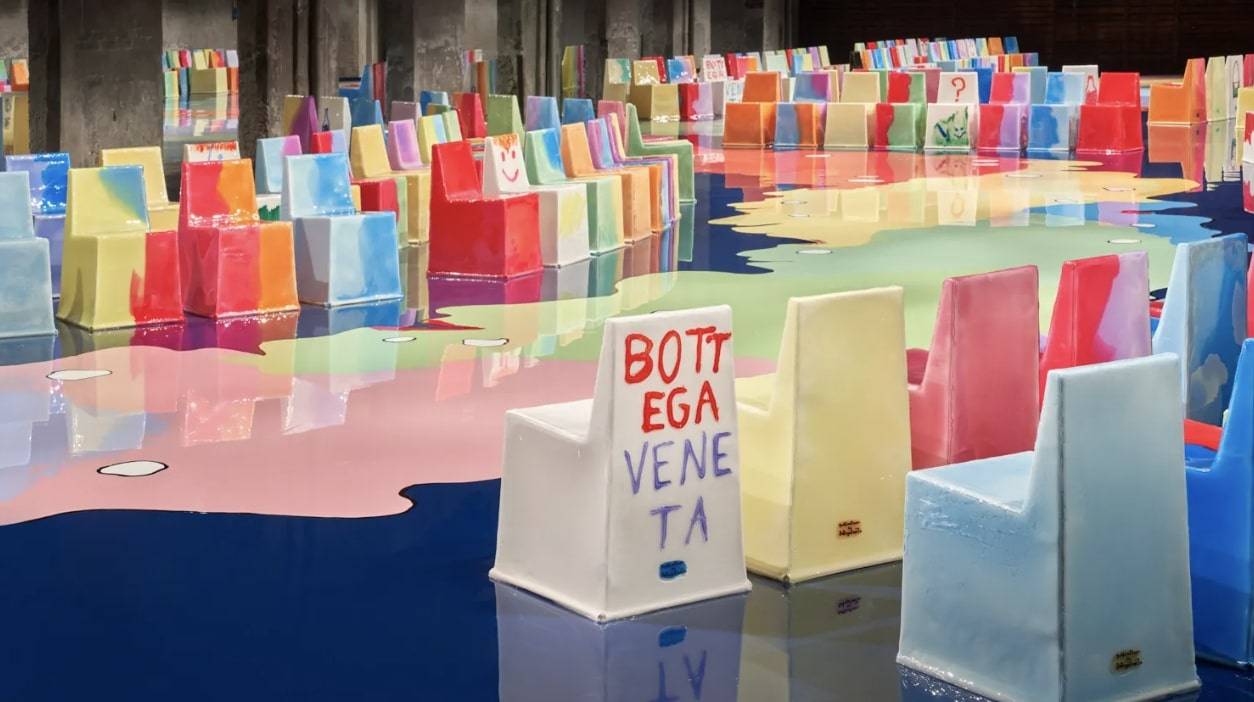
Bottega Veneta Spring/Summer 2023 — Milan
Gaetano Pesce’s one-of-a-kind resin chairs for Bottega Veneta SS23 formed a river of color along the runway. Each chair was unique in shape and hue, celebrating individuality. The seating echoed the collection’s embrace of difference and emotional expression. Together, the chairs became a visual manifesto for human variation.
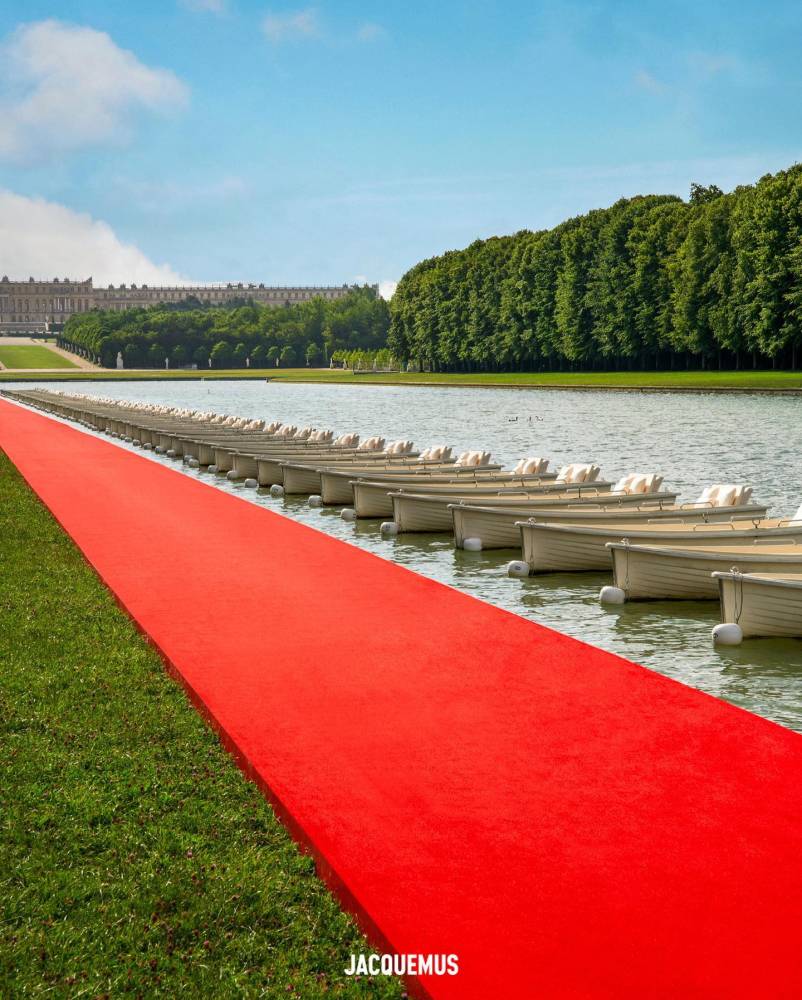
Jacquemus Fall/Winter 2023 — Versailles
For “Le Chouchou,” Jacquemus seated guests in white wooden rowboats floating along the Grand Canal at Versailles. The runway stretched beside the water, turning seating into movement and perspective. This arrangement reframed the scale of the collection. Viewing from water level softened the spectacle, aligning with a vision of fashion that felt poetic rather than grandiose.
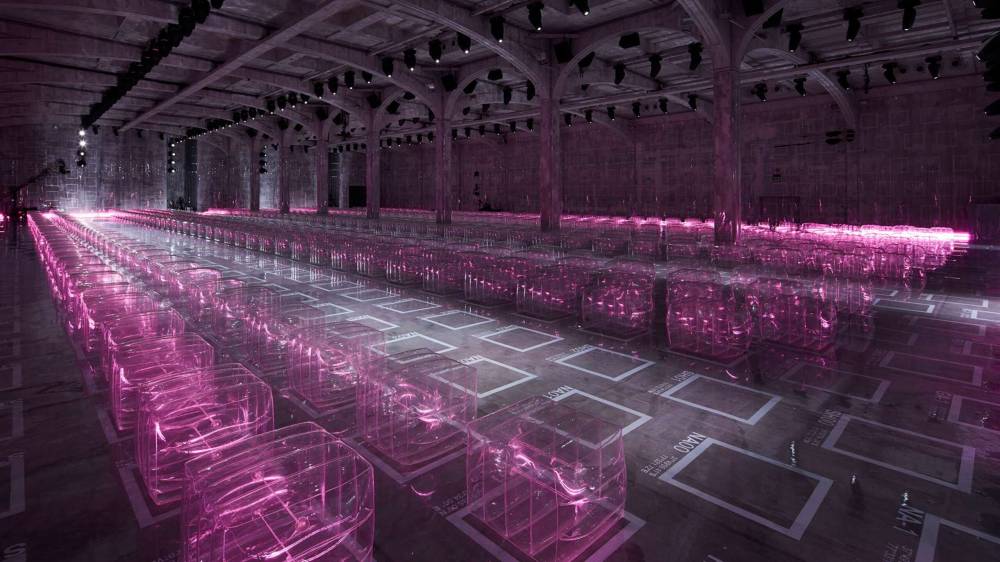
Prada Spring/Summer 2019 — Milan
Prada’s SS19 show featured transparent inflatable stools, re-edited from a 1960s Verner Panton design. Placed within a rigid Cartesian grid, the stools appeared almost immaterial. Their fragility contrasted with the show’s structural geometry, echoing a collection that explored tension between order and lightness.
Miu Miu Spring/Summer 2020 — Paris
At the Palais d’Iéna, Miu Miu introduced OSB-wood chairs as part of an off-center architectural installation. The rough, industrial material disrupted the monumentality of Auguste Perret’s concrete space. The seating reflected the collection’s ongoing dialogue between refinement and rebellion, youth and authority, elegance and friction.