






When the city starts to hum

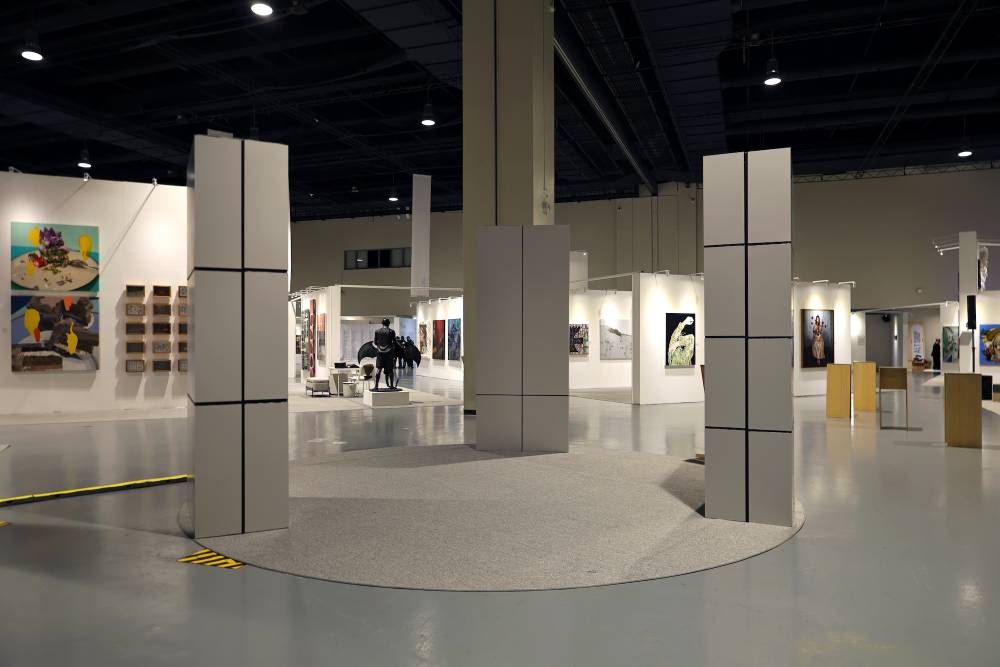
Presentations with multiple artworks, whether in group shows or art fairs, can feel polished to the point of sterility and silence. Or it can go the other way, with sensory overload from all the light, color, and sound. This year at ALT Art 2026, one work seemed to meet the tension in between, with an art installation that seemed to vibrate with a tangible presence you couldn’t miss.
“Superstructures,” the latest installation by Miguel Lorenzo Uy, hummed like the energy of a city on the move. Using aluminum composite panels, the same material that skins many buildings in Metro Manila’s central business districts, Uy transformed something corporate into an artwork charged with life.
The work was presented in collaboration with Nagaraya, the quintessential Filipino cracker nut that has recently taken on the role of cultural patron, especially through its partnership with ALT Collective.
As someone born in the ’90s, Uy grew up with Nagaraya in the background of family gatherings and long afternoons. “I want to say that this collaboration is quite nuts,” he laughs, pun fully intended.
In the same manner as the ubiquitous brand, and much like the very material he works with, Uy took something familiar and reframed it. At ALT Art 2026, he turned a surface we often overlook into something tense with life, while still accessible to many, drawing in audiences from every generation that passed by.
Linking art, cities, and our human experience
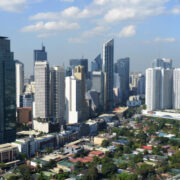
Many of the passersby at ALT Art 2026 were visitors who flocked from city centers across Metro Manila. Uy’s immersive, multisensory work “Superstructures” seemed to build on this, centering on humanity’s complex relationship with the urban environment.
The aluminum composite panels, the building material of many skyscrapers, acted as both material and metaphor. Rather than constructing static objects that simply mirrored the city’s terrain, Uy activated the surface.
His use of audio exciters was particularly exciting (true to its name). The panels vibrated, becoming the source of a localized, sonic environment. Field recordings from Metro Manila’s central business districts were layered with the heavy, grinding textures of doom metal and ambient horror, creating a foreboding soundscape that seems to pulse beneath the façade of our urban development today. These activated the senses to ponder things we usually miss but are always present.
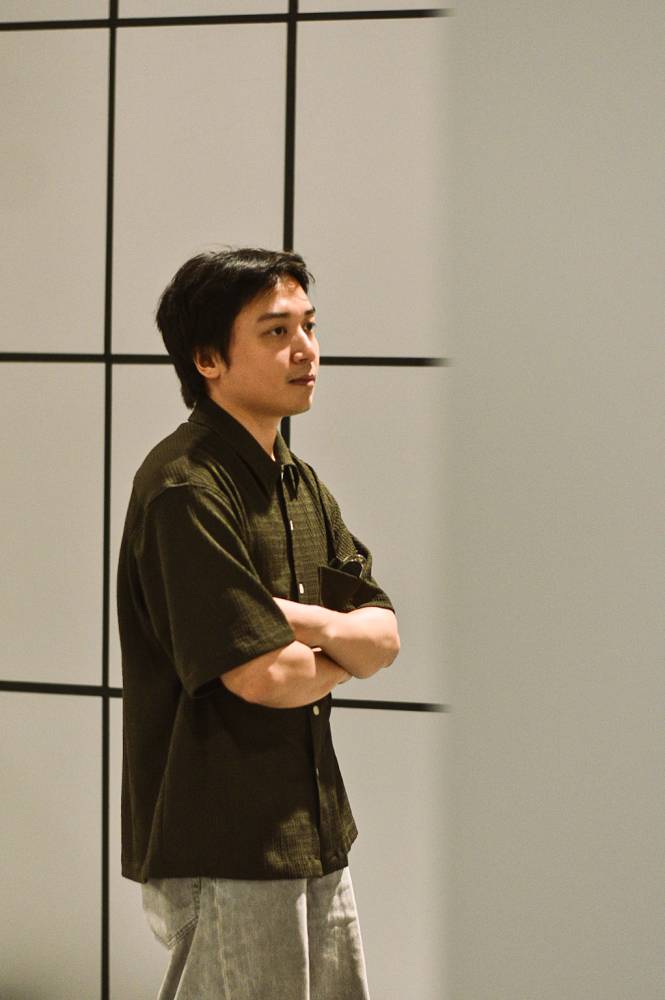
“I think it’s not just about the city but also the economic, cultural, and political systems,” Uy explains. “The city is the organism, and I wanted to deconstruct and dissect this skin through the use of the same materials used to create it… There’s this superficial quality of progress, and it’s almost always exclusive in the visual realm. Adding sound elevates and amplifies the energies it emits.”
Our environment, Uy suggests, also shapes how we perceive reality. “There are tensions between nature and nurture, progress and inequality, utopia and exploitation,” he says. “The work acts like a lens or mirror that redirects and reflects these tensions into something more tangible.”
The artist emphasizes how the work aids us to “become more conscious of our own agency… Though sometimes, to me, it is a double-edged sword—to be conscious of the world is to know that hell exists.”
Cogs in the machine
Often, in our busy, city-dwelling lives, we can all feel like cogs in the machine. Uy conveyed this conceptually, through the panels that seem to conceal, but at the same time, reveal.
“There was a connection between the veneer and how it covers up a system so perfectly designed to act like a machine and its cogs, or an organism and its cells,” he shares. “The work touches on the philosophical and existential: what it means to be independent of the machine or to be part of it.”

As he manipulated the panels, further metaphors emerged. The system is at once fragile and rigid, thin and delicate, yet opaque and formidable. The process itself was meticulous. Precise grooves must be carved with a router to bend the material and reinforce its structure. A few micrometers off and the aluminum skin tears.
“In a way, working on this project felt like experiencing the manufacturing of the city’s façade,” he says.
Into further depths
Despite its scale, Uy sees this work for ALT Art 2026 not as a culmination but as a new, added foundation to his practice.
“Superstructures” marks the third iteration of his project, following earlier, different versions in 2022 and 2024. Rather than branching outward, the artist wants to go deeper, too. “This body of work feels more like looking at the roots and the depths… There’s so much potential in developing the ideas and aesthetics surrounding this series.”
While Uy’s installation appears to examine the surrounding urban environment, he ultimately probes something more internal, questioning the structures that both constrain and sustain us, not just as city dwellers but also as very real people.
Through “Superstructures,” we encounter the hum of the city, as the persistent pulse beneath our daily routines becomes audible. And through listening, we’re pushed to remember that there are structures not just around us, but within us, too.