





When water becomes the author


How do you photograph climate change without reducing it to doom and gloom? Through multiple forms of media and a very personal archive, Filipino photographer and National Geographic Explorer Gab Mejia approaches the climate crisis with perspectives that are as poetic as they are thought-provoking.
Trained in environmental engineering and informed by Indigenous knowledge systems, Mejia has built a body of work that approaches ecology through care for community narratives. And having been published in prestigious publications like National Geographic and BBC, as well as having exhibited internationally, he’s established himself as one of the country’s youngest yet most distinctive visual storytellers.
For his latest work for the Foto Bali Festival at Nuanu Creative City, alongside 36 artists from 24 countries, Mejia draws from a personal source—a box of family photographs damaged by Manila’s ubiquitous floodwaters.
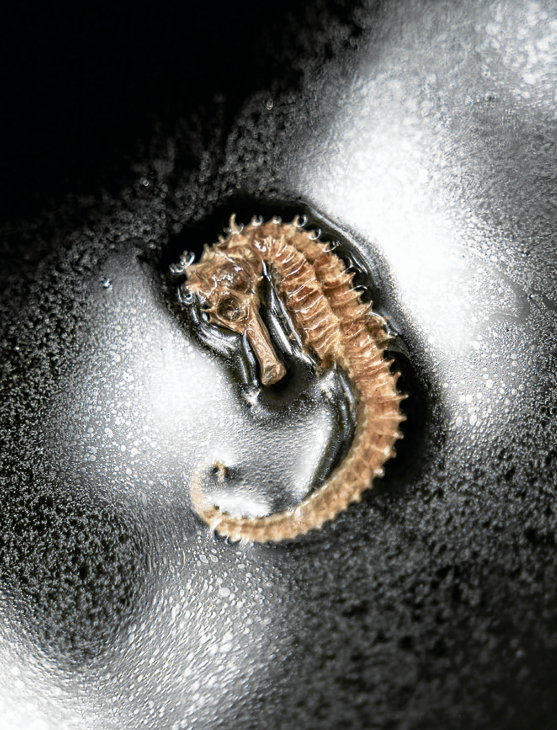
Mejia describes “the eco-poetics of white water” as “water that’s turbulent—like when the wave crashes into the beach. It’s this transitional flow, but at the end, it enters this subtle liminal state.” It’s where the ongoing project, “White Water,” gets its name—transforming those water-stained family archives, while imposing meditations on climate change, sea-level rise, colonial history, and the fragile nature of memory.
Through collage, documentary photography, archival imagery, maps, and tracing paper, Mejia creates layered works that invite viewers to see water not simply as a force of destruction, but as a keeper of memory.
Part of this year’s festival theme, “Afterimage,” which explores the traces that linger after transformation, “White Water” reflects on what remains after both floods and photographs fade. In conversation with Mejia, he discusses the intersections of culture and ecology, and why, for him, photography is ultimately an act of care.
“White Water” is such a layered project. How did it begin?
It started in 2022, but really, it started much earlier. It was after I confronted Ondoy in 2009 that many archives, albums, and artifacts in our ancestral home in Manila were flooded. My baby pictures, my grandparents’ photos were all wiped [out]. They had these chemical alterations, bleaching, and residues that became stains to these images growing up. They stayed in our cabinet for so many years.
It was only through documenting the climate crisis—from droughts and super typhoons to floods—that I really started connecting to this story of water. I realized floods and water really shape and become an author to the practice that I work in. Maybe these are living beings that I should pay attention to.
Water almost feels like another artist in the series.
Sometimes when I look at these photographs, it’s painful to see them. But at the same time, I think, wow, water is an artist as well.
You would think these photographs would be safe inside a plastic album for decades, and then [it takes] just one storm or one flood and everything’s gone. I don’t have negatives anymore, and I can never recover those photographs. Water changed them.
I began thinking about white water as both a physical force and a symbol of the institutional systems that shape the climate crisis. It became a way of putting language to climate change—and to the disproportionate injustices it creates, especially for our coastal communities.
The project combines archival photographs with various techniques. How did you develop that visual language?
I wanted to create a counter-memory and a counter-geography. The family archives had already been undone by water, but I also wanted to work with contemporary stories of climate change—from Typhoon Ondoy, from low-lying islands, from reclamation projects in Manila Bay and Hagonoy, Bulacan, where my mom’s ancestral home is. Bulacan is a poster child right now for rising sea levels.
So, for example, this is a satellite image I juxtaposed with a collage of my grandfather under a seawall. There’s a contrast with Apo Reef, now being militarized as a geopolitical tool to hold power, where the Chinese government is encroaching on our sovereign artists.
We think images are permanent. We think they contain fragments of truth. But floods and sea-level rise [can] wipe them out and change those memories.
You often connect ecology with culture, memory, and Indigenous knowledge instead of treating climate change as purely scientific. Why?
Without nature and without ecology, there would be no communities to sustain. There would be no culture to exist. I see it as a sort of continuum or sphere—ecology, community, and culture are nested within one another.
There has been such a big rift because of globalization, capitalism, and consumerism. But Indigenous and ancestral practices are based on care and reciprocity. They’re not transactional. The climate crisis is a cultural crisis as well.
Your photographs deal with difficult realities, but there’s also a sense of tenderness. How do you balance this?
I looked back at how photography itself was used as a colonial tool to acquire land and extract resources. Dean Worcester and even early National Geographic extolled us or presented Filipinos as helpless. I didn’t want to make the same mistake. For me, photography is really this act of care.

I find ways for the people I photograph to show them who they are and how they want to be seen. That’s why I’ve started breaking away from traditional breaking news assignments. I want to focus on stories that have co-authorship with people.
We’re an archipelago. Every island is a universe of its own with a different language, a different community, a different way of being.
Ebbs and flows
Like water itself, there’s movement in Mejia’s work. As his photography project “White Water” opens at Nuanu Creative City from June 3 to July 12, its themes resonate beyond the Philippine archipelago. Bali, too, is an island landscape grappling with ecological change, making the exhibition’s meditations all the more poignant.
Through family archives transformed by floodwaters and landscapes altered by climate change, “White Water” leaves audiences wondering—what really survives after the flood? And what stories remain after an image fades?
As Mejia puts it, “‘White Water’ was really a way to reveal how memory, history, ecology, and identity are really never fixed. They move through one another, leaving traces that are both fragile and enduring.”
The Foto Bali Festival 2026 runs from June 3 to July 12, at Nuanu Creative City, Bali
******
Get real-time news updates: inqnews.net/inqviber