









Who gets ‘to be?’


When Shakespeare asked “to be or not to be?” over 400 years ago, he likely didn’t imagine this rendition of the Peruvian Teatro La Plaza’s “Hamlet.” Since 2019, the production has toured around the world, recently landing at the Singapore International Festival of Arts 2026 on May 21 and 22.
It revisited the bard’s question, reframing what it means “to be” if the world hasn’t made space for you to exist fully.
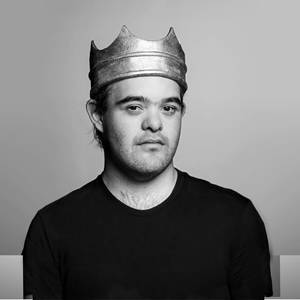
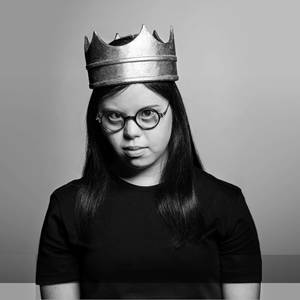
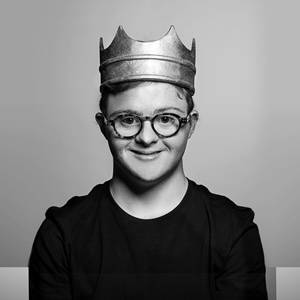
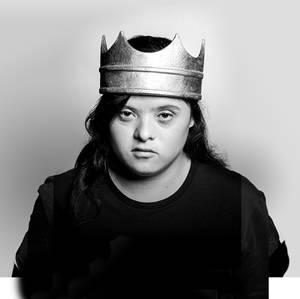
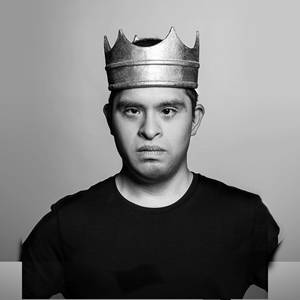
Directed by Chela De Ferrari with associate director Jonathan Oliveros, this reimagining casts eight actors with Down syndrome—namely, Octavio Bernaza, Lucas Demarchi, Jaime Cruz, Manuel García, Diana Gutiérrez, Cristina León Barandiarán, Álvaro Toledo, and Ximena Rodríguez. All eight have performed “Hamlet” in 160 shows across 33 cities and 11 countries.
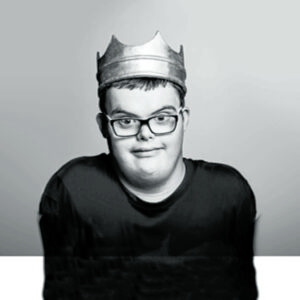
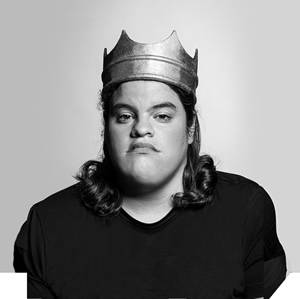
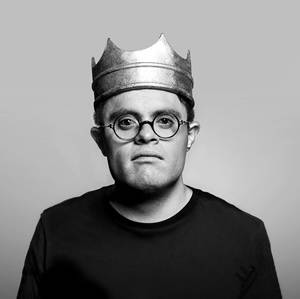
The script doesn’t follow “Hamlet” play by play, but instead loosens the text according to the actors’ individual lives and experiences, going beyond a simple “theme of inclusiveness” to make it into an entire “form of inclusiveness.”
In conversation with Oliveros, with Renato Costa translating from Spanish, he describes the work as “born from the need to tell a totally different ‘Hamlet,’ seen from the perspective of neurodivergent people.”
Building a play for the neurodivergent
Before there was a script, there was what Oliveros describes as “an entire year of listening.” The company worked closely with the actors, drawing from their desires, frustrations, and questions of autonomy—ultimately asking questions like, “Can I live alone? Can I fall in love? Can I have a family?”
The result is a “very free version” of Shakespeare, shaped by “the experiences and stories of each actor.”
On his own method, Oliveros cites nearly two decades of working with neurodivergent communities. “It was a challenge to face a reality I didn’t know,” he recalls, which led him to seek out “populations that really needed support… through art.”
Beauty in difficulties
Working with actors with Down syndrome required a degree of unlearning. “One of the main challenges was breaking the myths,” Oliveros says, breaking assumptions that the neurodivergent couldn’t rehearse for long, be alone onstage, or memorize. But they all could, and they all did.
Rather than smoothing out differences or flaws, this “Hamlet” leans into pauses, repetitions, and unexpected cadences that give the performance its texture.
The production also confronts questions often denied to people with Down syndrome. “It was necessary to talk about themes that usually aren’t addressed,” Oliveros explains.
Visibility is not charity
For Oliveros, the audience is an important agent for changing perceptions of disability. “It’s very important that the public sees this work,” he says, “so they can understand with empathy that they are people like any other. Onstage, there are no differences.”
He recalls that just 20 years ago in Peru, people with disabilities were hidden from public life. Change, he suggests, begins with visibility as well as opportunity.
One example is Jaime Cruz, now part of the cast. He once worked as an usher at Teatro La Plaza, distributing playbills and watching rehearsals. He told Oliveros he wanted to be an actor, which at the time seemed an unlikely prospect. Today, he tours the world performing with the “Hamlet” cast.
The Philippine gap
Our conversation turns toward the Philippines. When asked what we can can learn, Oliveros pauses, then asks: Are there laws? Are there jobs? Are people with Down syndrome visible?
The answer isn’t as bleak as it once seemed. I tried to remember the billboard I’d seen on EDSA of a film, until my editor pointed me to “I’mPerfect,” which cast actors with Down syndrome in a mainstream love story, with Krystel Go even winning Best Actress at the Metro Manila Film Festival.

There are also growing efforts, like SM Cares’ “SM is All for Down,” the Miss Possibilities Foundation, which stages a pageant for young women with special needs. Chains like Shakey’s and Jollibee have also opened inclusive hiring programs in the past, while Elait has had deaf employees and Pancake House actively hires workers on the autism spectrum.
Legally, Republic Act No. 7277 mandates equal employment, while Republic Act No. 10524 requires government offices to reserve at least one percent of jobs for PWDs, alongside the standard 20 percent discount on goods and services for PWD cardholders.
So while it’s still rare to encounter people with Down syndrome or disabilities in everyday roles, the Philippines is not without progress. But we’re still learning how to make inclusion feel ordinary.
“They are part of the country, part of its life, its history. They should have the same opportunities as you or me,” says Oliveros.
Read the full story on lifestyle.inquirer.net
******
Get real-time news updates: inqnews.net/inqviber


