




Who is ‘Indigenous’ to the Philippines?

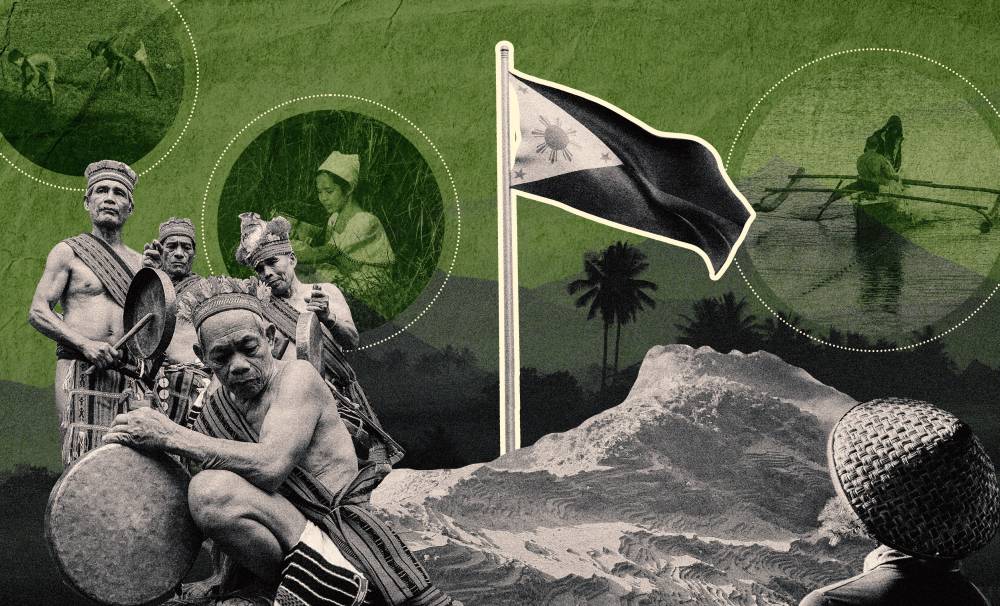
What do we mean when we say “indigenous”? In biology, a plant or animal is indigenous to a place if it has adapted so well to the environment after millions of years of evolution. In social science, something is indigenous if it was developed by the same culture that uses it. Indigenous architecture, fashion, and customs are ways that cultures have adapted to their environments, and these ways of life have been passed on through generations.
Many nations, such as New Zealand and the United States, were founded on what is called “settler colonialism,” where invaders establish new societies on land that was already inhabited. The first inhabitants, who are then separated from this society, are called “Indigenous” or “Aboriginal.” This distinction is perpetuated by societal systems that usually benefit the settlers more and discriminate against the Indigenous.
So, while the settler colonialists flourish, the Indigenous People, or IPs, are ignored and left to fend for themselves, with little protection from the new colonial society.
Being Indigenous in the Philippines
In the Philippines, there is still a distinction between the “Filipino majority” and IPs. IPs are discriminated against; they are displaced by land-grabbing, armed conflict, and environmental damage. And yet we still romanticize IPs as the “original Filipinos.”
There is some irony here. First of all, there is no “original Filipino” because we only became Filipino through colonialism and an anti-colonial, nationalistic struggle. Secondly, IPs are not “primitive” examples of prehistoric culture; they are living cultures that have to navigate modern times. Thirdly, if most Filipinos in the Philippines can trace their roots to ancestors who populated these lands way before the Spaniards arrived, why are they not considered “Indigenous”? If so, what are they?
Researchers, such as anthropological archeologist Stephen Acabado, have pointed out that our current legal definition of “indigenous” is shaped by old colonial efforts to “Christianize” and “modernize” the so-called “non-Christian tribes.” In other words, the distinction between “majority” and “Indigenous” in Philippine culture is mainly a legacy of colonialism that continues to fragment our archipelagic identity. It sets aside many aspects of our shared heritage.
And by extension, it affirms distinctions between “highlander” versus “lowlander,” “urban” versus “rural,” “taga-lungsod” versus “taga-probinsya.”
We indeed have so many unique cultures—we have almost 200 languages and so many different mixed ethnicities. It is also true that as a nation, we have gone through many of the same historical, economic, and sociopolitical issues and events. After all, the issues of the Philippines as a nation affect all regions, but in different ways.
People also travel from their hometowns to other regions for economic reasons and in order to build relationships and communities. I was born Ilonggo and was educated in the Tagalog-speaking region. I do not have to be either one or the other; I can be both and be Filipino. (This is where “ethnicity” and “nationality” differ, but that is a topic for another time.)
Protecting the rights of IPs
Anyone who lives in the Philippines should be protected by the same rights. We all have the same human dignity, and we each deserve to be treated with respect and live harmoniously. Also, varied Indigenous communities could help inform how we can understand our shared cultural heritage.
These are all pieces of a larger puzzle we call “Filipino-ness.” Or, better yet, we are all colorful threads being woven into a beautiful design.
But what is actually happening today? Mother tongues are discouraged, indigenous art is stolen and commercially imitated, and defenders of nature and ancestral domains are constantly harassed. For many in the majority, being Indigenous is seen as a costume, rather than a way of life. And due to our compulsion to Americanize everything and make our multi-ethnic cultures fit within a very Manila-centric idea of “Filipino-ness,” so much of what makes the Philippines vibrant is being actively erased.
We need to learn more about our own indigeneity. But how can we do this as individuals? Here are some suggestions.
• Learn what you can about IPs, their concerns, and worldviews. You can do this by reading books and watching documentaries. So much rich knowledge is available online as well. If you can afford it, you can also find a way to visit IP communities to immerse yourself in their cultures. Look for Schools of Living Traditions.
• Following the advice of anthropologist Dada Docot, you can learn what you can about your hometown. When someone asks, “Saan ka galing?” or “Ano ang probinsya mo?” Your answer exposes your roots. What are the traditions and ways of life in your hometown? How do you say or describe certain things in your own native language?
It is important to treat IPs as real people in the real world today, not as exotic characters from some precolonial fantasy. We all participate in a very complex and mixed culture. We all suffer from the same sociopolitical issues. Remember: IPs are also our kapwa.