






Who you are is a story you tell

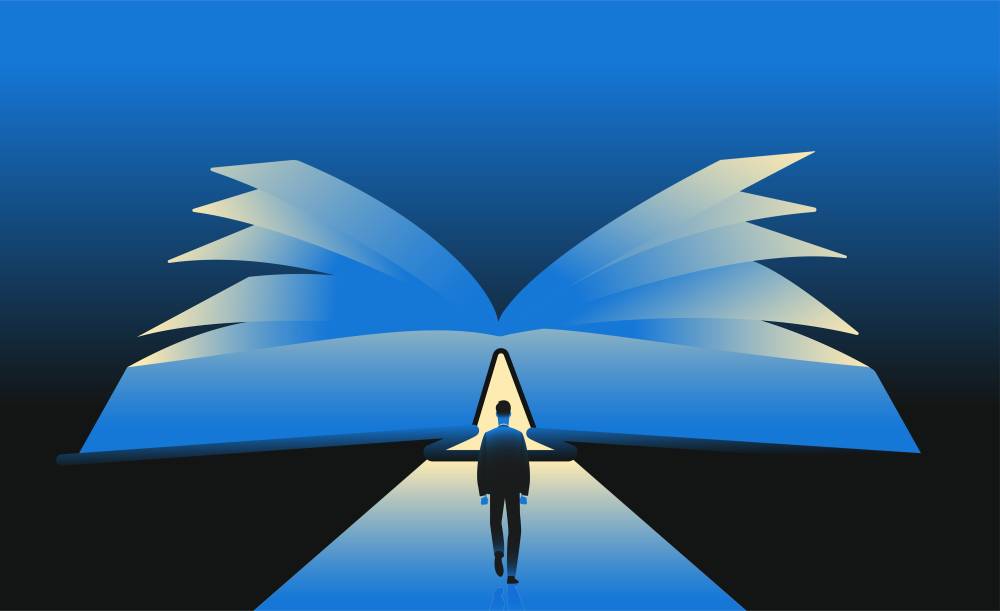
Who we are, and everything we know about ourselves, is just a long story. Sometimes, we accept stories that others tell us about ourselves. Sometimes, we make up our own stories to get a sense of identity. We make sense of the world by curating events to fit the idea of who we are today. We find proof in our memories that will confirm that we are like this because of some childhood experience, or how we were raised, or what culture or media told us was right.
I am not saying that your story is false, or a fiction, or an illusion. Actually, stories are the only way we can tell what is real. Stories help us find a place in the world. Stories tell us who we are and what our destiny is.
Who you are
When I ask you who you are—“Sino ka?”—how would you describe yourself? Your name and family lineage tell us the story of your heritage. Your religious, academic, and work affiliations tell us the story of your beliefs and values. Your friends, enemies, and country of origin tell us the larger story you share with others—that is, your history.
Who we are as people—our unique personalities as individuals—is a character we play, one that is recognizable. It all stems from our “personality,” which comes from the word “persona”—the special mask worn by ancient Greek actors so their voices could be heard in large, open-air stadiums. It is “per” (through) and “sona” (sound).
This is also the reason why, when we act strangely because of hunger, exhaustion, or irritability, friends might say that we have wandered from the character of who we are—“Nawala sa sarili.”
What shapes you
As we move through life, the people and places we engage with shape who we are. We are marked by them. In our language, the process of remembering and the process of aging share the same word: “pagtanda.” An elder is “matanda,” implying that they have a lot (“ma-”) of marks (“tanda”). These marks are reminders (“palatandaan”) of meaning. Memories mark us, and we return to them when we want to remember who we are.
All of us have marks. We decide how they define us. That story is “kasaysayan,” from the word “saysay,” or “purpose” or “meaning.” We each have individual histories, and we are all part of a larger effort to make meaning.
But how do we tell the story of the Filipino? And, who gets to tell it?
History, at least the “official” account documented in books and immortalized in popular media, is just a curation of events. Real life is never really linear like that. Real life does not happen chapter by chapter. It is messy. So many things are happening all at the same time, all the time. The secret is that we are the ones who decide what is important. We are the ones who decide which events point to the destiny we want to have as Filipinos.
How to weave your own identity
With so much information on our smartphones—not all of which is true—how do we make this decision?
The reason we now have such a thing as “doomscrolling” is that the internet has given us unlimited access to everything happening in the world. And since platforms want to keep our attention, so they can keep making money on our engagement, endless scrolling has become the norm.
This is why we are now overwhelmed with news from all parts of the world—political games we do not understand, someone else’s heavy emotional baggage that we do not have the capacity to process on our own, and massive conflicts we feel powerless to solve.
In an age of boundless information and infinite options, our ability to make meaning has become weaker and weaker. And so, our sense of self is scattered; our sense of belongingness becomes a shallow performance. We no longer have real history. We only have passing trends.
But now we are invited to be weavers—tagahabi—to create tapestries of beauty and meaning in a time of chaos and distraction. We must be intentional with the threads—the memories—we choose to include. What actually happened? What does it say about who we are? We cannot let others tell us our own stories. They may create fictions to fool us, and if we accept these lies, we will be easily manipulated.
That said, we must relearn how to tell our own stories. This is true for both the personal story that defines us as individuals, as well as the larger history we accept as Filipinos. After all, stories are not just ways to distract ourselves from the mess of living. Stories are the way we know who we are. Stories are fundamental to our identity, as individuals and as a people.