










Why the Quezon City calorie count ordinance matters

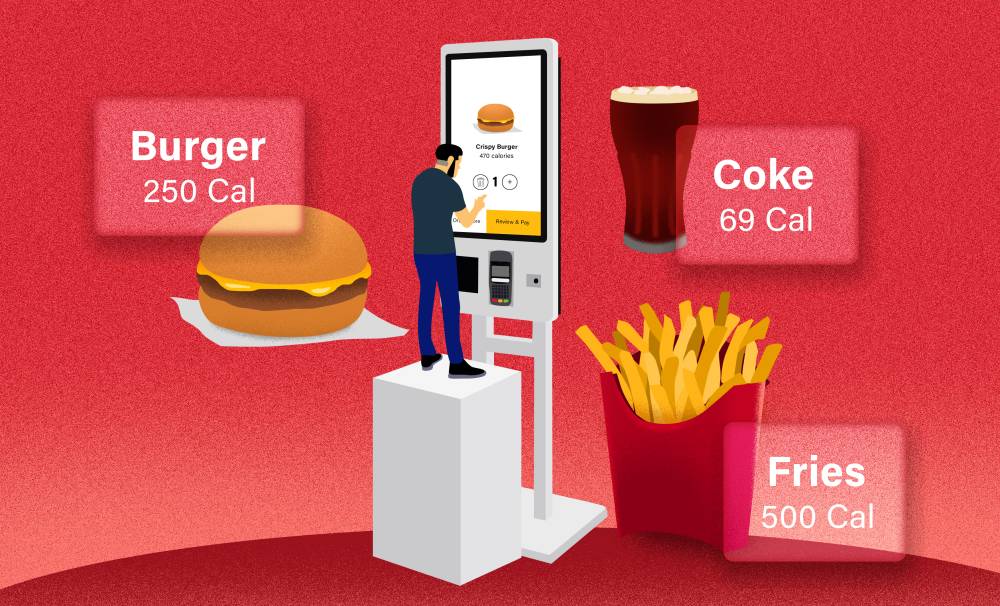
It’s here. After over a year since we reported its announcement, Quezon City (QC) has officially implemented calorie counts in restaurant menus. I found out because I was randomly eating at a McDonald’s on Aurora Boulevard in Cubao, and I was pleasantly surprised to see that the digital kiosk carried calorie counts on all menu items. (I was also surprised to find that the numbers were a bit off from the US menu.)
Turns out that it had been freshly inked a day or two before I made the discovery in that McDonald’s branch, and it came at a great time because I was back on the calorie-counting game, trying to cut a lot of the fat I had gained in 2025.
Could still use some work
However, it’s not yet all good. The QC ordinance is supposed to mandate all food businesses into carrying calorie counts on their menus, but it looks like it will be a very slow rollout. Also, upon a closer read of the letter of the law, it turns out that only huge chains (with five or more branches operating under the same name) are required to have the calorie counts during the first year, while the following year, slightly smaller food businesses with two to four branches are required to follow.
Then, only in the third year of the ordinance’s existence (at this point, 2028) are all restaurants and food businesses, regardless of size, supposed to have it.
That lines up with the reports from QC-based friends I’ve asked. So far, it’s only the major fast food chains and convenience stores within the large swath that is Quezon City that have the calorie counts listed. That means if you’re watching your intake, right now, you can only really be careful when you’re eating at a fast food place.
I suppose that makes sense, as we tend to choose fast food as the laziest, most hassle-free choice, and it’s easy to take in more calories there than you intend to consume.
The other shortcoming I’ve found, although this one is likely a little more niche to us lifting for aesthetics, is that the calorie counts are purely calorie counts—there are no macro breakdowns. I can’t tell how much protein, carbs, and fats I’m actually consuming.
Normally, I would let this go, but the aforementioned McDonald’s US menu is able to provide me that much-needed nutritional information, which is why I ended up thinking triple cheeseburgers were a suitable high-protein meal. (Fun fact: they are… but at a cost.)
A tough ask
Before you call me whiny for asking so much of this ordinance, I understand that this is a tough request, especially for smaller, individually owned businesses.
After all, this is why smaller businesses have been given until 2028 to comply with the law; it’s going to be an added expense for these establishments to analyze their food offerings and provide nutritional information, even if there is a way to put it all together. (For example, Sukat Squad on Instagram is a one-person operation that uses small scales and searchable nutritional information of ingredients to figure out macro breakdowns of pretty much any food. While it is a lot of work, their public service proves that it is doable given enough time and passion.)
But imagine, really, asking a carinderia—a place where everything is conceptualized, served, and measured in vibes—to quantify every little morsel of food they give you. It’s going to be a nitpicky bodybuilder’s dream, but it’s still an added hassle and expense for a business owner who just wants to make money feeding people who just want affordable meals.
Now that I think about it, I’m fine with just the big chain brands—those that could afford nutritionists and food scientists—complying with this rule.
Still a welcome addition either way
That said, even with my reservations and slight misgivings about how this new ordinance is executed, I’m still willing to admit that this is an important step in fixing our overall health and nutrition.

Even though I want fancy things like being able to know how much protein I’m actually taking in a double Quarter Pounder or being able to track the amount of calories a stick of fishballs has, what we have now is still highly useful. We already have the basic nutritional idea of most of the packaged food we buy from stores—but that’s like half of the things we eat.
Being able to know a little more can still go a long way toward whatever nutritional goals we have, whether we’re slimming down or bulking up and building muscle.
I actually believe this ordinance is only the beginning; maybe it may not happen for another five to 10 years, but I feel Mayor Joy Belmonte’s law is going to break down the doors for all other cities to prioritize health and nutrition like this—the reason being that I already see this being implemented in other places. All it takes is one particular place around here and the right political will to set the tone.
In the meantime, I would imagine that QCitizens might actually buy from their neighborhood fast food joints even more because, at least now, they know how much they’re taking in.
******
Get real-time news updates: inqnews.net/inqviber