









Wikipedia inks AI deals with Microsoft, Meta, and Perplexity as it marks 25th birthday

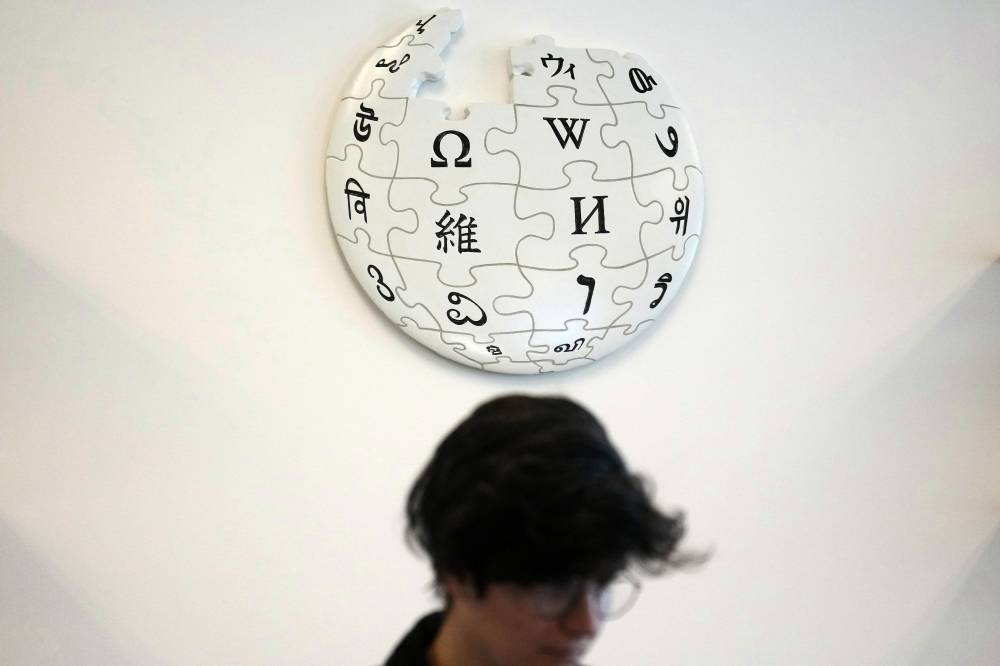
Wikipedia unveiled new business deals with a slew of artificial intelligence companies as it marked its 25th anniversary. The online crowdsourced encyclopedia revealed that it has signed up artificial intelligence (AI) companies, including Amazon, Meta Platforms, Perplexity, Microsoft, and France’s Mistral AI.
Wikipedia is one of the last bastions of the early internet, but that original vision of a free online space has been clouded by the dominance of Big Tech platforms and the rise of generative AI chatbots trained on content scraped from the web.
Aggressive data collection methods by AI developers, including from Wikipedia’s vast repository of free knowledge, have raised questions about who ultimately pays for the artificial intelligence boom.
Training on Wikipedia data
The Wikimedia Foundation, the nonprofit that runs the site, signed Google as one of its first customers in 2022 and announced other agreements last year with smaller AI players like search engine Ecosia.
The new deals will help one of the world’s most popular websites monetize heavy traffic from AI companies. They’re paying to access Wikipedia content “at a volume and speed designed specifically for their needs,” the foundation says. It did not provide financial or other details.
While AI training has sparked legal battles elsewhere over copyright and other issues, Wikipedia founder Jimmy Wales says he welcomes it. “I’m very happy personally that AI models are training on Wikipedia data because it’s human curated,” Wales tells The Associated Press in an interview.
“I wouldn’t really want to use an AI that’s trained only on X, you know, like a very angry AI,” Wales adds, referring to billionaire Elon Musk’s social media platform.
“Chip in and pay for your fair share”
Wales says the site wants to work with AI companies, not block them. But “you should probably chip in and pay for your fair share of the cost that you’re putting on us.”
The Wikimedia Foundation last year urged AI developers to pay for access through its enterprise platform and said human traffic had fallen eight percent. Meanwhile, visits from bots, sometimes disguised to evade detection, were heavily taxing its servers as they scrape masses of content to feed AI large language models.
The findings highlighted shifting online trends as search engine AI overviews and chatbots summarize information instead of sending users to sites by showing them links.
Wikipedia is the ninth most visited site on the internet. It has more than 65 million articles in 300 languages that are edited by some 250,000 volunteers. In fact, the site has become so popular in part because it’s free for anyone to use. “But our infrastructure is not free, right?” says Wikimedia Foundation CEO Maryana Iskander in a separate interview in Johannesburg, South Africa.
It costs money to maintain servers and other infrastructure that allows both individuals and tech companies to “draw data from Wikipedia,” says Iskander, who’s stepping down on Jan. 20, and will be replaced by Bernadette Meehan.
The bulk of Wikipedia’s funding comes from eight million donors, most of them individuals. “They’re not donating in order to subsidize these huge AI companies,” Wales says. They’re saying, “You know what, actually, you can’t just smash our website. You have to sort of come in the right way.”
From keyword method to chatbot style
Editors and users could benefit from AI in other ways. The Wikimedia Foundation has outlined an AI strategy that Wales says could result in tools that reduce tedious work for editors. And while AI isn’t good enough to write Wikipedia entries from scratch, it could, for example, be used to update dead links by scanning the surrounding text and then searching online to find other sources.
“We don’t have that yet, but that’s the kind of thing that I think we will see in the future.”
Artificial intelligence could also improve the Wikipedia search experience by evolving from the traditional keyword method to more of a chatbot style, Wales says.

“You can imagine a world where you can ask the Wikipedia search box a question, and it will quote to you from Wikipedia,” he says. It could respond by saying, “Here’s the answer to your question from this article, and here’s the actual paragraph. That sounds really useful to me, and so I think we’ll move in that direction as well. ”
Reflecting on the early days, Wales says it was a thrilling time because many people were motivated to help build Wikipedia after he and co-founder Larry Sanger, who departed long ago, set it up as an experiment. However, while some might look back wistfully on what seems now to be a more innocent time, Wales says those early days of the internet also had a dark side.
“People were pretty toxic back then as well. We didn’t need algorithms to be mean to each other,” he says. “But, you know, it was a time of great excitement and a real spirit of possibility.”
Wikipedia versus Grokipedia
Wikipedia has lately found itself under fire from figures on the political right, who have dubbed the site “Wokepedia” and accused it of being biased in favor of the left. Republican lawmakers in the US Congress are even investigating alleged “manipulation efforts” in Wikipedia’s editing process that they said could inject bias and undermine neutral points of view on its platform and the AI systems that rely on it.
A notable source of criticism is Musk, who last year launched his own AI-powered rival, Grokipedia. He has criticized Wikipedia for being filled with “propaganda” and urged people to stop donating to the site.
But Wales says that he doesn’t consider Grokipedia a “real threat” to Wikipedia because it’s based on large language models, which are the troves of online text that AI systems are trained on. “Large language models aren’t good enough to write really quality reference material. So a lot of it is just regurgitated Wikipedia,” he said. “It often is quite rambling and sort of talks nonsense. And I think the more obscure topic you look into, the worse it is.”
He stressed that he wasn’t singling out criticism of Grokipedia. “It’s just the way large language models work.”
Wales says that he’s known Musk for years, but they haven’t been in touch since Grokipedia launched. “I should probably ping him,” Wales says. What would he say? “‘How’s your family?’ I’m a nice person, I don’t really want to pick a fight with anybody.”