











Women fighting back

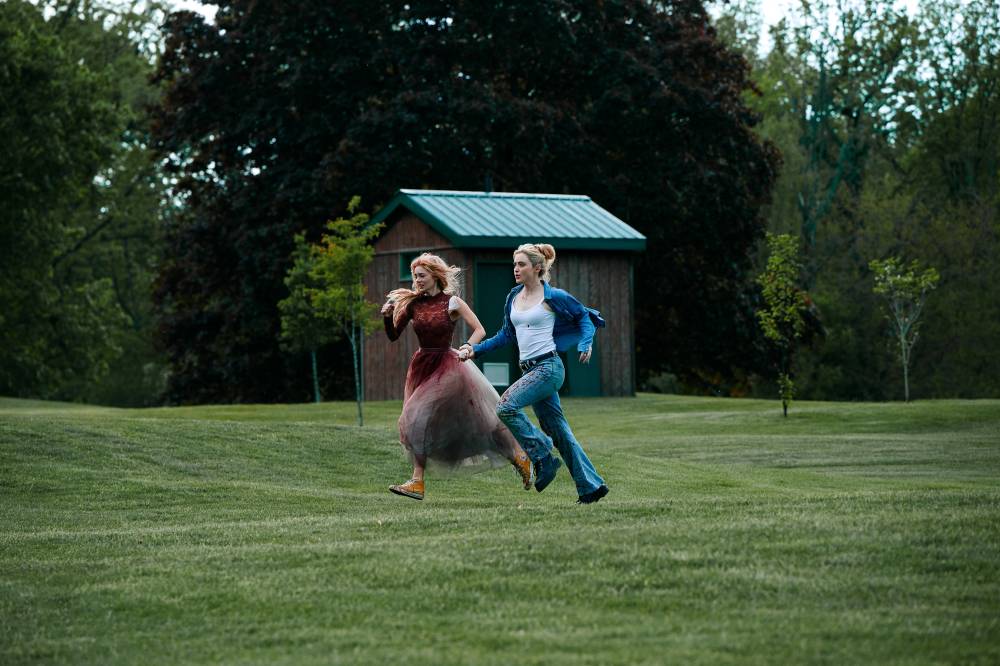
It’s so unfortunate that Maggie Gyllenhaal’s sophomore directorial release, “The Bride!,” didn’t manage to capture the interest of the movie-going public. A quick internet search shows that it only earned $29 million worldwide on a $90 million budget despite the fact that the film was visually lush and had another fantastic performance by lead stars Jessie Buckley and Christian Bale.
It was juicy and meaty in concept and execution. The dialogue was rich. The production design was a wonderful blend of goth and punk that made 1936 Chicago look like a Tim Burton film that took itself seriously. Not to mention, Buckley delivered a bravura performance as both Mary Shelley and Ida, the woman Shelley possesses who has connections to the mob.
What I love about “The Bride!” is how it portrays the contagious effect of female rage. Buckley’s Ida, reanimated after death and constantly inhabited by Mary Shelley’s spirit, calls out men who abuse women and ends up being attacked by two men in a club. Frank defends her and kills the two men.
They are photographed and labeled as the Monster Killers. Running from the law, they end up killing more people as Ida/Mary Shelley becomes an icon for women everywhere for fighting back against the patriarchy.
Stories by women, about women, for women
Stories like this, written and directed by women, are not new, and we’ve seen variations of these over the past few decades. It’s a painful reminder about how women, until now, have been constantly pushing back against the way they are treated by men for centuries.
I don’t want to speak out of turn, talking about female rage as a gay man, but I so enjoy these films that allow women to be unapologetically angry. Fiction allows us to imagine and realize the extremes of how we want these changes to occur in reality—so that maybe, in the real world, we can find some sort of middle ground.
A less violent way, hopefully, for women to feel safe in a world that still manages to make women feel that men have some ownership of their bodies and their lives.
From hunted to hunter
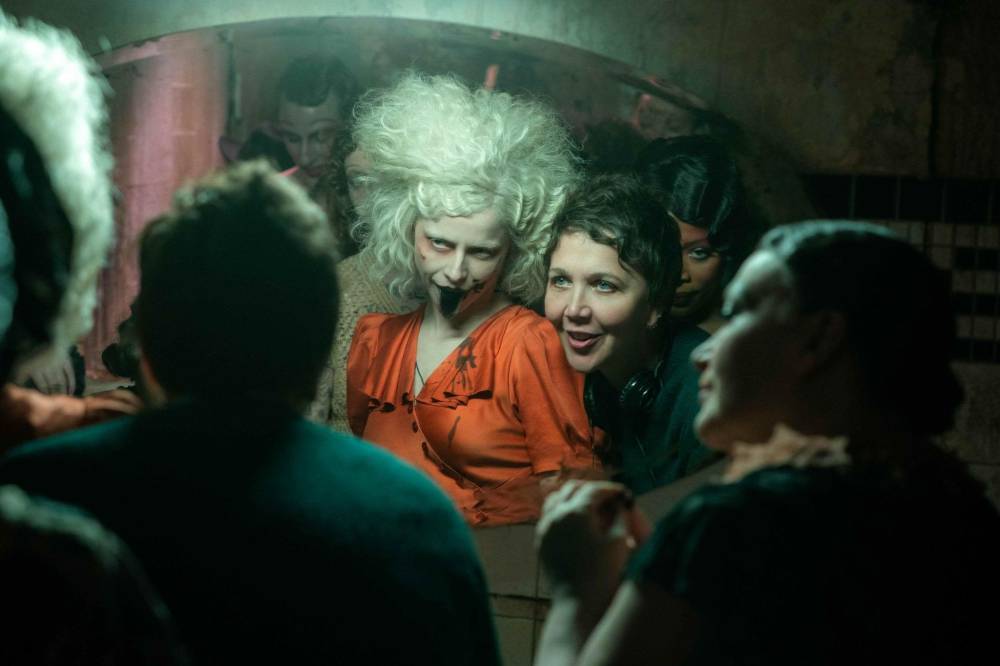
As much fun as the film “Ready or Not” is, directed by Matt Bettinelli-Olpin and Tyler Gillett, and starring Samara Weaving, it is a reminder that a lot of these horror/slasher films put the woman as the protagonist, as she is usually hunted down by a male killer.
In the early days of these slasher movies, women are victims who are chased and hunted down by some psycho killer—whether supernatural or ordinary—and the image persists of women being the victims of violence. But films like “Ready or Not” and its sequel “Ready or Not 2: Here I Come,” which add Kathryn Newton as the sister of Weaving’s character, subvert the genre in a way by making them the hunter, not afraid to fight back.
The sequel pretty much follows the same formula as the first, though it amps up the violence and humor with more inventive ways to kill the offending parties, but it still continues the trend that women are still the prey. The two films don’t use patriarchy as the offending party, but instead have used the obscenely wealthy as the perpetrators of such crimes, which makes their comeuppance so much more enjoyable.
As for the recurring image of the woman being chased? It’s still there.
A recurring issue
This is an issue that persists because women are still being terrorized every day. When I go through social media, my algorithm shows posts about women talking about instances when they have been followed and harassed, with some even sharing about almost getting drugged in a club. I’ve become hyper-aware of the issues on women’s safety because these are things I really look into when I spot them on my social media feed, which is why I always walk my girl friends to their car, to their Grab, or all the way home, even if it’s out of my way.
I know a lot of my female friends are not a fan of Emerald Fennell’s “Promising Young Woman” with Carey Mulligan, mainly because of its ending, but I really enjoyed seeing the tables turned. It is the woman who takes the role of the hunter, and the abusers and rapists are depicted as prey.
But in this film, Mulligan’s Cassie is not some psychopath. She’s taking revenge for a friend who was assaulted by a group of men. The film is not restorative at all; it is bleak and cynical, but the extreme response of the film’s protagonist is what I like about it because I feel that after years and years of women talking about how they are treated on a day-to-day basis, nothing has really changed—and this seems like the only recourse.
As Newton’s Third Law of Motion goes, “Every action in nature has an equal and opposite reaction.”
Women as monsters
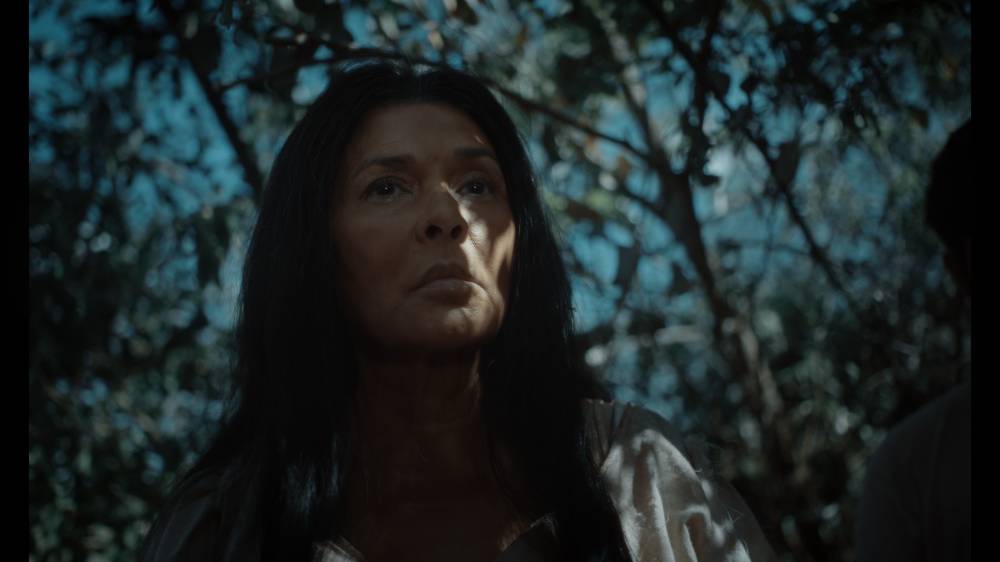
This is also why I particularly enjoyed Jun Lana’s “Sisa” with the incredible Hilda Koronel. It depicts the stylistic—gorgeous cinematography by Carlo C. Mendoza, by the way—and the almost theatrical story of a woman, during the time of the Philippine American War, who enters a concentration camp pretending to be mad so that she can gather information and plot the demise of the Americans who have subjugated her countrymen.

Here, women are dismissed and disregarded as unable to fight back, but the character of Sisa, played with such nuance and texture by Koronel, proves everyone wrong.
While the film tackles anti-colonialist themes, it also includes how patriarchy is a huge part of the problem. It is the job of the women to take back control of the country by any means necessary. What I love about this is how it refers back to articles I’ve read and documentaries that I’ve seen that detail how—during the Spanish colonization—it was the women who instigated rebellion against the invaders.
This is why the aswang image has always been predominantly female. The Spanish used psychological war tactics to take our folktales and mythology, branding women as aswang (much like they did during the witch trials) so that men would stop listening to them. This was heavily recorded in the Visayas, as the women there were particularly tough.
Lana’s “Sisa” reminds me of this. The film is not so much a full narrative, but an illustration of what women taking back their agency looks like, in the face of colonial and patriarchal oppression.
Before the end of Women’s Month, I felt it necessary to take stock of the films that have emphasized the extremes of female power and how it could be used—and how these images and stories are needed for women to take back the power that was taken from them.
******
Get real-time news updates: inqnews.net/inqviber