




Yormilk: Epal or not?

The country is experiencing a nutrition crisis. As paradoxical as it sounds, more and more children are becoming undernourished while also becoming more and more obese. “Between 2019 and 2022, the cost of a healthy diet more than doubled, and today, 67 percent of households cannot afford even a nutrient-adequate diet. Children are also surrounded by food marketing that undermines healthy choices,” says the National Nutrition Council (NNC) and UNICEF.
Simply put: When budgets tighten, priorities often fall on satisfying appetites rather than meeting prescribed nutritional goals.
Yormilk and a case of widespread malnutrition
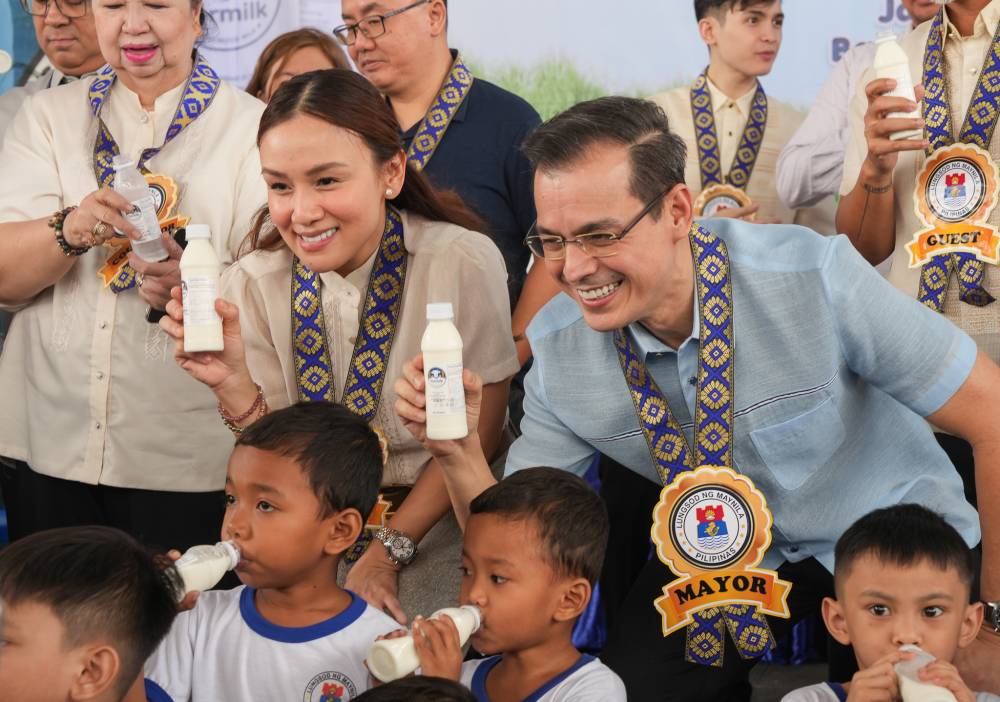
In response to growing widespread malnutrition, the Manila City government recently launched “Yormilk: Kaagapay ng Batang Maynila sa Paglaki,” an initiative geared toward providing free milk to over 21,000 preschoolers in the capital. According to Manila Mayor Francisco “Isko Moreno” Domagoso, this was done in response to a study conducted by the Manila Department of Social Welfare (MDSW), which found 1,593 “wasted” and “severely wasted” children across 467 Child Development Centers in Manila.
(In nutrition, “wasted” refers to instances where one’s weight is too low for their height.)
“Mahal ang gatas. Mahal, kaya kung minsan mas nauuna nating bilhin ang mga bagay na makabubusog sa tiyan ng ating mga supling dala ng hirap ng buhay,” said Domagoso during the project’s launch in Barangay 137, Tondo.
The “Yormilk” program was done in partnership with the National Dairy Authority and the Department of Health (DOH), where fresh milk will be sourced directly from local cattle farmers. More specifically, the initiative will mobilize 423 child development workers to distribute the milk to 21,651 beneficiaries three times a week for a 90-day cycle, according to the Philippine Information Agency.
This follows a similar initiative where DOH recently partnered with several nonprofits to provide pregnant women in Manila a glass of milk a day to ensure proper nourishment. The initiative seeks to curb malnutrition during a child’s first 1,000 days of life.
Epal in plain sight?
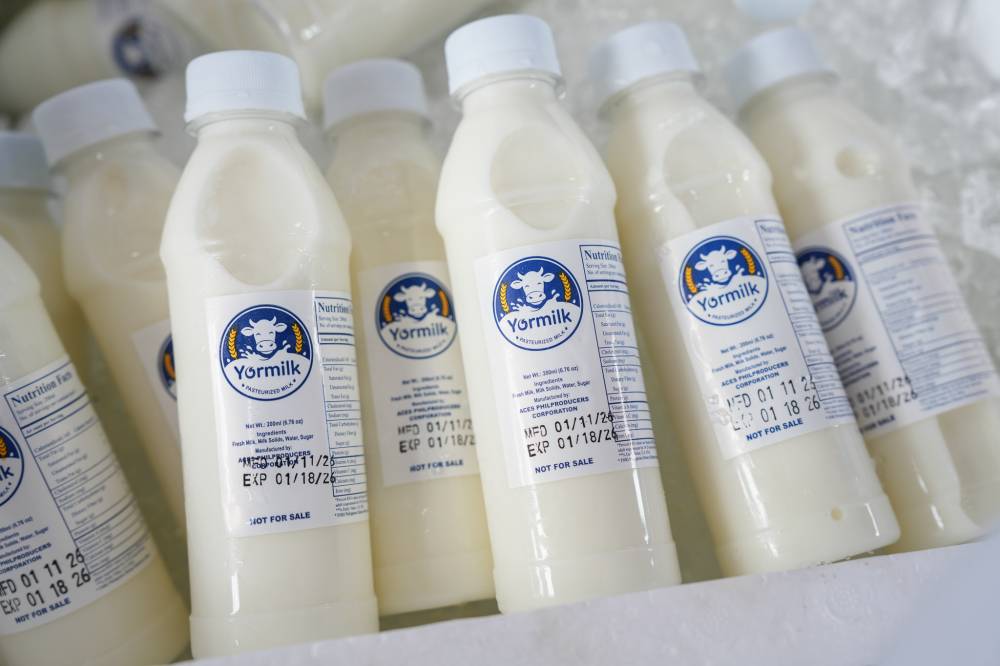
While the free milk distribution program seeks to address a real and present issue, attention has veered past the initiative, instead focusing on the “Yormilk” branding and labeling. A cross between Domagoso’s “Yorme” nickname and “milk,” the Manila City mayor received criticism for inserting himself into a government initiative.
Think public covered courts and bridges labeled with the name of a government official. Your classic case of epal politics.
Epal politics has historically been looked down upon. Not only is it ugly to look at, but it paints government projects as personal favors that should be owed to the politician in charge. Forget accountability and responsibility. That covered court was done out of the goodness of that mayor’s heart.
According to the Presidential Communications Office, the administration is actively working toward establishing “anti-epal” guidelines. Department of Interior and Local Government Secretary Jonvic Remulla specified that public officials must not put their names, pictures, or logos in government-funded projects. However, he explains this has not yet been included in any enforceable laws.
“Wala pa tayong codified conduct para diyan sa anti-epal campaign. And it will be a great help if the national legislature made steps para talagang mabawal iyan.”
Looking at the “Yormilk” program, it doesn’t check the boxes of your typical epal project—no faces, logos, or names, just an anagram of “mayor” that Domagoso happens to be known by.
“Yormilk” doesn’t scream epal politics by all intents and purposes. But in that same breath, epal politics is all about amassing enough name recall that you can cash in on come election time. And when a simple milk distribution program has become the talk of the town simply because of how it was branded, it’s certainly done its job.