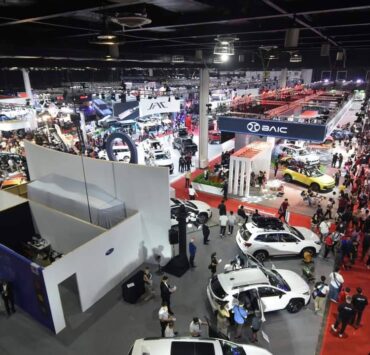



First and fast impressions of a whirlwind trip


I started writing this column from Hon Tre Island, a pristine summer destination nestled in Nha Trang Bay, Vietnam. Separated from the mainland by a scenic 12-minute boat or cable car ride, this island is home to the sprawling Vinpearl Resort Nha Trang—a massive property combining 5-star luxury with extensive entertainment infrastructure. It is just one piece of a global chain containing 60 properties across 20 provinces and over 17,500 rooms; 15 VinWonders theme parks; six world-class golf courses; and three VinPalace convention and performing arts centers. The Vinpearl portfolio includes two semi-wildlife conservation and care parks, live-action performance shows in destinations such as Nha Trang and Phu Quoc.
Looking east toward the South China Sea, the mainland coast sits roughly 1,370 kilometers away from our own Philippine shores. Yet, despite the geographic distance, the industrial momentum taking place on this island feels incredibly close to home.
This entire luxury ecosystem was built by Vingroup, a diversified conglomerate with interests spanning real estate, healthcare, education, retail, and technology. At the helm is Chairman Pham Nhat Vuong, Southeast Asia’s wealthiest man, whose fortune Forbes places at $33.2 billion as of latest (in comparison, the Philippines’ wealthiest, Enrique Razon Jr of International Container Terminal Services Inc and Bloomberry Resorts Corp, has a net worth of $15.9 billion).
Interestingly, during our tour, news broke that VinFast had officially appointed his eldest son, Pham Nhat Quan Anh, as the brand’s new board chairman—signaling a fresh generational chapter for the enterprise.
Chairman Vuong’s rise is a legendary narrative of grit. Born in Hanoi in 1968 to a poor family at the height of the Tet Offensive, his inherent mathematical ability earned him a scholarship to study in Moscow during the late 1980s. Following graduation, he moved to Ukraine, opened a small Vietnamese restaurant, and risked everything to establish an instant noodle production line. He built Mivina into Ukraine’s most popular food brand before selling it to Nestlé for $150 million. Returning to Vietnam, he merged his resort and real estate businesses to create Vingroup.
Today, that same aggressive, top-down corporate philosophy is trained squarely on electric vehicles (EVs) through VinFast, driven by a culture built on an absolute obsession with speed to market.
Before arriving on the island, our media contingent toured VinFast’s flagship manufacturing complex in Hai Phong. Spanning 335 hectares of entirely reclaimed land, this high-precision facility went from breaking ground to fully operational in an unbelievable 21 months. Driven by over 1,400 precision industrial robots, the plant operates at a 90 to 95-percent automation rate in its stamping and paint shops. At peak velocity, it can roll out 43 vehicles per hour, yielding an annual capacity of 300,000 EVs and 1 million electric motorcycles.
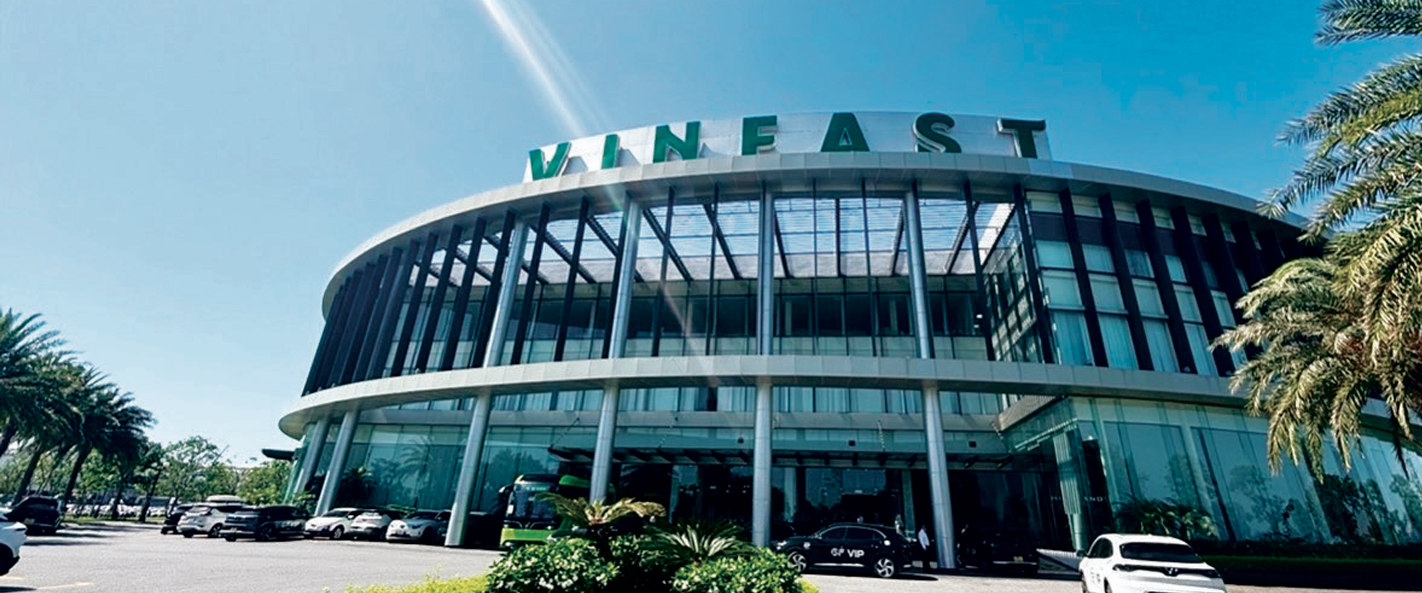
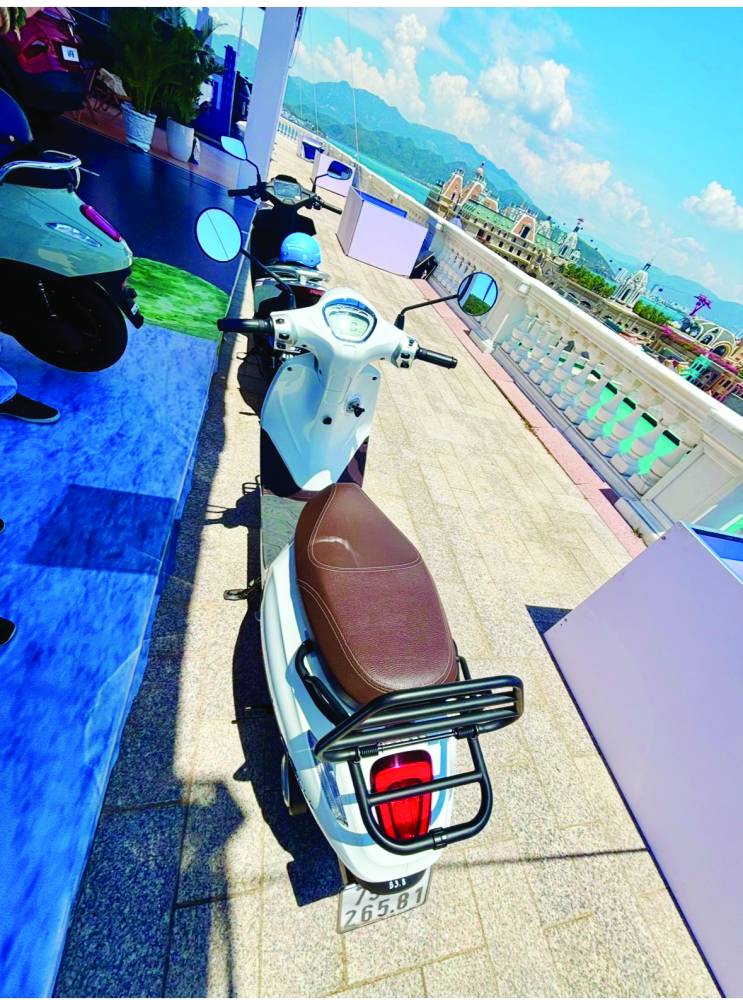
On Hon Tre Island’s coastal roads, I put that manufacturing output to the test behind the wheel of the all-electric, 7-seater VF MPV 7 and the 5-seater VF 7, alongside the VinFast Evo 200 electric scooter.

For multi-generational households in the Philippines, a 7-seater is the ultimate family workhorse. The common hesitation is always whether an electric powertrain can handle real-world utility. On the road, the immediate takeaway is the remarkably quiet cabin and smooth, robust torque delivery. VinFast is betting heavily on practical family segments, and experiencing the BEV maker’s approach to interior packaging and ride comfort gives a clear preview of what the VinFast team is bringing to our shores.
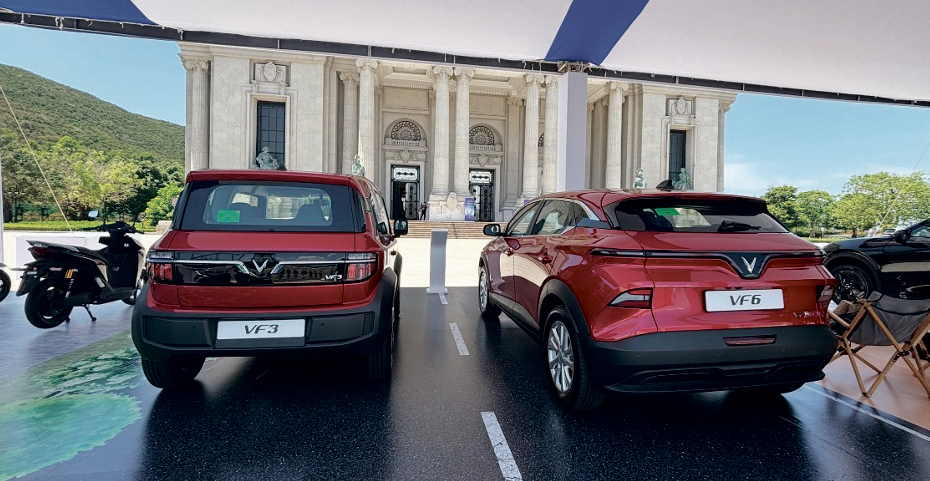
Whether you choose to transition to an EV or replace an internal combustion vehicle with a newcomer like VinFast is entirely your choice. If you are curious, I highly recommend visiting a showroom with your family, trying out the units (test-sitting the third row), and joining owner groups to gather real-world data.
Ultimately, technology can only do so much. If we remain entirely dependent on personal cars for every short distance, we will simply continue to clog our highways and run out of parking spaces. True sustainable mobility requires behavioral change: Keeping sidewalks clear for pedestrians, walking short distances, refusing to park traditional cars or even fully charged BEVs/PHEVs in charging slots, and collectively pushing for better public transportation. True green progress is as much about shifting our mindsets as it is about changing our vehicles.