










Jumping ‘Out of Danger’ and into forested nature, with an Athlete


Consider this my Valentine’s Day story, but with a twist. Because our story starts with a couple who’s already met and fallen in love and said their “I dos” and are now living happily ever after. So, what more is there in this seemingly perfect love story?
In order to reveal it, I had to make that 4-hour trip from Manila to Sablan in Benguet Province last Feb. 1 to meet the Engler couple, who owns a 7.8-hectare sanctuary farm here, about 600 meters above sea level, where the road would eventually lead up to 1,500-meter mountaintops nestling Baguio City.
The Engler couple, Paul and Celeste, along with daughter Calille, lead the Out of Danger Project that aims to conserve threatened native tree species. I was introduced to this family a few years ago by Celeste’s brother Ian RJ Reyes, whom I met in a Mitsubishi owners’ club meeting.
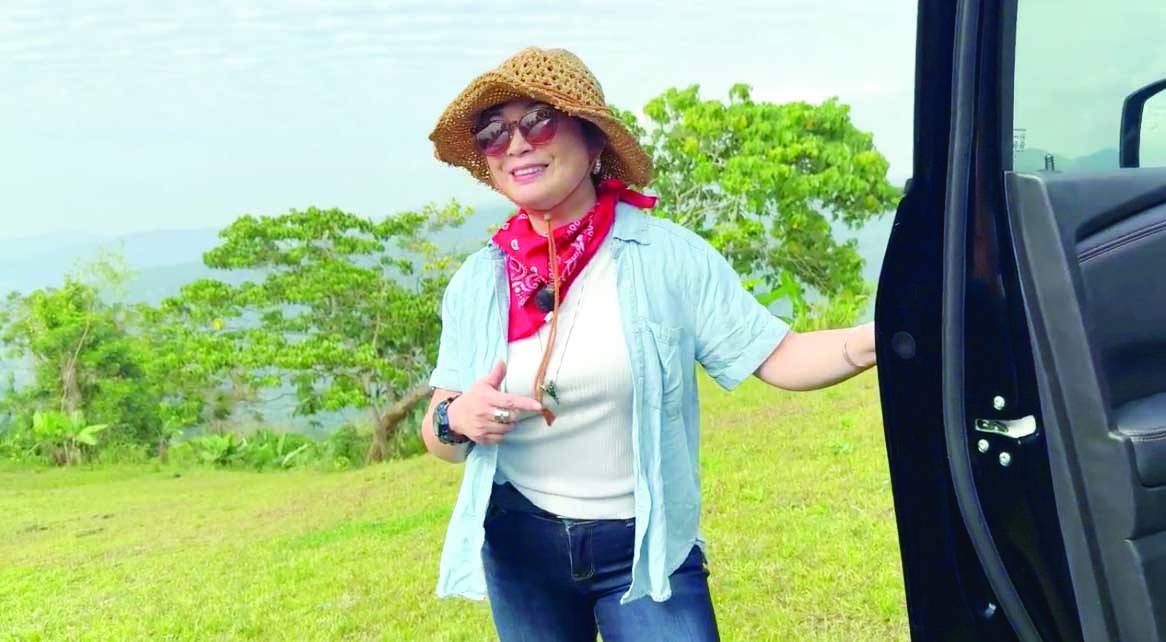
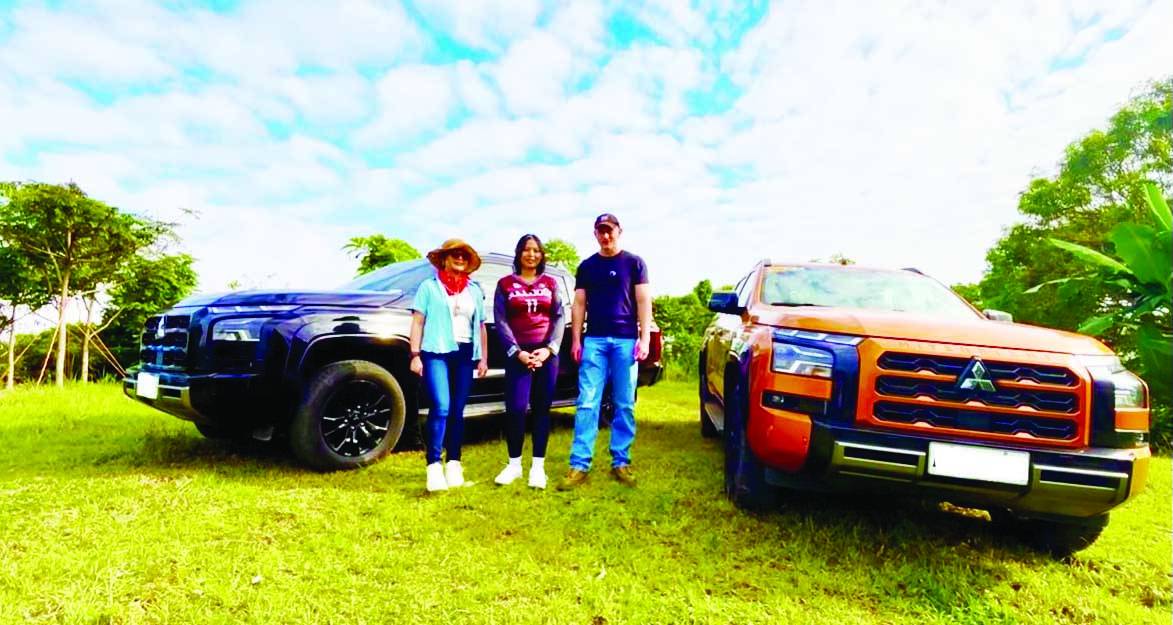
I was driving a Mitsubishi Triton Athlete 4×4 pickup that day, and at the agreed-upon meeting place at the Gallano-Nangalisan Bridge, another Triton Athlete pickup pulled up, a black one, and out came the Engler family with Ian, all warmth and smiles.
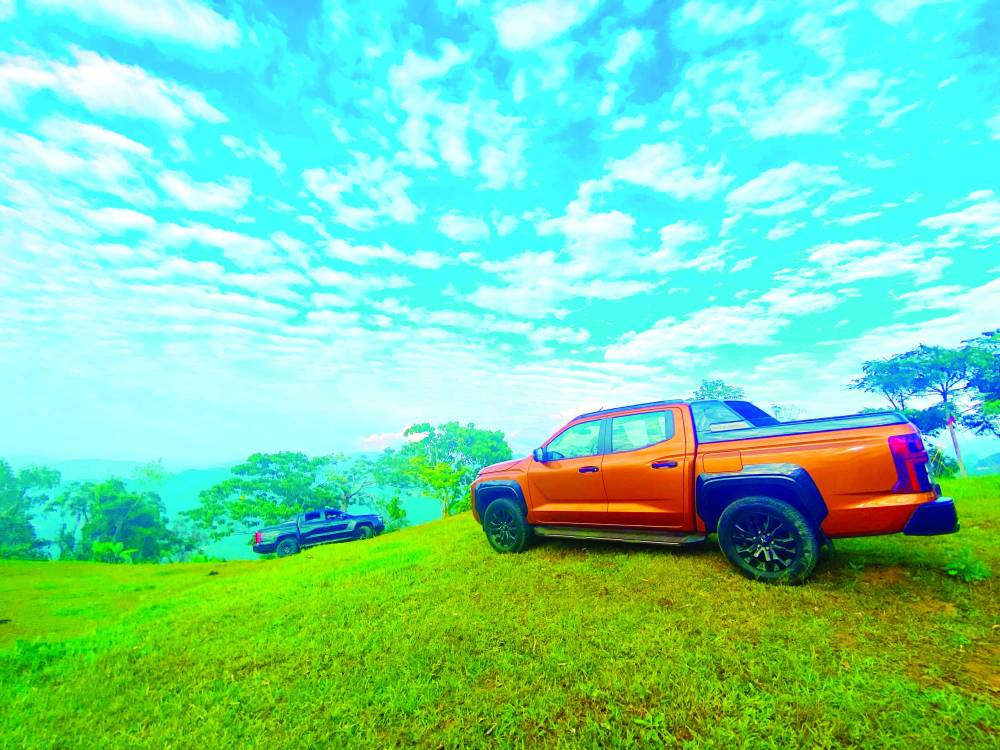
The Out of Danger sanctuary farm was still a good 20 km away from the bridge. And as I followed them in this 2-car convoy, I got to appreciate this side of Benguet, the side that motorists and travelers often overlook because they’re too eager to get up to Baguio City. The winding road was narrow and often had its pavement broken or missing in some patches, and this made me appreciate the comfort of the driver’s lumbar support and the sensation of driving a crossover instead of a traditional truck. The touchscreen monitor, which clearly displayed both rear and front views, gave me the confidence to navigate the narrow roads. And I was glad it was this narrow, to give more space to the wild flora and fauna, the original inhabitants of these mountainsides.
Upon reaching the farm, it was, as expected, quite picturesque, with views of the forest stretching as far as the eyes can see—a green horizon merging with a blue sky of feathery clouds. It was a place that would truly inspire someone to create, rather than destroy.
The Out of Danger Project has been recognized by the Philippine Native Tree Enthusiasts as having a significant collection of native tree species, with 700 trees across 70 species. The organization listed the Englers’ farm sanctuary under the Green Legacy Project. This arboretum aims to protect local biodiversity and is dedicated to creating a sustainable farm focused on native species and ecological balance.
Why is it named The Out of Danger Project?
Celeste explained: “We started out looking for native but endangered trees. Planting them here on our farm was a way to take them ‘out of danger.’ As we grew to appreciate the idea of clustering native trees together, I chanced upon the word ‘arboretum’—essentially a library of trees. Having a place like this is a project and a library at the same time. We hope this project gives future generations an idea of how beautiful Mother Nature is, specifically with Philippine native trees. We have a lot to be grateful for, but also a lot to be responsible for.”
According to the couple, the farm’s elevation, similar to that of Tagaytay City in Cavite, is conducive for various species to thrive.
“Back in 2017 and 2018, we only came to the farm once a year because the roads were not car-friendly,” Celeste recalled. “Every time there was a typhoon, we would worry about the farm but hesitate to visit. We had an old car and an SUV, but at the height of our planting phase, we couldn’t drive all the way up. We had to hike the last 2.5 km every time we visited. We used to hire 4×4 trucks just to transport seedlings and carry our farming implements. Having a Triton Athlete 4×4 was an answered prayer.”
Celeste admitted her family had always been Mitsubishi fans, starting with her parents, who still own a fully functioning Mitsubishi Space Wagon. No wonder she was named Celeste.
“My brother Ian knows a lot about Mitsubishis; he did extensive research on the best pickups and highly recommended the Triton. We had been looking at the variants for a couple of years, and the timing was perfect in December 2024 when the new design came out. Paul and I were instantly attracted to the design, the capacity, and the price,” she said.
Paul added: “The first thing we liked was how it looked, but it turned out to be incredibly practical. The price was great for a 4×4. I grew up on a farm in the States, so I appreciate how useful a truck can be. While we use this as a daily driver, its utility was a major influence. It allows us to haul trees and navigate steep or deep-rutted roads. In Baguio in general, it’s just been a great vehicle.”
Vision for the future
The couple, who bought the property in 2017, admitted they didn’t have a set goal initially. “The roads were rough until just a couple of years ago. We couldn’t come during the rainy season. But seeing the native hardwood furniture in Baguio City got us interested in native trees, and we came up with the idea for a sanctuary.”
Celeste added: “When we started planting hardwood trees, we realized we might not see them fully grown in our lifetime. That put the importance of starting now into perspective. It’s about taking action with the time we have. Hopefully, future generations will see these native trees as living things rather than just furniture.”
Calille, a fourth year Biology student who plans to take Medicine as a course, sees the potential of the project from an added perspective.

“What piqued my interest was lifestyle medicine. For me it’s about a holistic approach to health,” she said. Calille stressed that this does not just include the physical aspects to health but also physical activities and being part of nature.
“As my dad said, it’s also about experiencing nature. I think it would be such a dream to also prescribe that experience to patients. My mom and I used to joke, ‘hug a tree for 10 minutes,’ especially if the patient has hypertension. But it turns out there is a scientific basis to this. There are actual studies that support it. I would like to help legitimize that, and keep that option open to local communities,” Calille said.
Comfort and strength
“One feature we love about the Triton is that it has the comfort of a sedan but the strength of a muscle vehicle, a really strong, reliable car,” said Celeste. “Having lumbar support in a truck is pretty cool, actually, that was a major selling point for me.”
For Paul, a standout feature that’s ideal for mountain province climate is the heater. “A lot of cars here don’t have heaters. The only way to defog windows is to blast the AC, and when you’re already damp from the rain at night, it gets cold. Having a proper heater is a big bonus in Baguio.”
Celeste agreed: “Last December, we visited Atok, where temperatures can drop to zero (degrees Celsius). We definitely needed that heater.”
4WD capability
“The fact that you can shift to 4H while driving is quite useful,” Paul noted. “Even within Baguio City, some roads are so steep that if it’s wet, you start to slip. Being able to engage 4WD easily makes those hills simple to climb.”
Celeste concluded: “Since we’ve had this car, we’ve been to so many destinations that only 4×4 vehicles can reach. Last December, we drove over the mountains of Kibungan, Capangan, and Tublay. Recently, we drove from Atok to Bauko, Sagada, and Besao, then on to Bontoc, Banaue, and Kiangan, Ifugao. There were certainly parts of that trip where, without a 4×4, we would have been very apprehensive.”