










‘KATAS NG KALAKAL’


Remember this name: Danilo Enriquez Gabon.
He is the perfect example of a man who didn’t allow opportunity to go to waste, in a quite literal sense.
Danilo’s success story started when he was still too young to fend for himself, and his family stood on precarious ground. The Gabon family lived in Barrio Magdaragat, originally a fishing village situated along the northern banks of Manila Bay bordering Manila and Navotas, but which eventually devolved into what would be infamously called “Smokey Mountain”—the garbage dumpsite of the megalopolis.
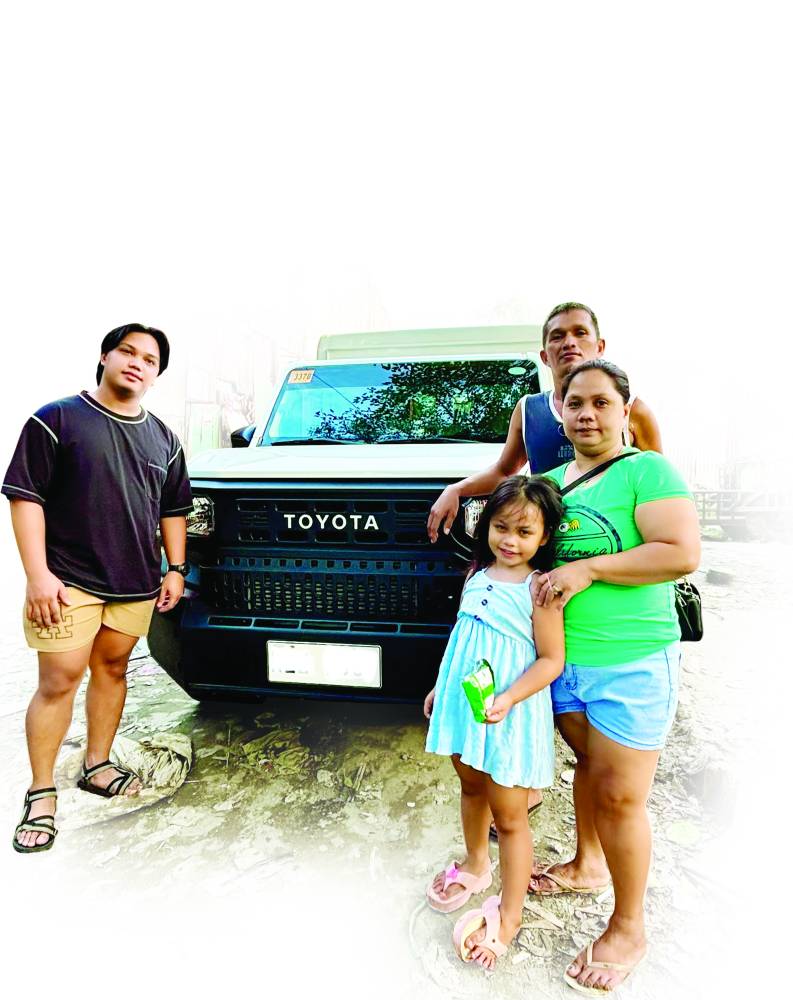
Danilo’s father was an all-around staff member for a foreigner whose company was based in the area, while his mother was a housekeeper. Of the three siblings, Danilo was the one who saw the “glimmer of gold” in the tons upon tons of garbage piled on their homeland. And so, in 2014, with the help of his wife Jonalyn, they purchased a bicycle fitted with a sidecar to collect “kalakal” (scraps) that they sold to recycling facilities.
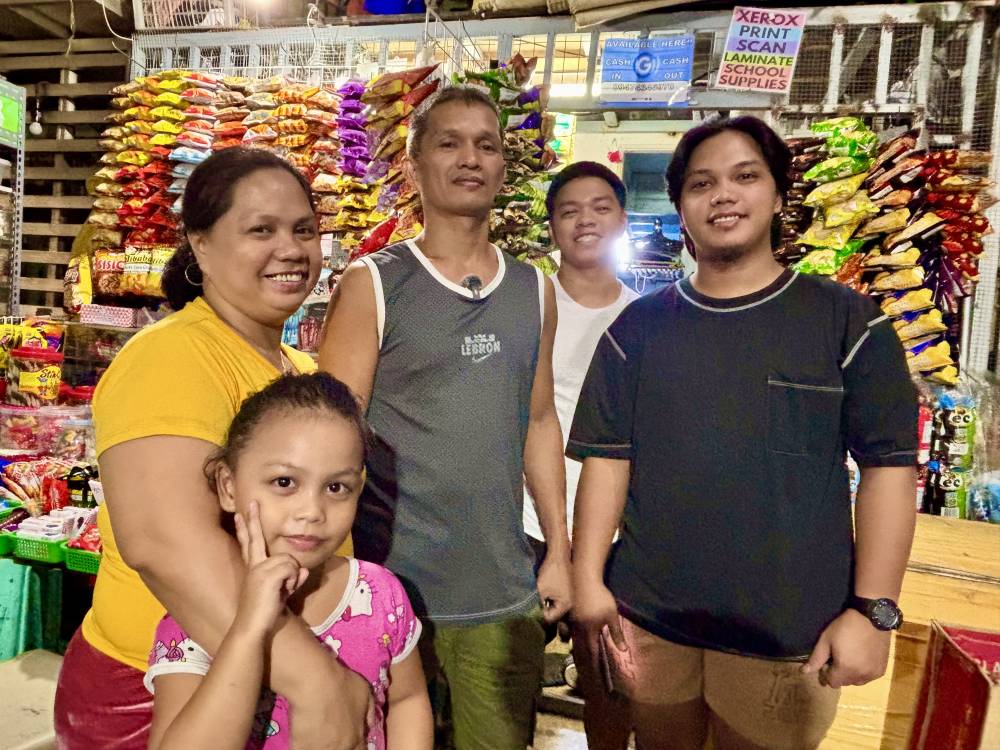
Not long after, they bought two motorbikes with sidecars, expanding their “kalakal” collection capacity. Jonalyn also opened up a sari-sari store just outside their residence in Balut in Tondo, Manila.
In October last year, they made another important decision to level up their business and way of life. They purchased a brand-new Toyota Tamaraw utility van.
Their Tamaraw was barely three months old on Jan. 7 when I paid the Gabons a visit in their humble abode, an up-and-down apartment style room in one of a series of buildings the government built for the informal settlers of the area, and which was (unceremoniously) named “Permanent Housing”.
Danilo, at 42, was of slim build. He was soft-spoken, but his story of perseverance reflected the strength of character and supreme care for family that needed no words to be said.
Danilo showed off his brand-spanking new white Toyota Tamaraw van at the building’s parking lot. He said that he acquired the vehicle from the Toyota Otis dealership in Manila at the end of October 2025. “This is our first brand-new car,” he proudly said. “We bought a used van years ago, but we quickly sold it because the cost of constantly repairing it was more than the income it generated for us.” The tone of his voice felt like he was expressing that not all garbage was salvageable or useful.
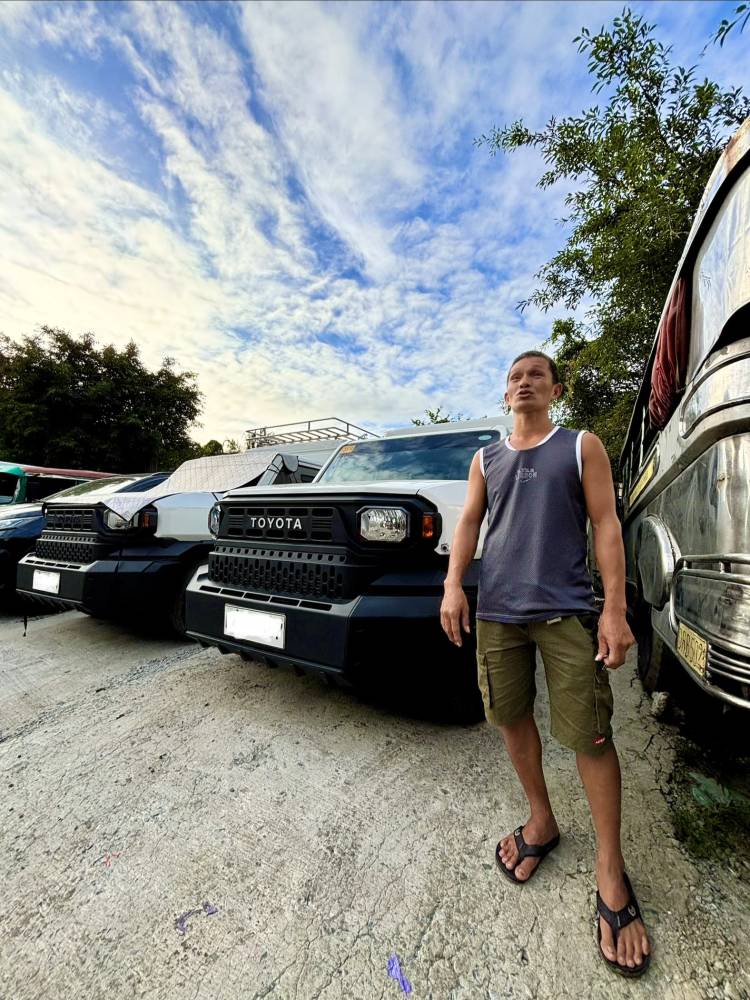
He said the Tamaraw van was now being used to carry goods for Jonalyn’s store, and for picking up and delivering scrap from the junk shop.
Danilo’s Tamaraw has also been used for family trips, showing its true power in recent family outings to mountainous destinations: Tagaytay in Cavite, to a beach resort in Batangas, and to Norzagaray in Bulacan. Danilo said the van could fit in 20 adults and children, and still run like it was nothing.
“The engine is very powerful. The acceleration is smooth. I love how it performs on uphill climbs. I chose the manual transmission because I want my two feet to still do the work,” Danilo said, the “padyak” spirit in him seeming to have carried over to his Tamaraw ways.
Jonalyn’s sari-sari store is another display of Filipino entrepreneurship. One section sold the usual “sachet culture” merchandise and school supplies. Another section offered digital money transactions (GCash cash-in and cash-out). Yet still another offered photocopying, printing, and lamination services.
It takes an entire family to run these varied operations, 40-year-old Jonalyn said with a chuckle. While Danilo takes care of “taking out the garbage,” she and their sons Isaiah Jerome, 22, John Daniel, 21, Princess Danica, 20, and Elijah, 17, take care of everything else (eldest Isaiah sometimes takes on scrapping duties). The youngest, Queen Hannah, at 4, is free to do 4-year-old things, for now.
Still, with all the chores needed to be done at home, the Gabon kids haven’t neglected their studies. Isaiah is about to decide which university to continue his mechanical engineering course in, after working as a credit investigator for some time now. John is a sophomore BS Criminology student at Universidad de Manila. Princess is in her second year of a Hotel Management course at the Pamantasan ng Lungsod ng Maynila, while Elijah is in his senior year at Arellano University high school.
It’s fair to say that Danilo and Jonalyn’s hard-earned income is being wisely invested for the future. Danilo discloses that his junkshop earns anywhere between P60,000 to P90,000 a month, which is augmented by Jonelyn’s store, which earns up to P17,000 a month.
Mini-mountain
We walked a couple of hundred meters from his home, to a 100-sqm lot behind a building, fenced in with corrugated GI-sheets. I couldn’t see what was behind that wall, but I already guessed this was Danilo’s own “safety deposit box.”
He opened the gate, revealing a two-story high mini-mountain of unwanted but still valuable things, stored up scrap collected the past week or so. The pile was neatly segregated and bundled up into large, transportable sacks. He pointed to where plastic scraps were bunched in, the discarded metals, paper and cartons, even electronic gadgets and chargers.
The plastic scraps, he said, would be delivered to a factory in Valenzuela to be melted and reformed into plastic containers.
He said he employs four full-time staff to help him collect, store, and deliver the scrap materials. His sons also assist in driving the Tamaraw to pick up the scraps. The scrap materials are picked up from Quiapo, Carriedo, and four malls in Manila.
“We travel at night, from 7 p.m. to 12 midnight. We accumulate 500 to 600 kilos of scrap per day.” Danilo adds that his two cargo tricycles are still being used to this day.
“We earn an average of P3,000 a day. From this, we deduct our fuel expenses, about P300; the four employees are paid P300 each. I get to take home P1,500. Out of that, we deduct P500 for our food. P1,000 will be the junk shop’s capital for the next day.”

Riding shotgun
I then rode shotgun with Danilo as he drove his Tamaraw to Toyota Otis to get its floor matting and speakers fitted on. I was particularly mesmerized by the long, customized transparent stick shifter that glowed in multicolor a la disco lights. “It makes it easier for me to grab hold of the shifter,” Danilo said with a laugh.
Danilo acquired his Tamaraw via the no-downpayment plan, which also means that the monthly amortizations for five years will be somewhat of a challenge. “I will have to pay nearly P25,000 a month for five years, but it’s a brand-new vehicle, and it’s a Toyota,” he said. “The Tamaraw is a reminder of the hard work my family has gone through. And we will continue to work hard, not just for the business, but for my family.”
Danilo said the Tamaraw serves not just as an income-generating vehicle, but as a transport to keep his family safe. “I remembered when my kids had to go somewhere for their school assignments, they had to commute or rent a vehicle. Sometimes, they didn’t make it on time, or they were able to get home late at night. So this Tamaraw will also serve as their service shuttle.”
Danilo’s faith in himself is mirrored by the dealership’s belief in him. “Toyota (Otis) never showed hesitation. The team visited me at home. Then they told me to wait for a week. They saw how hard we worked and the honest money we earned,” Danilo narrated.
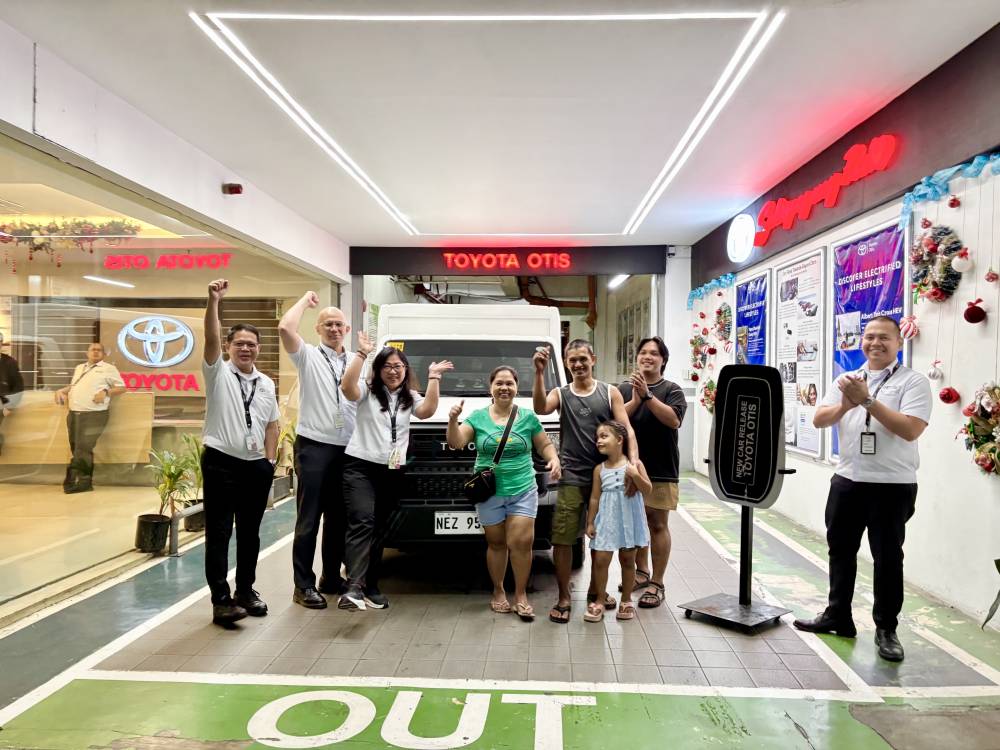
Toyota Otis group sales manager Engelbert DC Mandilag said: “When you get to know their business, you know that the family is capable of owning a brand-new Tamaraw. The only thing lacking at the time was the documents. I asked them to produce a barangay permit and barangay certification to prove that they had a long-term existing business. They were known in the area. Even the credit investigators saw that they lived there and their existing business had been there for a long time already. At first, the family was hesitant to acquire a brand-new vehicle. We offered to visit them to hasten transactions, and I could also see the condition of their businesses, which justified to our financing team (Toyota Financial Services) the release of the vehicle to the family.”
Mandilag added: “We want the Gabon family to become an inspiration for other micro-businesses who want to own brand-new vehicles. Our advice: Don’t hesitate to visit any Toyota dealership and inquire. One doesn’t need a huge income. All you need is a steady stream of regular income that will be enough to support the monthly installment for the Tamaraw, as well as the daily needs of the family. The Gabons’ junk shop and the sari-sari store are both steady income-earners.”
Toyota Otis vice president and general manager Mark J. Tejada said he was impressed with the level of commitment that Danilo has for his family and his employees.
“When I visited his junk shop, it was raining. Danilo told me, rain or shine they go out and do the work. Even if they’re sick. Four of the employees also have their own families to support. The only break was his birthday. People may take for granted his sense of commitment but it’s inspiring.”
Just as Danilo found something valuable in the trash people wantonly throw away, Toyota Otis found a gem of a hardworking family in the Gabons.
******
Get real-time news updates: inqnews.net/inqviber