









My 5 most impactful car-related stories of 2025


Before I share my most impactful mobility stories in 2025, let me put all of these into context.
The global mobility landscape is in a period of transition, and this transition is characterized by the interweaving of old and new technologies. On one hand, we have the traditional fuel combustion systems powered mainly by fossil fuels. On the other hand, we have new energies—electricity, solar, wind, even water. The bigger picture here is the interplay of economies, influenced by numerous factors. One of these key factors is the rising concern on climate change and its main driver greenhouse gases. Governments and the private sector are still searching for ways to find that perfect balance between profits and the planet, and that search is all the more pronounced in the transport and mobility sectors.
How do we design objects and systems to cut emissions to the bone? We need to go to the top 20 nations that produce emission volumes measured in gigatons (59, to be exact), and account for 80 percent of the world’s greenhouse gases. Of those 20, the top 5 account for nearly two-thirds of those emissions. These are China, the United States, the European Union (plus the United Kingdom), India, and Russia.
It’s in this context that I would like to mention engineer John Doerr when he gathered the expertise of scientists, policymakers, activists, business leaders, and philanthropists in an attempt to write a unifying solution in his book “Speed & Scale: An Action Plan for Solving our Climate Crisis Now.”
On a side note, according to “Climate Capitalism” author Akshat Rathi in 2024, though China and India are now the largest and third-largest annual emitters, respectively, the United States and Europe still hold the title of largest cumulative emitters.
From the point of view of those pushing for zero tailpipe emissions, the global countdown from 59 gigatons to net zero covers 5 broad sources of emissions: Transportation, energy, agriculture (with animal agriculture or humanity’s incessant appetite for animal flesh causing deforestation and poisoning bodies of water, but this deserves another story in another platform), nature, and industry. The objective, which was to electrify transportation, targets the 8 gigatons of emissions that come mostly from tailpipes.
Clearly, the push for the electrification of transportation is not merely economic in nature, but also climatic. As of January 2021, nearly 10 million EVs were on the road worldwide.
But this number is but a drop in the bucket. Many climate scientists still view transport as 95 percent dependent on oil. Internal combustion-powered cars, vans, and buses tend to stay in circulation for up to 20 years (more so for buses if they’re “hand-me-downs” to developing nations), planes for 25, and ships for 40. Energy experts from the UK’s University of Oxford, Jillian Anable and Christian Brand (authors of “Is the Future Electric?” in “The Climate Book”), said that with this data, this means that even if, from tomorrow, 100 percent of new cars and other modes of transport were fully electric or fueled by another renewable source, it would take decades for fossil fuels to completely disappear from this sector.
With that said, here are my top 5:
1. China sets new benchmarks in the EV price war
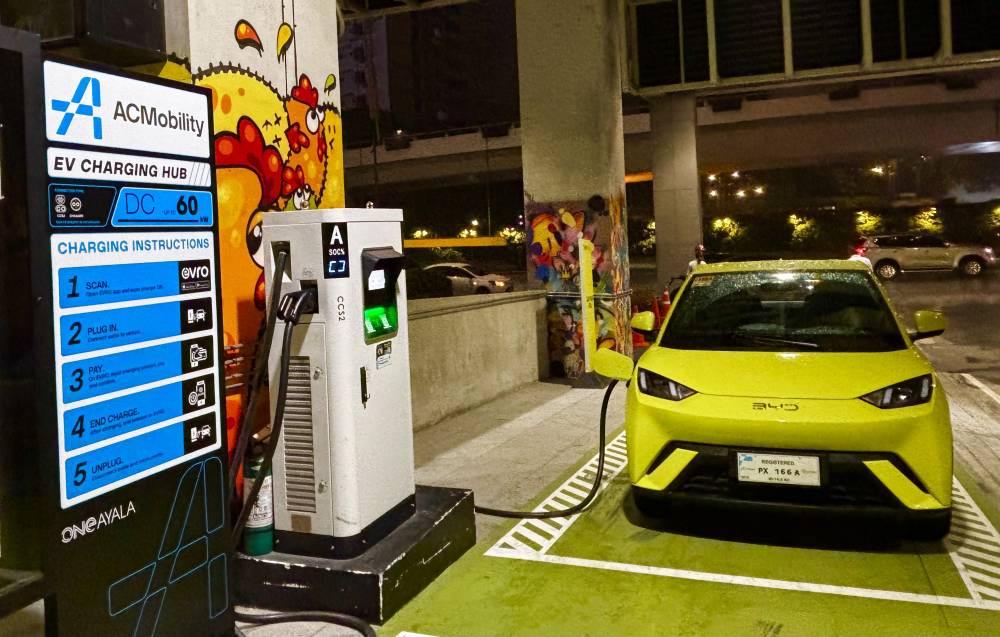
This year saw the proliferation of more Chinese EV brands, competing not just on specs, but more importantly on price. We saw the rise of brands such as BYD, GAC, MG, Jetour, Zeekr, and Dongfeng, and pound-for-pound, most of their NEV offerings went cheaper than ICE cars. To name such notable models, these were the BYD Seagull and Atto 3—battery EVs in the sub-P1 million to P1.5 million range, and considered the “sweet spot” for the Filipino middle class.
This year could also be considered the year that the Japanese “stranglehold” on the Philippine car market started to loosen with the influx of Chinese brands, which now also offered tech-laden features at considerably lower prices.
2. ACMobility divests from legacy automotive marques
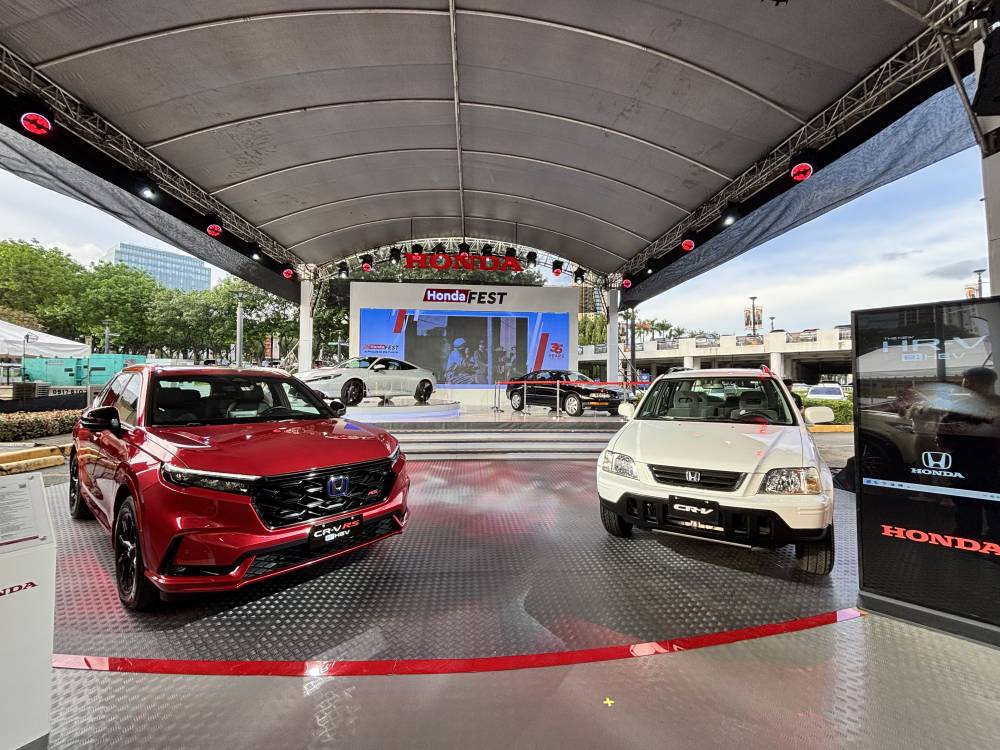
ACMobility of the Ayala Group effectively “burned the boats.” Some observers saw this letting go of the Volkswagen distributorship and 35-year stewardship of Honda dealerships as “brutal decisions.” It was the end of an era. The Ayala-Honda partnership defined the 90s and 2000s motoring scene (which gave us the Civic SiR era and the CR-V revolution).
Is the country’s oldest conglomerate “over the ICE age?” Hardly, because, even if it seems all-out in support of its BYD brand, reallocating massive resources (showroom space, capital, manpower) entirely to BYD and the Chinese brand’s EV ecosystem, there’s still its Kia brand that builds both EVs and ICEs.
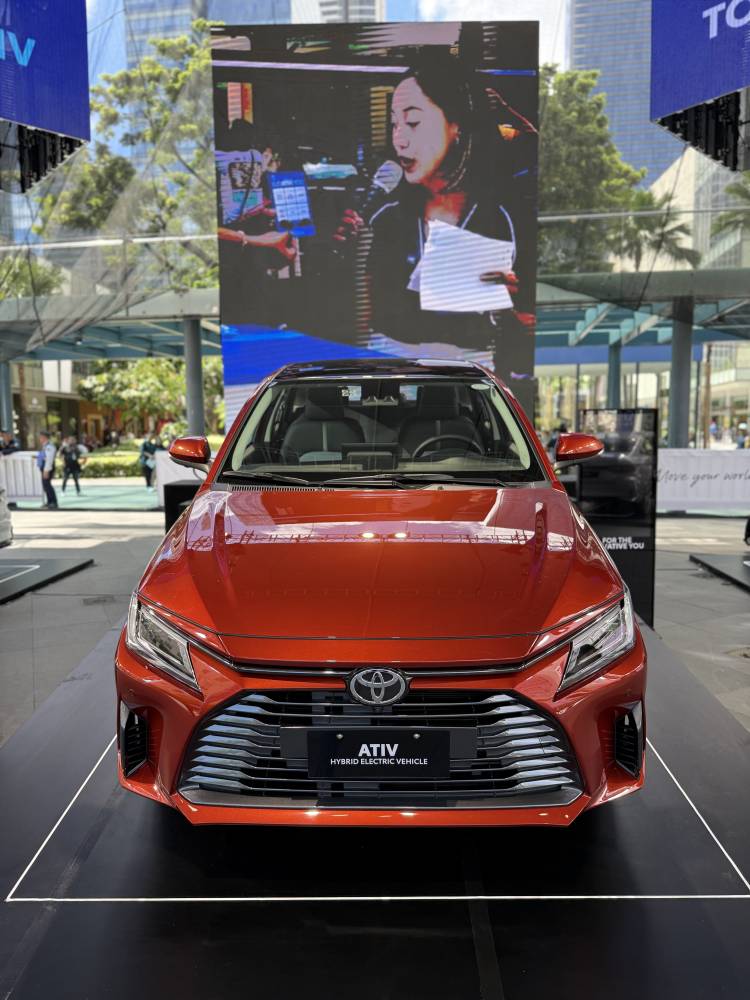
3. Auto giant Toyota’s multi-pathway approach vindicated
While everyone shouted “EV revolution,” Toyota quietly dominated the sales charts with what it does best: Making hybrid electric vehicles (HEVs), and adding its newest—and most affordable—hybrid offering, the ATIV. The Yaris Cross, Zenix, and Corolla Cross HEVs were everywhere. But then, as its final masterstroke of 2025, it finally launched the bZ4X BEV, which also signals that the carmaker has made good its commitment to go for the multipathway strategy; vindication for Toyota, which was previously seen as lagging in the EV race. Now, Toyota in the Philippines, which has a dominant 48-49 percent share of the market, is now in the best position to offer full EVs to their loyal customer base, with its HEVs serving as the perfect “transition” vehicles.

The bZ4X launch is Toyota’s way of telling the market, “We are ready for the future, but we will move at our own pace.” The bZ4X legitimizes EVs for the conservative ICE buyer who still harbors major doubts on Chinese brands.
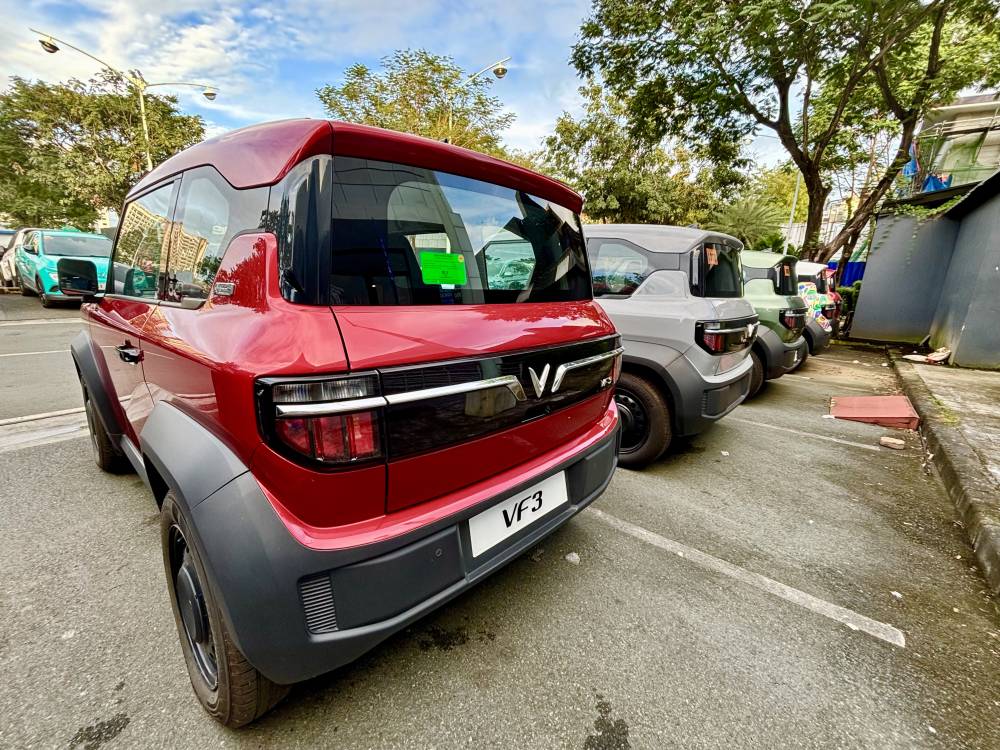
4. VinFast’s “total assurance” gamble: Battery subscription and residual value guarantee
The most “gung-ho” of all brands this year would have to be Vietnam’s VinFast. It didn’t just sell cars; it has rewritten the rules of ownership. First, it introduced the battery subscription to lower its EVs’ purchase prices. Then, in November, it introduced the Residual Value Guarantee (RVG) that promises to buy back the vehicle at 70% of its value after 3 years (and up to 90 percent after 6 months). What VinFast has done is it is doing away with the “zero resale value” stigma, the top argument against Chinese and new EV brands, and replaced that with the proposition of owning a “risk-free” EV. By combining low entry cost (subscription) with a guaranteed exit price (RVG), they created the closest thing to a “risk-free” car ownership experience in the Philippines.
If VinFast does everything else right, improves more on its vehicles, keeps communication lines open, takes feedback of Filipino owners and customers to heart, and continues its dominant taxi fleet Green GSM on the road with high satisfaction ratings, then VinFast has a shot at making it in the mainstream.
5. PUV Modernization stalled
Jeepneys, the “kings of the road,” still get to sit on their noisy, smoke-belching thrones in 2025 and in the foreseeable future. The government was forced to slow down, recalibrate, and admit that the jeepney phase-out or the PUV Modernization wasn’t working as planned. We saw budget cuts for subsidies and a “softening” of the deadline enforcement. This is the social cost of mobility, the sober counter-weight to all the “high-tech gifts” the upper strata of the market have been receiving. The sorry state of our public transport sector is a reminder that mobility isn’t just about high-tech cars; it’s really about moving people.
This also proves that you cannot just copy-paste First World transport solutions into a Third World economy without a massive safety net. The tension between government and transport groups (Manibela/Piston) showed that “modernization” is useless if the drivers can’t afford the units and the commuters can’t afford the fare. Even if the government has not officially admitted the phase-out timeline was flawed, highlighting the social crisis in our public transport system, the President has asked the Department of Transportation for a thorough review to find a “just and humane” approach.
So, with that, I wish all of us safe, happy, and productive journeys in 2026!