





My heart and my sweetheart are here: Pinoy scientist in BMW Germany settles in PH

A Filipino expert who held a high-paying position in Europe has decided to give it all up to serve his home country.
Filipino transport scientist Syrus B. Gomari had a promising career in Germany but chose to return to the Philippines in 2022 under the Department of Science and Technology’s Balik Scientist Program. His mission: To help solve the country’s complex urban planning, transport, and traffic problems. Since then, he has decided to remain in the country.
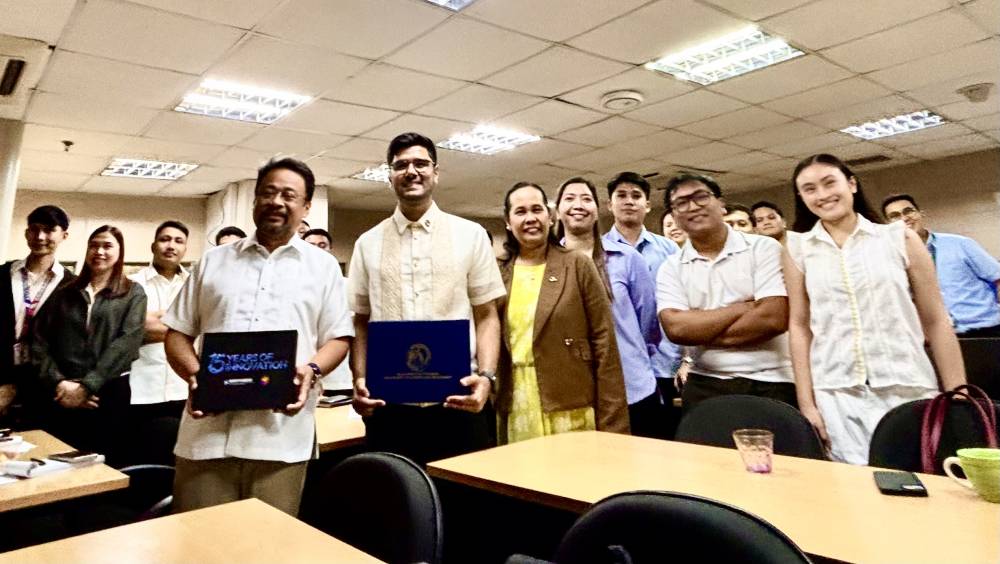
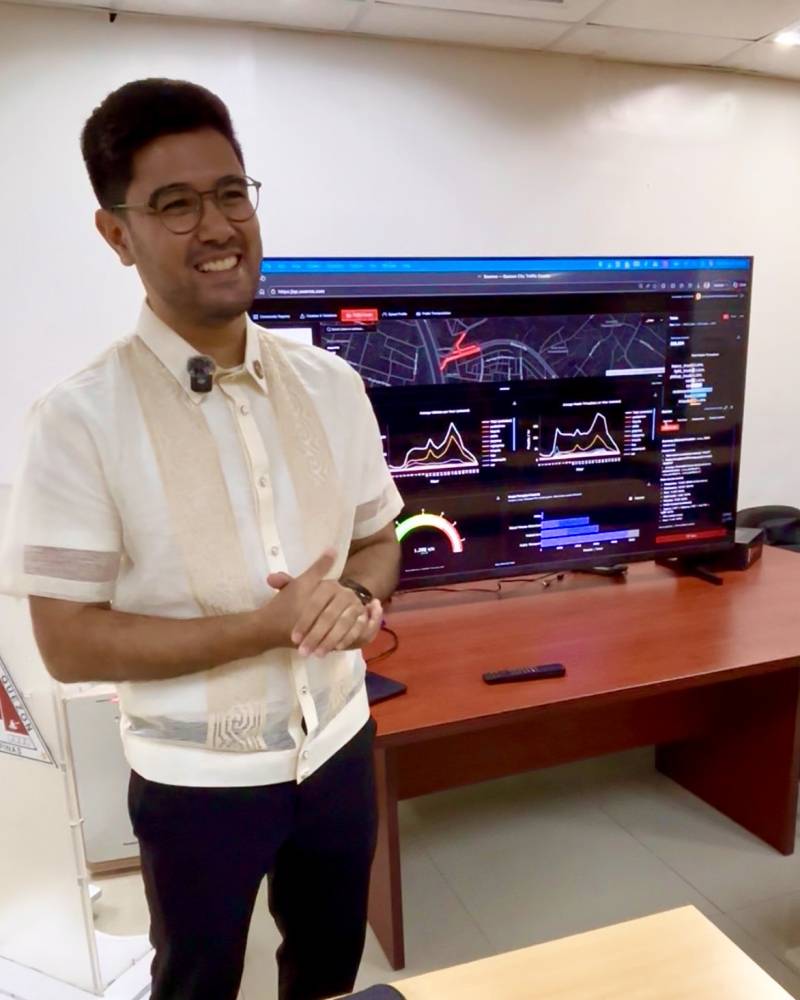
I met Gomari during a joint DOST-Quezon City government event on Feb. 18 at the Office of the City Administrator in Quezon City Hall. He was presenting his work on a sustainable mobility app for traffic management. Attendees included Assistant City Administrator for Operations Alberto Kimpo, DOST-PCIEERD Chief Science Research Specialist Dr. Ruby Raterta, and various DOST and city hall officers mentored by Gomari.
The event served as Gomari’s exit report presentation. He’s collaborating with the QC government to implement transportation and sustainable mobility planning using AI-powered data collection. He has also mentored projects in Pasig and Naga City, and conducted research and consultations with various universities nationwide.
During the presentation, he demonstrated Seermo, a Philippine-developed, AI-powered decision-making tool designed to optimize transport planning and traffic management. Developed by MobilityVision+ and Gomari himself, the tool accelerates data collection 10 times faster than traditional methods, enabling LGUs to create evidence-based, sustainable policies.
Before joining the government program, Gomari was with the BMW Group in Germany. From 2018, he spent three and a half years as a PhD candidate at the Technical University of Munich, funded by BMW. He worked within the navigation team at BMW’s headquarters, where he was involved in creating systems and analyzing the quality of the company’s parking information system. This experience served as his entry point into the software development side of transport and urban planning.
Gomari holds an international MSc degree in Infrastructure Planning from the University of Stuttgart and a BSc in Civil Engineering from De La Salle University-Manila, where he was named the Most Outstanding Civil Engineering student in 2013.
‘Carefully calculated move’
After his presentation, Gomari told me: “While I’m young, I wanted to take the chance to return as a Balik Scientist. Of course, the option to go back to Germany will always be there, but I’ve moved past that now. I didn’t return; I’m already here. It feels permanent now, but it was a carefully calculated move. I wanted to see if the DOST and the LGUs were receptive to the idea, and it was up to me to prove that it would work.”
He added: “There was no certainty with that decision. It was a leap of faith. While the public reason is my lifelong passion for helping the Philippines, the other half of the story is that my girlfriend lives here. That was a major motivator. I figured if things didn’t work out career-wise, at least we would be happy. It was difficult to give up the comfort and the high-paying job in non-chaotic cities. But in the Philippines, the presence of so many problems and so much chaos—especially in planning—means there are also many opportunities to fix things.”
Density as an asset
Despite the challenges, Gomari remains hopeful. “I always say to every LGU that it’s about how you leverage the assets that already exist,” he noted, citing Metro Manila as an example.

“I often hear people without technical knowledge say that Metro Manila is so dense that there is nothing more we can do. But the truth is, it’s about what you do with that density. Germany and Finland actually wish they had the density we have. Because we are so dense, it is actually easier to make our cities walkable; we have establishments spread everywhere due to organic development. It’s just that our current street designs and planning methods are still chaotic, but that can be fixed.”
Gomari argues that density should be viewed as a strength rather than a liability.
“In many European countries, public transport has to be subsidized because there aren’t enough passengers. In our current system, as flawed as it is, some bus companies refuse to give up because they are actually making a profit. That is the reality. If we recognize that our density ensures a public transport system will be profitable regardless of the model, we can see it as an asset.
“When I saw those opportunities, that’s when I decided to give it a try. Initially, I only gave myself a 6-month window, but the program was extended to a year. I won’t forget July 2023—that was the first time I met Pasig Mayor Vico Sotto. When he gave the green light, I knew we could do this. Everything snowballed from there—from my presentation in Pasig to starting in QC, and meeting former VP Leni Robredo early last year. It all started with taking a chance.”
The decision to settle in the Philippines was ultimately a deliberate one. “I was at a crossroads finishing my PhD with BMW. I had to choose between staying in Germany to enjoy a very stable but ‘boring’ life—because their urban planning is already so well-developed—or coming here where I can truly make a difference.”