








Safer than ever? 40 years of PH road-safety laws

The Philippine automotive industry has truly exploded in the last four decades.
The Chamber of Automotive Manufacturers of the Philippines Inc. reported that local car sales reached a record 467,252 units in 2024. Barring any major changes in buying habits, the industry is expecting to hit the 500,000-unit mark this year.
But although increasing car sales may seem encouraging, there is a flipside to all this, besides the often-reported gridlock in metropolitan areas – road crashes are number-one killers of young people aged 5 to 29 worldwide, along with being the 12th leading cause of death across all ages, according to the 2023 World Health Organization (WHO) Global Status Report on Road Safety.
Digging deeper into the numbers, the WHO said 1.19 million people were killed globally in 2021, including 11,096 Filipinos recorded by the Philippine Statistics Authority. Meanwhile, the Metropolitan Manila Development Authority (MMDA) reported that 427 Filipinos were killed and 21,910 were injured in Metro Manila road crashes in 2024.
Given that the Land Transportation Office (LTO) seems to be ramping up its enforcement of traffic laws (at long last), this seems like a good time to refresh ourselves with major road-safety legislation from the last 40 years.
Buckle up!
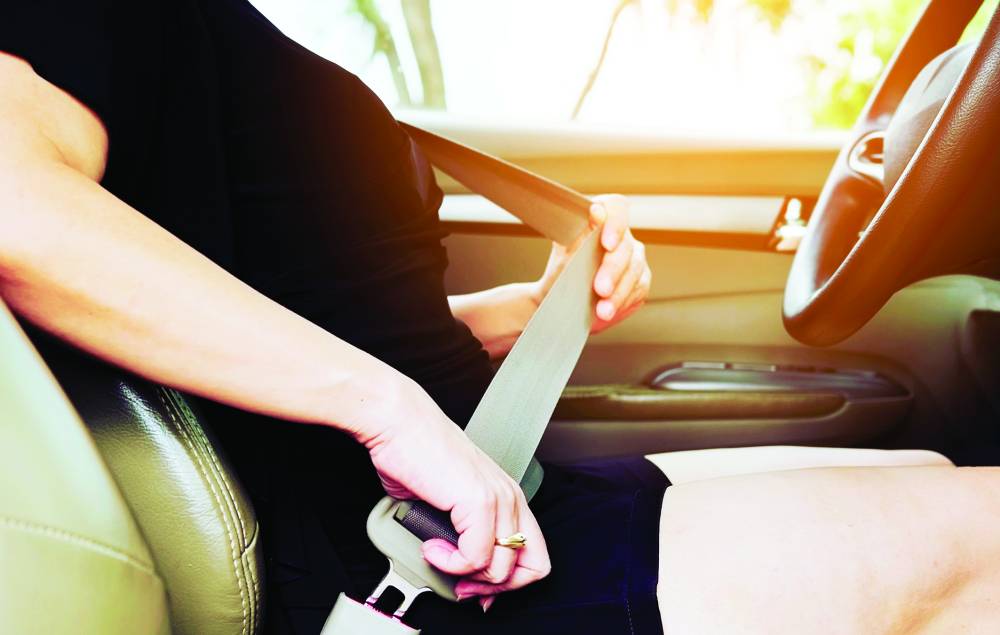
Republic Act (R.A.) 8750 or the “Seat Belts Use Act of 1999” is still one of the country’s most important traffic laws.
Besides finally mandating the installation of seat belts in all brand-new cars, the law requires the front passengers of public and private vehicles to buckle up while the engine is running (even if the vehicle isn’t moving). The law also applies to the rear passengers of private vehicles.
These provisions were expanded in February 2019 by R.A. 11229 or the “Child Safety in Motor Vehicles Act,” which mandated that only passengers aged 13 and above (and at least 150 centimeters tall) are permitted in the front seat. Younger or shorter passengers must sit in the back with an applicable child restraint.
The WHO said major road-crash trauma was “much lower” for seat-belt users (especially in vehicles with airbags, which are designed to supplement seat belts). It also said child restraints reduces road-crash deaths by at least 60 percent, with the greatest protection for children under 4 years old.
Despite signing it into law, then-President Rodrigo Duterte ordered the suspension of R.A. 11229’s implementation in February 2021 following the economic difficulties caused by the COVID-19 pandemic. As of press time, Duterte’s successor (and fierce political rival) President Ferdinand Marcos Jr. has not officially lifted the suspension.
Wear your helmet
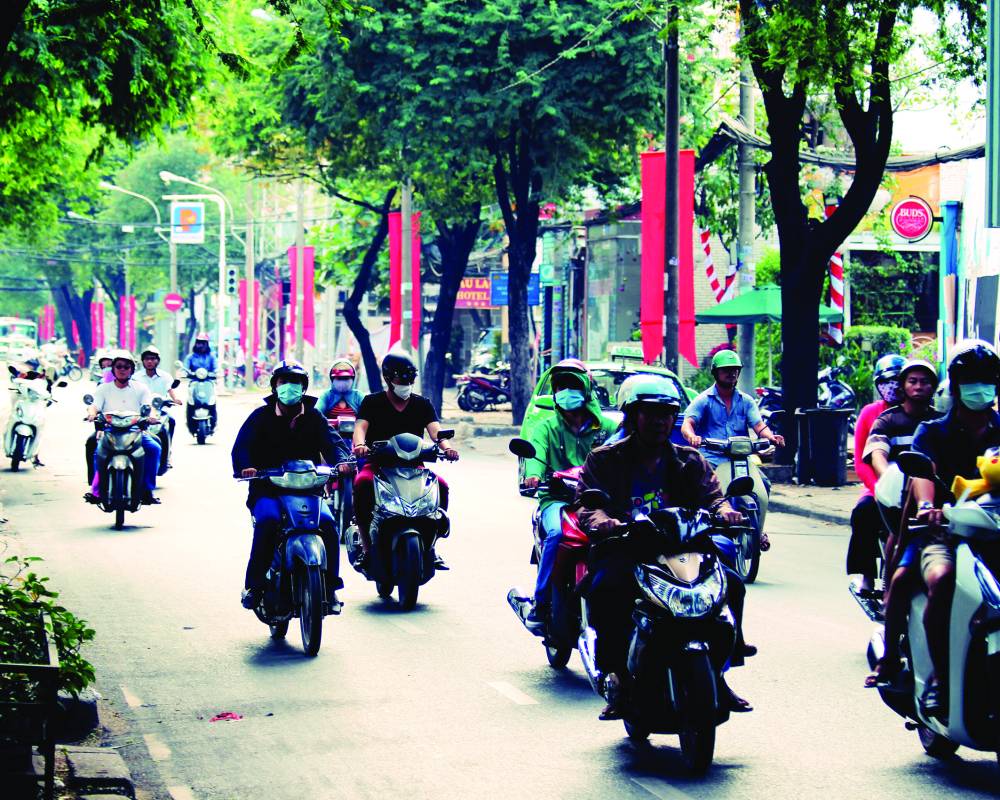
R.A. 10054 or the “Motorcycle Helmet Act of 2009” is one of the most frequently violated traffic laws in the country.
It requires all motorcycle passengers to wear a government-approved helmet on any road, regardless of the distance of the trip. This was expanded in July 2015 by R.A. 10666 or the “Child Safety on Motorcycles Act,” which not only requires children to wear a helmet, but also to reach around the waist of the driver and comfortably step on the foot peg.
Although wearing a helmet can be bothersome, it really is your first and last line of defense on two-wheelers – the WHO reported that head injuries are the main cause of death in motorcycle crashes, with quality helmets reducing the risk of death by six times and reducing the risk of brain injuries by 74 percent.
These figures are particularly important because the MMDA reported that motorcycles were the vehicles with highest involvement in fatal (271 or 48.22 percent) and non-fatal injuries (20,206 or 53.3 percent) in Metro Manila road-crashes in 2024.
Focus on the road
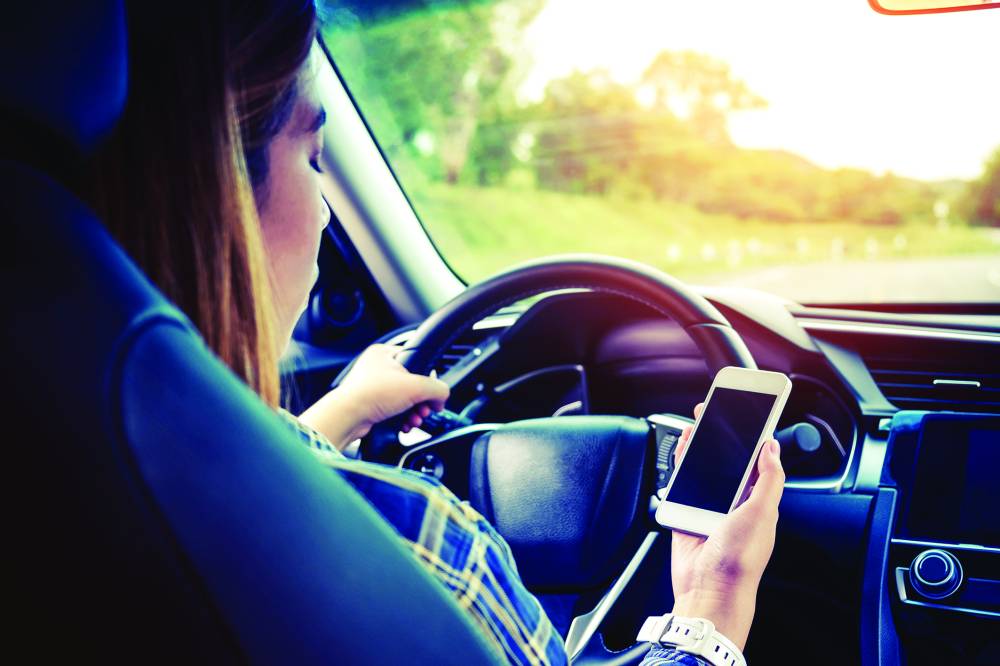
Distracted driving is likewise a serious road-safety issue that has been exacerbated with the advent of smartphones and their fiddly screens.
R.A. 10913 or the “Anti-Distracted Driving Act” seeks to address this by prohibiting drivers of all types of private, public and diplomatic vehicles from using electronic devices for calls and texts, as well as for the bizarre habits of watching movies, playing games and the like, when the vehicle is in motion or temporarily stopped at a stoplight.

However, the 2016 law permits the use of a hands-free device that doesn’t interfere with the driver’s line of sight. The WHO noted in its 2018 Global Status Report on Road Safety that using a phone (whether with or without a hands-free device) makes being involved in a crash four times more likely, while texting increases the risk by around 23 times.
And even if you leave your phone alone, it’s no good getting behind the wheel while under the influence of drugs and/or alcohol. The WHO said up to 69 percent of fatally injured drivers in low-to-middle-income countries like the Philippines had consumed alcohol before being involved in a road crash.
To counter this danger, R.A. 10586 or the “Anti-Drunk and Drugged Driving Act of 2013” outlines not only the maximum blood-alcohol concentration (BAC), but also the procedure for apprehending and testing drivers suspected to be under the influence.
Drivers of private vehicles that are under 4,500 kilograms must not exceed 0.05-percent BAC, as determined by an alcohol breath analyzer (also known as a breathalyzer), while drivers of motorcycles, trucks, buses and public-utility vehicles must have zero BAC. Any form of illegal-drug use, as determined by a chemical test, is likewise prohibited.
A new leaf?
As with many laws in the Philippines, substandard enforcement has long hampered the supposedly good effects of these comprehensive laws.
But with the LTO intensifying its campaign on vehicles that are unregistered and un-roadworthy (including luxury supercars), perhaps it can finally fulfill its mandate to fully enforce all traffic laws. In addition, agencies like the MMDA are relying on no-contact apprehension programs to more effectively catch and penalize law-breaking motorists.
Civil-society groups like the Automobile Association of the Philippines and various mobility organizations have likewise intensified their calls for safer roads, along with coordinating with policymakers and law enforcers to make sure that traffic legislation is worth more than the paper they’re printed on.
Do you think our roads have become safer over the last 40 years?