










The Destinator, from the mind of a family SUV specialist


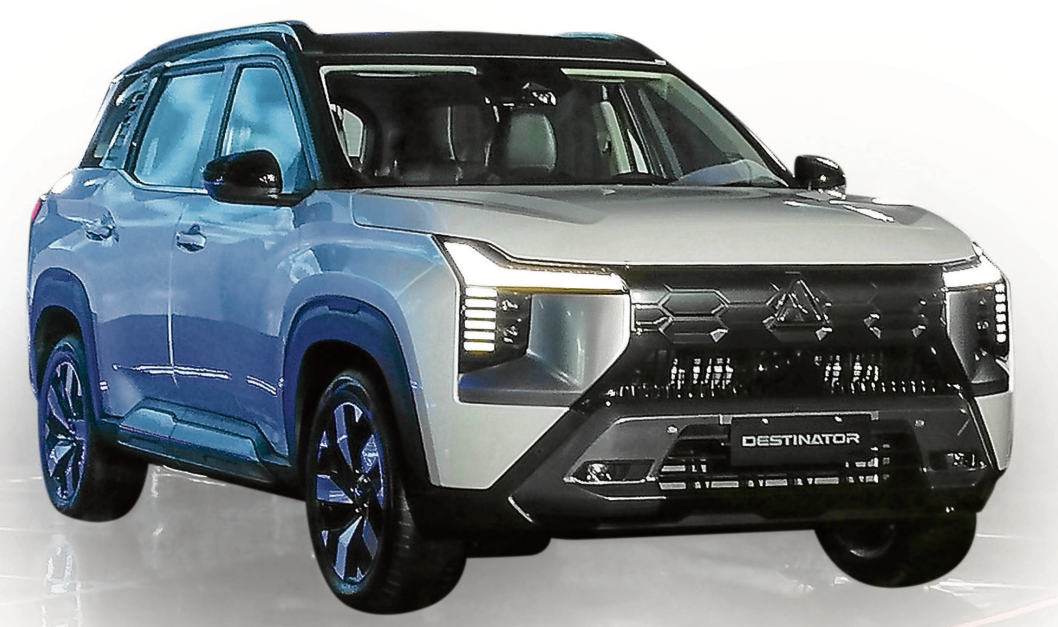
The Mitsubishi Destinator is the newest 7-seater in town that positions itself as having the premium driving feel of an SUV with the versatility and practicality of an MPV. As it was purposely built for adventure-driven Filipino families, the Destinator took care of what matters the most, as it was able to achieve the highest 5-Star safety rating in the Asean NCAP, a comprehensive safety performance assessment program for new vehicles in the Association of Southeast Asian Nations.
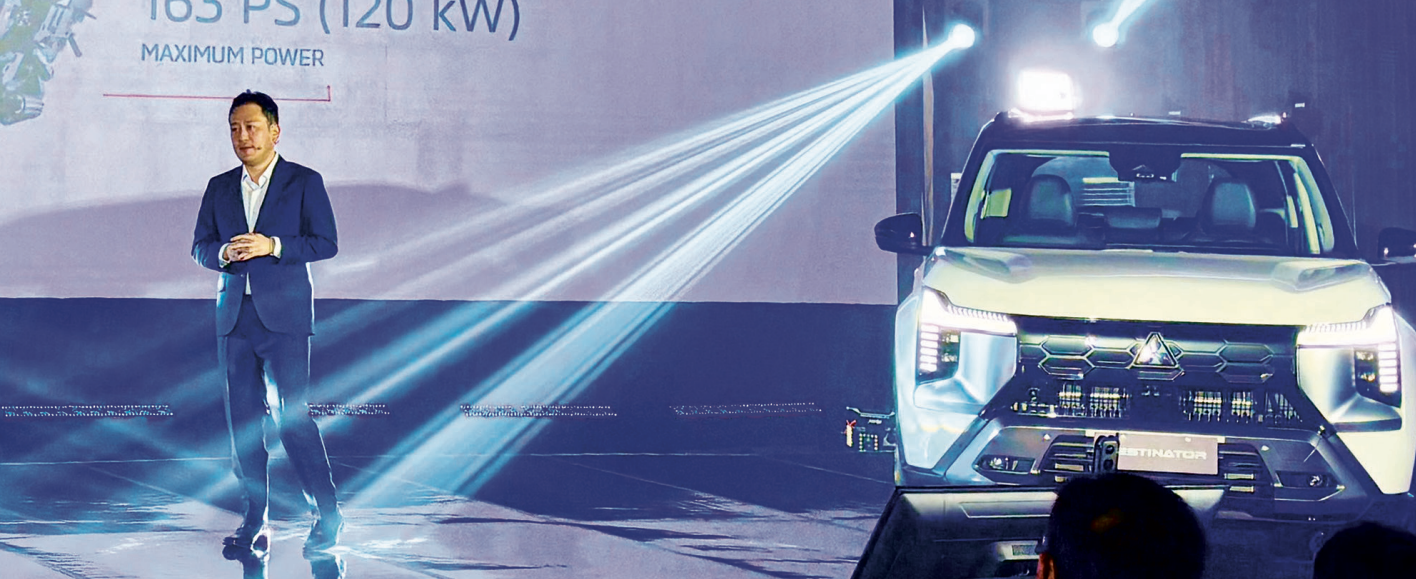
I was there during the Nov. 20 launch of the Destinator, but for some reason, I wasn’t able to go behind the wheel to take it for an initial spin. I got the next best thing, however, taking a ride in the mind of Masahiro Ito, Mitsubishi Motors Corp chief product specialist, who knows the Destinator like the back of his hand.
The first thing that came into my mind when I saw the Destinator was the direction that this new SUV is aiming for. It’s a 7-seater with high ground clearance, and I couldn’t help but make direct comparisons to the Montero Sport.
Ito wasted no time differentiating the Destinator from the Montero Sport. He said that the Montero Sport has 4WD and a ladder-frame (versus the Destinator’s unibody or monocoque platform), which contributes to authentic off-road capability, and a more robust, rigid, and stable ride in any road conditions. The Destinator, on the other hand, “offers the same type of reliable off-road performance even with 2WD while providing a comfortable ride and cabin environment that allows any family to enjoy their time inside, no matter how long they go.” This model combines the spaciousness and comfort of an MPV with the capability of an SUV. He added that the team upgraded ride comfort even compared with any type of MPV.
Ito said that he assumes the reason Montero Sport and Destinator feel similar in this direction is that Mitsubishi “consistently develops and offers something that would reflect our brand identity, and Mitsubishi Motors-ness.”
Apart from this, Ito said he and his team ensure that the Destinator stays different from Mitsubishi’s other SUVs and MPVs through these aspects: The powertrain; the Tarmac Mode; Mitsubishi Connect; Cybersecurity; Yamaha Audio Integration; and suspension tuning.
Possible hybrid?
I remarked that the 1.5L Turbo (4B40) is a potent force, but would MMC consider a hybrid variant, given the current trend?
He answered: “We know the market trend toward electrification and we are exploring all possibilities for our lineup. The Destinator now only has ICEs (internal combustion engines), but we upgraded our turbo engine with additional engineering for a water-cooled intercooler and dual injection system to achieve both performance and fuel efficiency.”
He added, “A water-cooled intercooler also has the advantage of reducing the turbo lag compared to the normal intercooler located in front of the engine. We decided to use a downsized turbo engine considering the performance of the vehicle, fun to drive, practicality in daily use, with fuel economy and ease of daily driving.”
Tarmac Mode
Ito said that the Tarmac Mode is an “exciting addition, which provides driving pleasure with agile dynamics on dry paved roads.”
Ito’s team integrated and adjusted basically four types of control systems: Traction control for slip resistance, active yaw control (AYC) for ease of turning, acceleration control for responsiveness, and steering control for steering effort.
“Compared to the normal (drive) mode, Tarmac Mode has the following differences: AYC has bigger control and operation for easier turning even with high speed; acceleration gain is bigger for ease of acceleration and to improve responsiveness. Steering effort (weight) will be bigger especially at high speed so that the driver can easily control the vehicle even when drivers are required to have accurate control at high-speed curves and winding roads,” Ito explained.
Mitsubishi Connect
As the Destinator marks the debut of Mitsubishi Connect in the Philippines, I asked Ito of the readiness of the Philippine telecoms infrastructure to successfully facilitate this feature in the vehicle. Ito confidently said: “The Mitsubishi Motors engineering team has conducted tests in collaboration with Philippine network operators, and confirmed that sufficient reliability has been ensured.”
Cybersecurity
With remote functions like door unlock and engine start now available in the Destinator via smartphone, what cybersecurity measures or encryption standards has Mitsubishi implemented to prevent hacking or unauthorized access?
Ito said: “Mitsubishi Motors Connected service has implemented security measures for remote functions such as door unlocking and engine start via smartphone in accordance with international standards. These include mutual TLS-based encrypted communication and multilayered protection mechanisms such as using monitoring tools, detecting unauthorized or anomalous behavior, along with other defensive and threat-detection controls.
“Mitsubishi Motors has obtained UN-R155 (CSMS) and UN-R156 (SUMS) process certifications in Japan and the EU, and applies equivalent security levels in other regions such as Indonesia and the Philippines. Through these efforts, Mitsubishi Motors ensures that remote vehicle functions are protected against unauthorized operations in compliance with international security standards,” he said.
Yamaha Audio Integration
Among the strong selling points of the Destinator is the Yamaha Premium Sound system. I asked Ito if the inclusion of this system required any structural changes to the door panels or sound deadening materials (addressing noise, vibration, and harshness or NVH) to maximize the acoustic performance.
Ito replied that “the Destinator itself adopted lots of sound absorbing materials for the quiet cabin, but we use additional deadening for the models with Yamaha audio.”

With the inner panel, he explained that the doors are utilized as a speaker enclosure by covering the service holes with the service hole cover, which allows for sufficient production of low-pitch sound.
And with the outer panel, the team added damping sheets and stiffeners (which are standard for the Destinator), preventing the “muddy” sound caused by the resonance of the iron plate.
“We also worked together with Yamaha Sound Meister for creating the best sound fit for the Destinator by utilizing these additional materials and their sound knowledge and tuning skills,” Ito added.
Suspension tuning
I asked Ito if the suspension tuning was calibrated specifically for Philippine road conditions (which can be rougher than other Asean regions)?
He said: “We believe the Destinator provides a comfortable ride globally, but suspension tuning is made especially for the Asean market. For vehicle development, we conducted approximately 45,000 km of test driving in Asean, in collaboration with development, sales, and national staff from the local distributor. We also have knowledge of road conditions in each country and understand that Philippine road conditions are more severe than other countries. We made the best tuning for a comfortable ride considering the road conditions in the Philippines based on evaluations here.”
‘Gravitas and dynamism’
Finally, I asked Ito if he could describe the personality of the Destinator in just one word that separates it from the Xpander and the Montero Sport, what would that be?
The man paused for a time. “This is a very good question and difficult for us to express with only one word. But when I was working with our design team, I got several key words for expressing the design: Gravitas and dynamism. This is the design concept expressing the design of Destinator. Timeless modernity: Not only are the proportions of our SUV robust and strong, our designers try to make the design with much sophistication and a design that always feels novel.”
Hence, he said, the use of the 3D transparent grille effect, which is a distinct departure from previous models.
“That 3D grille is part of expressing this design direction,” Ito said.