











The other purposes of a multi-purpose vehicle

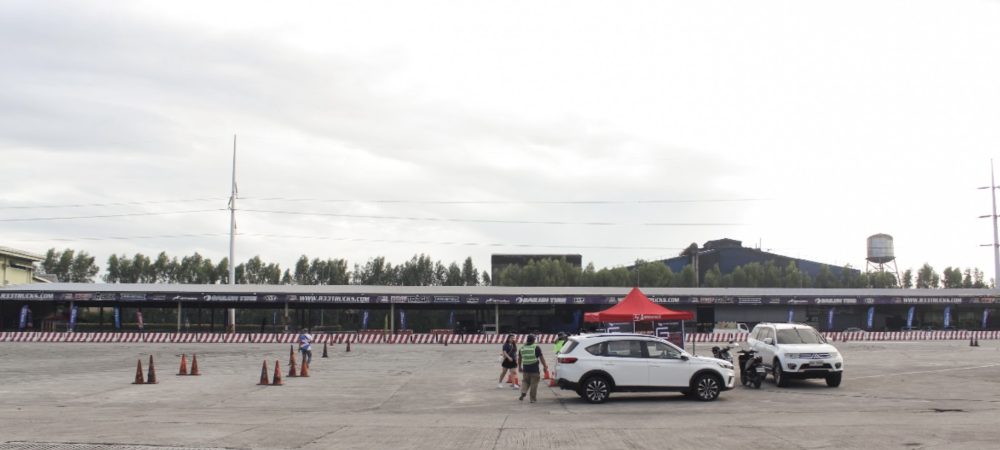
It was rather unsurprising that the best-selling car in the country in 2025 was the Mitsubishi Xpander and Xpander Cross.
Let’s face the facts – the seven-seat, multi-purpose vehicle (MPV) occupies the same price bracket as a traditional sedan. Whether you’re a large family on a budget or a Transportation Network Vehicle Services driver who wants more space and durability than a regular four-door, there’s just no beating the value proposition of MPVs.
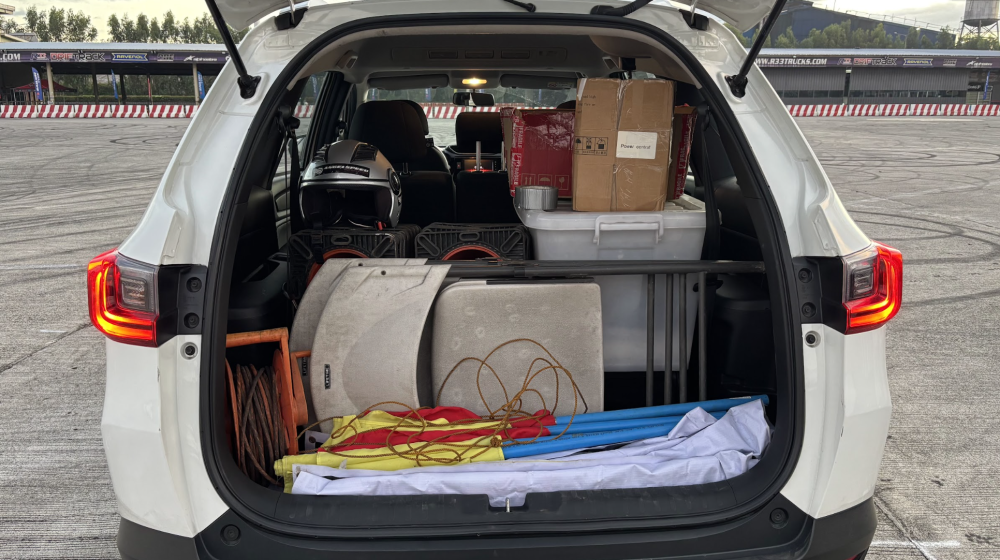
But what if you need to haul an assortment of bulky items like, say, equipment for a grassroots motorsport event? To find out what more an MPV can do, we contacted Honda Cars Philippines Inc., which graciously lent us their base-model BR-V S.
Easy to load
Outside of my duties in Inquirer Mobility, I am also the Race Director of Gymkhana Pilipinas or GP (which we market as “the most fun you’ll ever have doing 40 km/h”).
Gymkhana traces its roots to medieval horsemanship events, where soldiers had to ride their steeds through a series of obstacles. Nowadays, the horses have been replaced by automobiles, with different countries having varying takes on the gymkhana format.
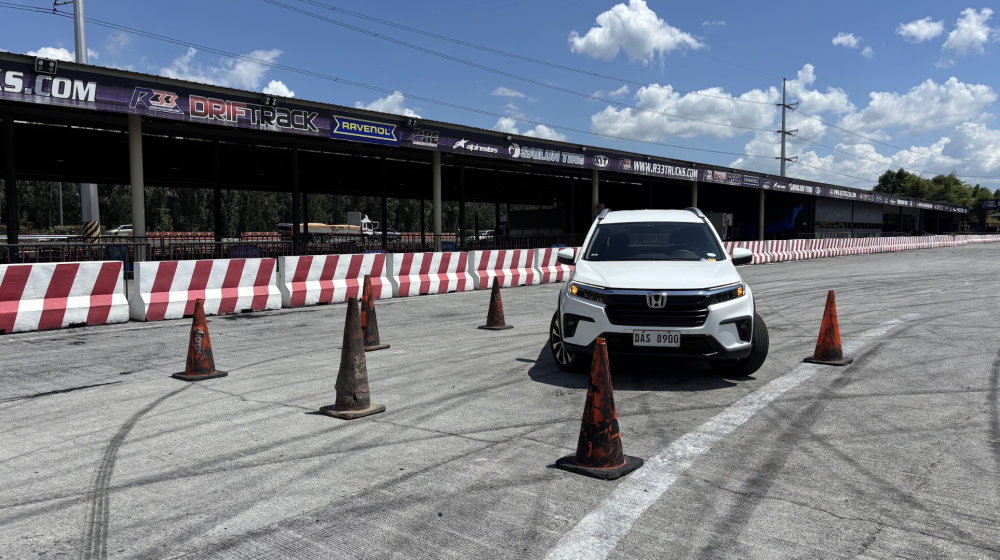
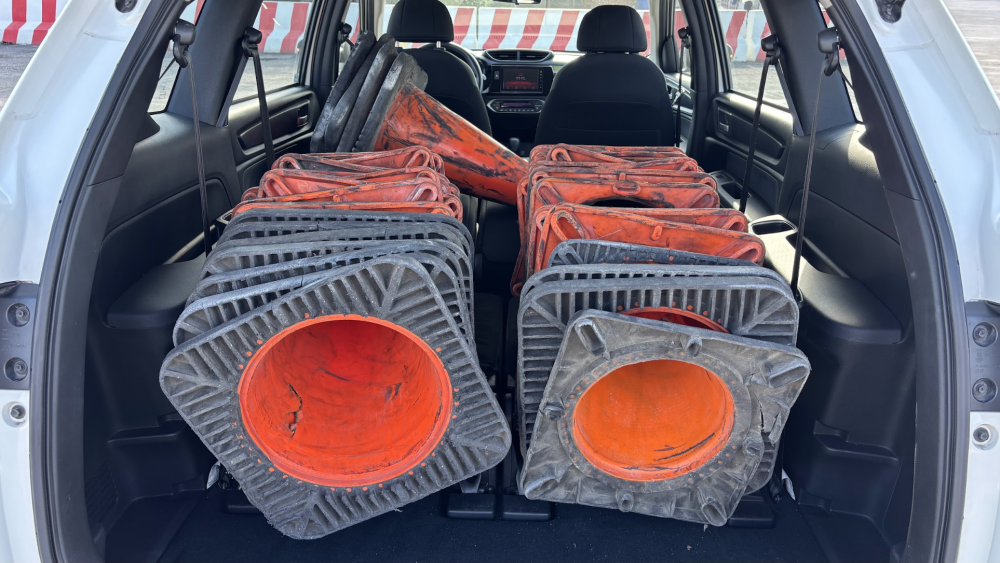
GP layouts are at least 200 meters long and involve highly technical maneuvers like chicanes and rotundas – this ensures that horsepower alone won’t guarantee a win. For our GP Match 1 last Mar. 8, I had to set up dozens of three-foot-high, rubberized pylons all by myself the day before at the R33 Drift Track in San Simon, Pampanga.
Thankfully, the BR-V’s split-folding second-row and third-row seats created an absolutely cavernous area for all those heavy cones. This Honda load-lugger also served as a welcome respite from the searing summer heat, thanks to its immensely powerful air-conditioner.
Easy on gas, Race day.
We loaded the BR-V with all our gear, then headed off to Petron Marilao in Bulacan. After breakfast, it was off to the R33 Drift Track as daylight crept into this beautiful Sunday morning.
One of the biggest reasons that I chose the BR-V over the Xpander for this experiment is its class-leading performance – this is thanks to Honda’s familiar 1.5-liter, twin-cam, 16-valve inline-4 gasoline pumps out 119 horsepower and 145 Newton-meters of torque, which are coursed through a continuously variable transmission (CVT).
The CVT is also what makes the BR-V considerably more fuel-efficient than the Xpander, which is let down by its severely antiquated 4-speed automatic gearbox. The Honda did 18 kilometers per liter at 100 kilometers per hour on the expressway (loaded with three people and our equipment) whereas our prior test of the Mitsubishi had only mustered a subpar 15 kilometers per liter at 100.
With the price of fuel reaching eye-watering levels (particularly diesel), the difference in fuel economy becomes noticeable over time, especially with a small events business like mine that does a lot of travelling. The BR-V’s peppy and fuel-efficient gasoline powertrain fits the bill just right.
Easy to drive
After a grueling day of racing action (GP was part of the R33 Cars Motorsport Fest that day), we loaded the BR-V once more and headed home.
Although I found the steering numb and the brakes rather spongy, the BR-V was just the sort of car I needed following hours and hours of work under the sweltering heat and occasional rain. Honda could get some tips from Mitsubishi on making the suspension more pliant – the Xpander Cross uses Montero Sport shock absorbers to handle bumps with aplomb.
I would also like to see the superb Honda SENSING active-safety suite applied across the entire BR-V range, similar to what Honda Cars Philippines does with the City, HR-V, Civic and CR-V. As of press time, this life-saving system is only standard in the top-spec BR-V VX, which also gets soft leather upholstery instead of the rough cloth in the S variant.
Easy choice
My week with the BR-V S reinforced my view that Honda Cars’ seven-seater remains one of the best in its class.
And it also proved why MPVs are so popular in the Philippines. You get the easy driving experience and fuel economy of a subcompact sedan, combined with the space and ground clearance of an unwieldy sport-utility vehicle.
Indeed, cars like the BR-V are more than just family shuttles – these can be viable workhorses for businesses like GP that don’t need the bulk and expense of a turbodiesel pick-up truck.
With just a few choice upgrades and some tweaks to the driving dynamics, I don’t see why Honda Cars’ MPV can’t take the Xpander’s crown with ease.