

Toyota Gazoo Racing PH Cup, other major motorsports events temporarily paused due to energy crisis

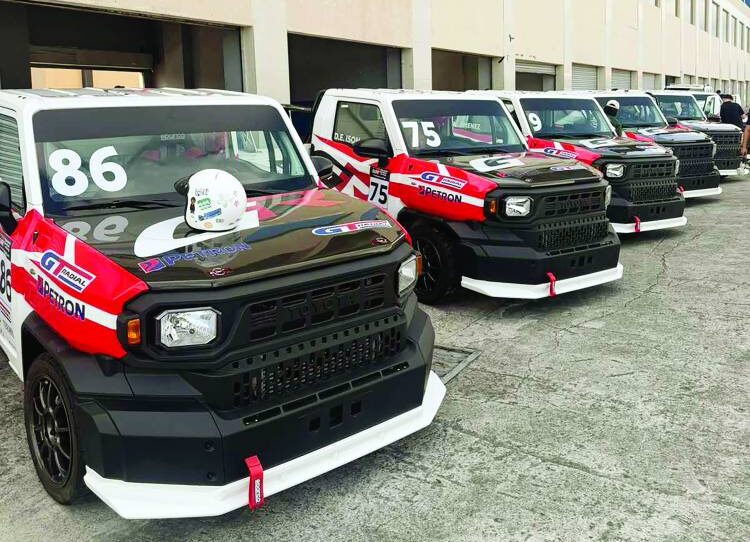
Three weeks ago, the local motorsports community was still celebrating after the successful staging of the Toyota Gazoo Racing Philippine Cup Weekend One street race held at the vast Riverpark compound in General Trias, Cavite.
The narrative, however, has drastically shifted amid the ongoing war in the Middle East and massive global supply disruptions. We’re now all in limbo on when the prestigious local motorsports event, along with other racing activities, like rallycross, slalom and karting, will again resume.
Specifically, the suspension includes holding off the Vios and Toyota Tamaraw one-make races.
This was after the Automobile Association Philippines (AAP) temporarily suspended all local motorsports activities and the issuance of permits.
This decision, announced late last month, stems from the State of National Energy Emergency declared by President Ferdinand Marcos Jr. through Executive Order (EO) No. 110 last March 24.
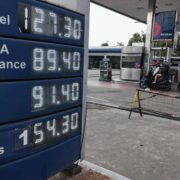
The said suspension is a proactive move to support national energy conservation efforts as the country faces an immense unprecedented fuel crisis.
In a statement, Toyota Motor Philippines (TMP) is committed to supporting national energy conservation efforts and will monitor developments to announce updates on the resumption of motorsports activities.
Mazda Philippines followed suit by suspending all motorsport activities indefinitely due to the global energy crisis.
“Mazda Philippines is one with the nation during this challenging time, as the world faces a global energy crisis,” the Japanese automaker’s local distributor, Bermaz Auto Philippines declared in a statement. “In solidarity with the country’s fuel conservation efforts, all Mazda motorsports activities are put on hold until further notice.”
Government precautionary measures
To secure a stable energy supply and protect the economy from global oil price volatility and supply disruptions, the government uses its emergency powers to fast-track procurement, authorizing the government to immediately purchase petroleum products without standard bureaucratic delays.
Moreover, through regulatory action, it can direct agencies to monitor and prevent hoarding, profiteering, and supply manipulation.
The government likewise can now order sectors to implement fuel and electricity saving measures, targeting a 10–20-percenr reduction.
Also, for one year, the president is activating UPLIFT or Unified Package for Livelihoods, Industry, Food, and Transport.
AAP steps in
As this crisis lingers on, the AAP is doing whatever means it can to mitigate the impact on the local motorsport scene. For one, the institution is looking for alternative fuels, like alco-gas and pure alcohol for local races.
It is also looking at electric motorsports, which likewise do not rely on petroleum-based fuels. Particularly, this high-performance sector is rapidly evolving and is being actively pursued in other countries. This utilizes advanced technology like traction motors, inverters and high-energy systems for competition.
According to reports, the AAP head of motorsports department, Rikki Dy-Liacco, said that the motorsports community has already been feeling the brunt of steep fuel prices in early March and when the government already declared the state of emergency, “that’s when the AAP stepped in”.
“This is not new in the country. This already happened in the 70s and the 90s. And we were able to adjust that time the same way we are doing now,” he said.
This suspension of motorsports activities , however, is happening, so far, only in our country as he does not see other countries slowing down on their respective races.
In fact, it is even known throughout the world that the Philippines is still the only country that has announced a national state of energy crisis.
The Philippines heavily relies on the Middle East for our energy needs, importing approximately 98 percent of its crude oil from countries like Saudi Arabia, the UAE, Iraq and Qatar.