









We must stop normalizing roadkill


Thanks to advancements in transport and communications technologies, this big, wide world isn’t so big after all. We’ve made this planet virtually smaller. Communities across the globe are more accessible to one another.
But as we’ve “shrunk” this planet, there is a sad trade-off: animal habitats are dwindling. Roads now cut across once-isolated lands. And with those roads inevitably come speeding vehicles—the kinds of things animals who have evolved in the wild for millions of years are unaccustomed to.
These animals know nothing of the deadliness of heavy mass combined with speed. It hasn’t been hardwired into their instincts. When they decide to cross the road, they are oblivious to the fact that a car hurtling toward them at 100 kph will be the last thing they ever see.
We’re the “bigger” animals here. We know it’s we who should adjust—take things more slowly and be more alert whenever we drive out in the country or in less-populated areas. Because where human habitation ends, that’s where wildlife usually roams. The open road is not an invitation to go flat out. The racetrack is, but never where slow-moving and usually small creatures need to cross to reach their natural habitats.
Building roads where there were none means more of that natural habitat is carved up and taken by humans. When that happens, wild animals have to cope through various behavioral, physiological, and evolutionary strategies. But as is often the case, natural evolution is too slow to catch up with human “progress.” Many species face significant stress and increased extinction risks as a result of sudden human encroachments. Animals often edge closer to human settlements, roads, and farms to survive, which frequently leads to increased human-wildlife conflict. The animals, confused and lost, are left to struggle to find a new space for themselves.
It’s 2026, and more people on social media are “flexing” their beloved companion dogs and cats. But out on the roads, certain people tend to display the opposite behavior. Recently, a viral video showed a large python being dragged by a man on a street in Davao and repeatedly slammed against the pavement. The poor animal was then run over by an e-trike. Despite many eyewitnesses, no one stopped the man from killing the animal.
Ignorance may have prompted the man to conclude that the snake could have been venomous and, therefore, a danger to humans. But in law, ignorance is not an excuse. All wildlife “strays” found in human-populated areas must be reported to the Department of Environment and Natural Resources (DENR). Any violation of the Wildlife Act, such as harming or killing an animal, should be reported to the police.
One can easily search online to know that killing any wild animal in this country is strictly prohibited and penalized under Republic Act No. 9147, also known as the Wildlife Resources Conservation and Protection Act of 2001. Implemented by the DENR, this law imposes severe penalties—ranging from six months to 12 years of imprisonment and fines of up to P1 million—for killing, hunting, or possessing wildlife, with even higher penalties for harming or killing endangered species.
People for the Ethical Treatment of Animals (PETA) recently sent me its statement on the video, saying the group is “horrified.”
“Philippine pythons are shy, generally docile animals who pose little threat and deserve gentle, respectful treatment. We share this planet with wildlife, and when animals enter human spaces, the normal human response should be mercy and compassion—not fear and cruelty. This snake should have been carefully rescued by trained authorities and returned to a safe space, not subjected to cruelty,” the statement said.
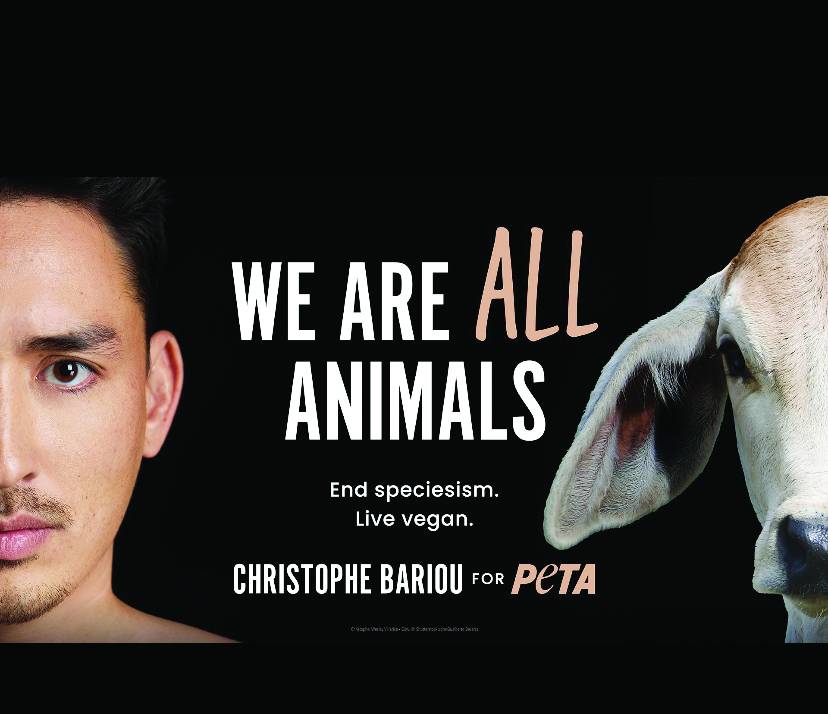
Even celebrities have denounced the act. “This was a terrible and cruel act to witness. I commend the justified, horrified reactions of most people who saw this. I truly wish someone had stopped that person immediately,” said Christophe Bariou in an Instagram story.

Bariou’s girlfriend, actress Nadine Lustre, added: “I can’t help but think that if this had been a dog or a cat being tormented in plain sight, witnesses would have intervened without hesitation. That’s something worth reflecting on.”
Nadine and Christophe stressed that all animals feel pain and face difficulties communicating their distress to humans.
Nothing that anybody says or does now can bring this helpless, innocent creature back to life. The python’s tragic ending happens to millions of other animals, not just here in the Philippines, but around the world.
I will never forget another image I saw posted on Facebook some years back: that of a carabao suffering from shattered hind legs after a highway collision. While it agonizingly hobbled on its two front legs, not one human shown in the image seemed to care. They looked more concerned about the damaged vehicle. While I certainly wished for the safety of the vehicle’s occupants, the carabao deserved equally immediate and proper care as well. Every sentient life feels pain and suffering, and it is within our power to not just feel empathy, but to act on alleviating or preventing that suffering.
Another heartbreaking scene seared into my memory took place in Malaysia in May 2025. A five-year-old male elephant died after being hit by a lorry while trying to cross the road. The mother elephant reportedly rushed to the scene, visibly distressed, and refused to leave her baby, desperately trying to nudge the truck off her dead calf. She stayed by her child for hours despite efforts by bystanders to lead her away. Wildlife officials eventually had to tranquilize her to clear the highway.
I beg my fellow motorists to be more mindful, alert, caring, and compassionate to the wildlife—all life—surrounding our roads. By the laws of nature, they have earned the right to live there. By the laws of humans, we have no right to take them away from their lands.