







1Sambayan: Senate sheltering Bato is ‘obstruction of justice’

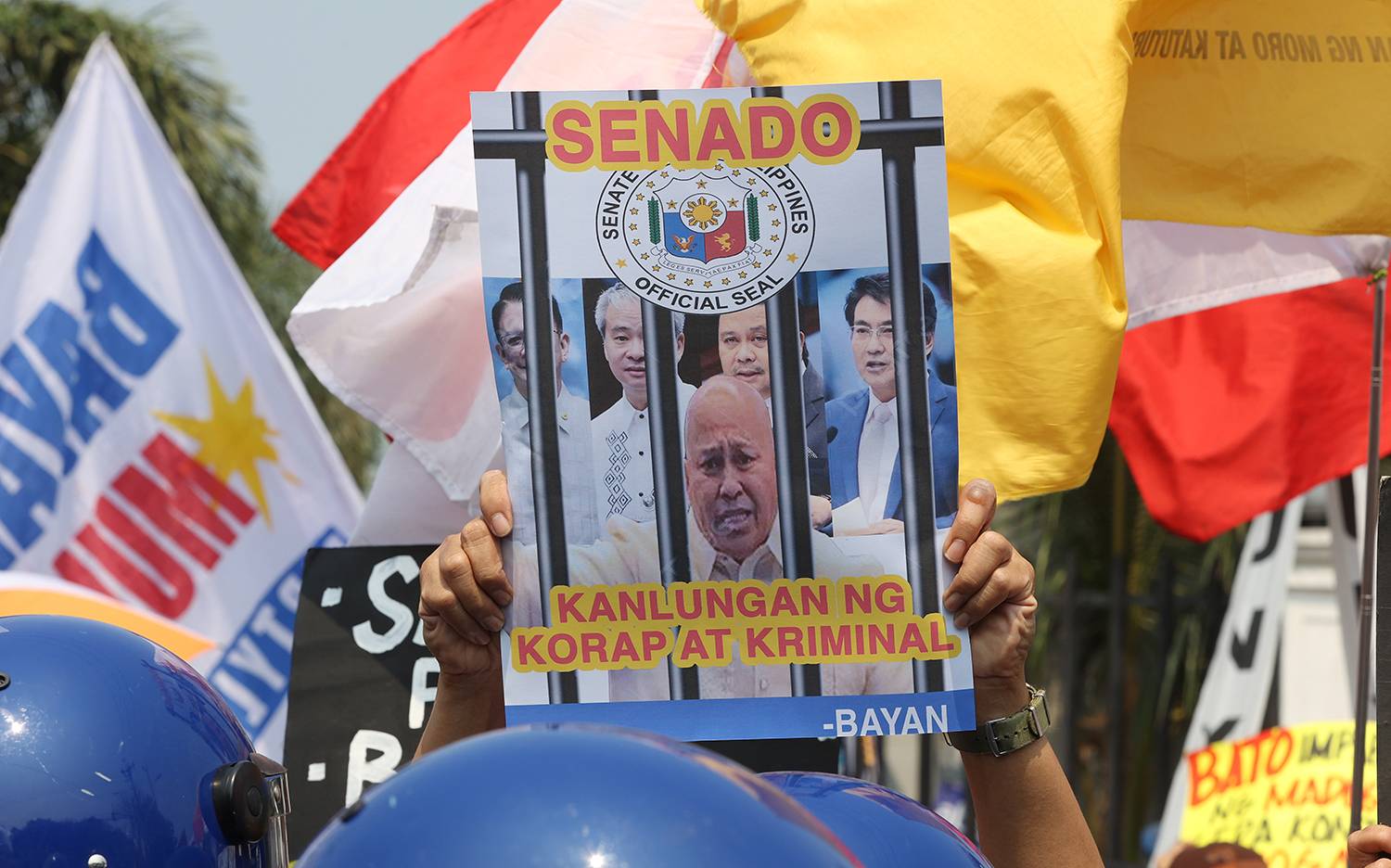
The new Senate leadership’s decision to place Sen. Ronald “Bato” dela Rosa under “protective custody” may constitute obstruction of justice and cannot be considered covered by parliamentary immunity, the opposition coalition 1Sambayan said.
In a statement posted on Wednesday, the coalition described the Senate’s action as “a dangerous abuse of institutional power” and may violate Presidential Decree No. 1829, or the law penalizing obstruction of apprehension and prosecution of offenders.
“No chamber of Congress is above the rule of law. The Senate is a constitutional body tasked to uphold the law, not shield individuals from accountability,” 1Sambayan said.
“Any act intended to conceal, harbor, or prevent the lawful arrest and surrender of a person facing charges for crimes against humanity undermines both domestic and international justice mechanisms,” it added.
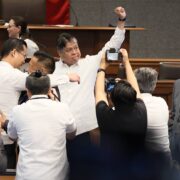
The group issued the statement after Dela Rosa sought refuge inside the Senate complex due to the National Bureau of Investigation’s attempt to serve an arrest warrant issued by the International Criminal Court (ICC) for his role in the Duterte administration’s deadly war on drugs.
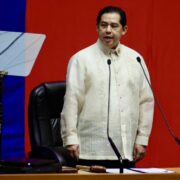
Following a sudden leadership change, Dela Rosa’s allies placed him under “protective custody.”
1Sambayan was founded in 2021 by civil society leaders that included former Supreme Court Associate Justice Antonio Carpio as lead convener, former Finance Undersecretary Cielo Magno, and former Election Commissioner Rene Sarmiento.
Appeal to comrades
Dela Rosa went live on social media on Wednesday afternoon to call on Filipinos to go to the Senate following reports that law enforcers would arrest him.
“I’m appealing to all of you, help me. Let us not allow that another Filipino will be flown to the Hague, next to President (Rodrigo) Duterte,” Dela Rosa said in Filipino.
But Dela Rosa clarified that he was not calling for a violent action.
“I’m calling for a peaceful prayer rally,” he said.
He made a similar appeal earlier on Wednesday to his fellow cavaliers for “peaceful support” from “foreign interference.” He even sang the Philippine Military Academy hymn.
“The issue here is not about politics, not about whatever issue, but about maintaining the sovereignty of the Philippines—that we don’t allow foreign powers to interfere with us,” he said.
“If they want to hang me, if they want to nail me to the cross, let it be here in our Philippine courts, not before foreigners,” he added.
‘Don’t be too eager’
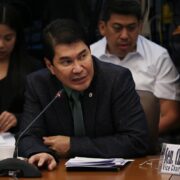
Late on Tuesday, five senators—Francis Pangilinan, Vicente Sotto III, Panfilo Lacson, Risa Hontiveros and Bam Aquino—filed a resolution, urging Dela Rosa to “voluntarily surrender to the proper authorities and seek judicial remedies in accordance with the Constitution and applicable laws and rules.”
In response, Dela Rosa told his colleagues to not be too eager to throw him in jail.
“[…] They shouldn’t be too eager to have me jailed. That’s too much. We’ve been together in the Senate for so many years, and yet they would just have me surrendered there so easily, knowing fully well that it is a foreign court,” he said.
He also said that he will exhaust available legal remedies.
He also maintained that the ICC should not enforce its arrest warrants as the Philippines is no longer a member of the Rome Statute.
‘Legally untenable’
“Why are we insisting to carry out these warrants of arrest issued by ICC? We are under no obligation,” he said.
1Sambayan insisted that justifying Dela Rosa’s parliamentary immunity “is legally untenable.”
It cited Article VI, Section 11 of the 1987 Constitution, which states that members of Congress are privileged from arrest only for offenses punishable by not more than six years imprisonment.
“Crimes against humanity granted to legislators was never intended to be used as a shield against accountability for grave international crimes,” it said. “It exists to protect legislative independence—not to obstruct the administration of justice or frustrate lawful processes arising from allegations of crimes against humanity.” —WITH REPORTS FROM TINA G. SANTOS AND MAILA AGER