







2026 budget bill comes with guardrails against graft

While all eyes are on the P6.793-trillion national budget for next year and how it is allocated, some general and special provisions of the 2026 general appropriations bill (GAB) may just be as critical.
Built into the bill, which was ratified by the House of Representatives and the Senate on Monday and now undergoing review by President Marcos, are provisions serving as guardrails against corruption, intended to prevent a repeat of the controversies arising from the 2025 budget.
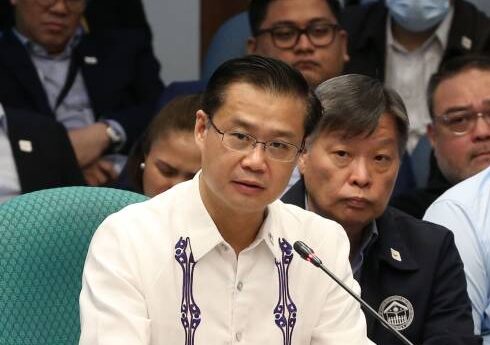
Among the most of significant are those introduced by the bicameral conference committee led by Senate finance committee chair Sherwin Gatchalian and House appropriations panel chair Mikaela Suansing.
They include strict prohibitions designed to keep government financial assistance programs out of political control or systems of patronage.
Under Section 19 of the GAB, all cash assistance and other forms of financial aid distribution “shall be conducted exclusively by authorized government officers and personnel or accredited partners.”
“[N]o public officials holding elective positions, electoral candidates, politicians, political parties, or any of their representatives… [shall] influence, be present in, participate in, or take part in the actual distribution of any cash assistance and other forms of financial aid,” it stressed.
Tupad, Maifip covered
The section expressly covers the Department of Social Welfare and Development’s Protective Services for Individuals and Families in Difficult Circumstances (PSIFDC); the Tulong Panghanapbuhay sa Ating Disadvantaged/Displaced Workers (Tupad); the Department of Health’s Medical Assistance to Indigent and Financially Incapacitated Patients Program (Maifip); “and other similar government financial assistance program.”
It also prohibits the display of political signages, branding or paraphernalia at distribution sites, and calls on the joint congressional oversight committee on public expenditures to monitor compliance.
The budget bill coming out of the bicameral deliberations also lays down specific requirements to ensure the use of funds are traceable.
Section 108 tasks all departments, bureaus, offices and other units to support the Citizens Participatory Audit (CPA) under the Commission on Audit (COA). The CPA will serve as a formal mechanism for civil society groups to help keep track of programs and projects funded under the bill.
This mechanism was among the requests made by civil society groups who were accredited as observers in budget deliberations to promote transparency and accountability. The COA is required to submit to Congress an annual report on the CPA.
Under Section 111, all agencies must post all infrastructure-related documents on their websites, in a format that makes them searchable and accessible.
Farm-to-market roads
A special provision formalizes the transfer of the development and construction of farm-to-market roads (FMRs) from the Department of Public Works and Highways (DPWH) to the Department of Agriculture (DA), following concerns raised over alleged overpricing and inefficiencies.
The DA is given a total budget of P82 billion for 2026. Congress has set aside P33.009 billion for FMRs in accordance with a national network plan.
It is now also up to the DA to regularly update the public about the progress of FMRs through an online dashboard on its website.
The information must include, among others, the project timeline and status, location, list of contracts awarded and their corresponding contractors, funding source, and the amounts obligated and disbursed. The DA must also submit a quarterly report to Congress on the matter.

The same requirement applies to the National Irrigation Administration. Its budget comes with a special provision requiring its projects to comply with the National Irrigation Masterplan.
Section 107 of the GAB’s General Provisions also sets an Oct. 31 deadline for the COA to submit and post its annual audited reports (AAR).
In the 2023, 2024 and 2025 General Appropriations Act, there was a provision ordering agencies to submit to the COA a status report on their audit observations and recommendations within 60 days of receiving the AAR.
Assistant Commissioner Alexander Juliano earlier noted that this provision required the COA to wait for an agency’s response to its initial findings before publishing the AAR. As a result, the state auditor published most of its 2023 AARs only in December 2024. This year COA published most of its AARs during the final stages of the 2026 budget deliberations.
Travel expenses
The commission is also required to send written notice to the Department of Budget and Management, Congress and other offices when it has published its reports on its website.
Section 100 of the General Provisions also requires government officials and employees—apart from department secretaries and all equivalent rank in the executive branch and agencies under the Office of the President—to submit a report on their foreign travels charged to the government.
The report must include the purpose of the trip, the period covered, location, and total expenses. It should be submitted to Congress in July or earlier.