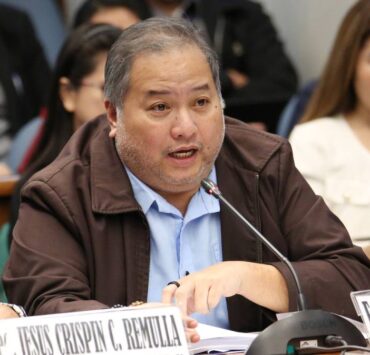











2nd plunder rap filed vs Recto, Ledesma over PhilHealth fund transfer

Executive Secretary Ralph Recto and former Philippine Health Insurance Corp. (PhilHealth) president Emmanuel Ledesma Jr. are facing new plunder, technical malversation, and graft complaints in connection with the transfer of P60 billion in excess funds to the national treasury.
This is the second time Recto and Ledesma are facing charges over the PhilHealth fund transfer, which the Supreme Court had earlier declared as unconstitutional.
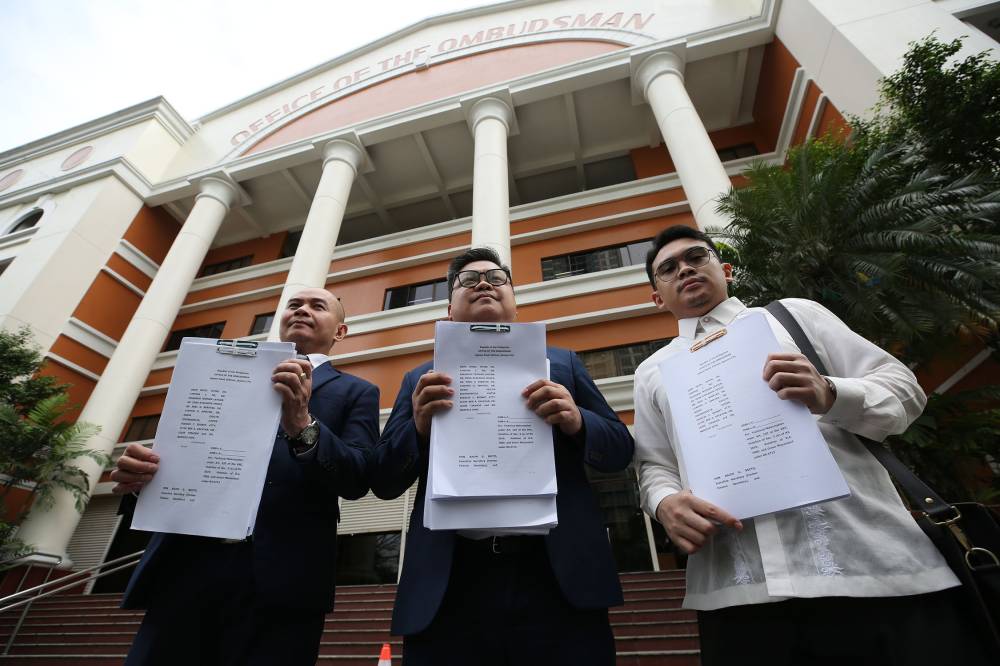
A coalition of doctors, health advocates, and lawyers led by Rodel Taton lodged the new complaint before the Office of the Ombudsman on Thursday. Taton is the dean of San Sebastian College-Recoletos Graduate School of Law.
In a 31-page complaint, the group asked the antigraft body to conduct a preliminary investigation to determine Recto and Ledesma’s possible criminal, civil, and administrative liability, including grave misconduct.


‘Immense injury’
The group said the transfer of the P60 billion clearly violated Republic Act No. 7875, or the National Health Insurance Act of 1995, as amended, and Republic Act No. 11223, or the Universal Health Care Act. They noted that the high court had already ruled that the action was unconstitutional.
Despite what the group described as full awareness of explicit legal prohibitions, they alleged that the respondents “deliberately, willfully, and maliciously,” and with “evident bad faith, dishonesty, and grave misconduct,” caused the transfer of PhilHealth reserve funds.
Specifically, the group pointed out that Recto issued Department Circular No. 003-2024, directing the transfer of excess funds from government-owned or -controlled corporations, including PhilHealth, to the national treasury to fund unprogrammed appropriations under the 2024 General Appropriations Act (GAA).
Recto, who served as finance secretary, issued and signed the circular in 2024.
Meanwhile, PhilHealth, through Ledesma, allegedly “willingly complied with the directive despite Republic Act No. 11223 expressly prohibiting the transfer of PhilHealth reserve funds to the National Treasury,” the group stated.
It argued that the transfer of PhilHealth’s excess funds caused “immense injury to the Filipino people,” as the amount could have been used to improve health services, expand the state insurer’s benefits, or reduce members’ contributions, as provided under RA 11223—grounds cited in support of their plunder complaint.
‘Political noise’
Recto on Thursday reiterated his innocence, adding that he would not be distracted by political noise.
In a statement, Recto also said he respects the right of any individual or group to seek legal remedy regarding the issue.
“Let me also reiterate my innocence, as opined by Supreme Court Justices, that no criminal liability may attach to me, as former Secretary of Finance, for acting in good faith and in accordance with a direct mandate from Congress in ordering the remittance of PhilHealth’s unused funds,” he said.
Recto added that he remains confident that appropriate institutions will evaluate any allegations fairly and objectively.

“For our part, we will continue to uphold the rule of law, respect due process, and work to uplift the lives of our ‘kababayan.’ I will not get distracted by political noise. The work of improving government performance and services is my priority,” he said.
SC ruling
In December last year, the Save the Philippines Coalition filed similar charges against the two respondents.
In a December 2025 ruling, the Supreme Court unanimously ordered the return of the P60 billion in PhilHealth funds previously remitted to the national treasury and permanently prohibited the transfer of the remaining P29.9 billion.
The decision, penned by Associate Justice Amy Lazaro-Javier, did not address Recto’s alleged criminal liability for technical malversation and/or plunder, as the consolidated petitions were limited to determining grave abuse of discretion.
However, four justices of the Court have asserted that there is no criminal liability that can attach to Recto, noting in their separate opinions that the then finance secretary solely “acted in good faith in implementing Special Provision 1(d).”
Special Provision 1(d) permitted the return of fund balances or excess reserve funds. —WITH A REPORT FROM LUISA CABATO