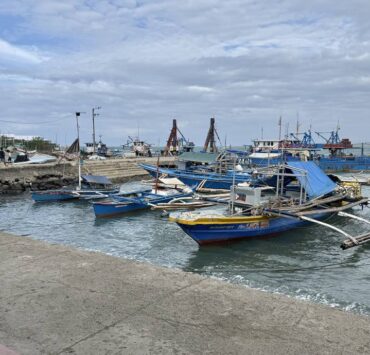









Alaminos City celebrates signature ‘longganisa’

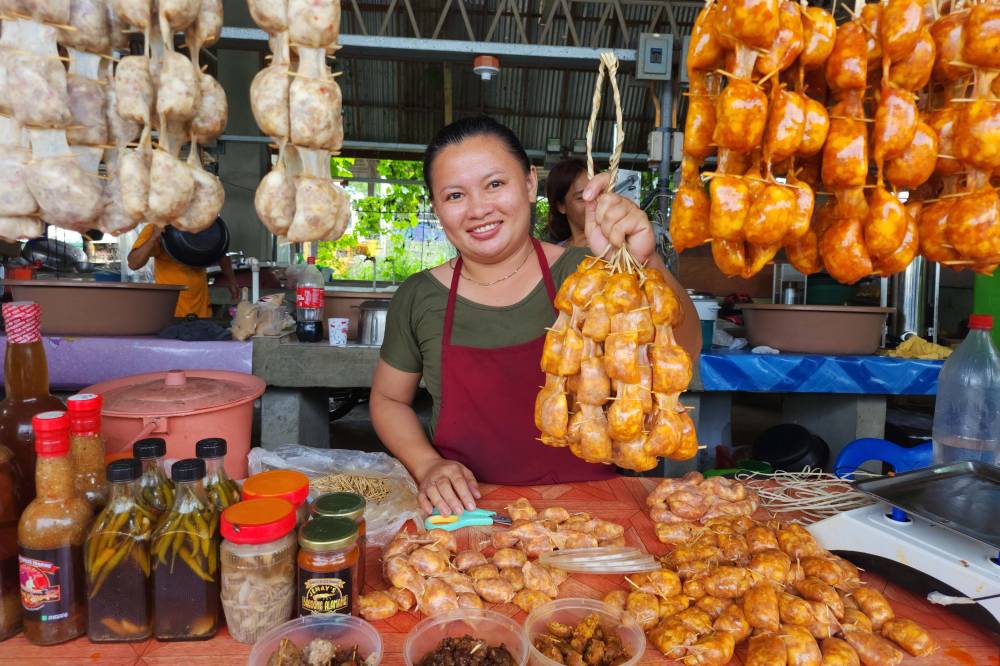
ALAMINOS CITY—For locals and visitors alike, Alaminos longganisa is a sausage with character—juicy, garlicky and perfectly crispy when fried.
But what makes it unique is not just the taste—it’s the small buri sticks separating each portion, a simple detail that has become the city’s delicious trademark.
The Alaminos longganisa is sold in three sizes—small, medium and large—and is usually offered by the dozen. Producers sell them in the city’s public markets and ship them to other towns and provinces.
“It’s the garlic in it. And when you really fry it, it becomes juicy. Then, especially when it turns crispy—that’s my favorite way of cooking longganisa, the flavor is very savory,” Alaminos City Mayor Bryan Celeste told the Inquirer.
The sausage’s bright yellow-orange hue also comes naturally. Producers use achuete (annatto) seeds instead of artificial food coloring.
Beyond the familiar segmented version, producers have also introduced what they call “deconstructed longganisa,” which is sold like ground pork or giniling, but flavored with the same ingredients used in the traditional sausage.
“You can mix that with any kind of food. Instead of the bacon you usually add, try longganisa—Alaminos longganisa. It’s really delicious,” Celeste said.
‘Deconstructed’
The distinctive “longganisa with toothpick” remains largely a backyard industry involving around 100 families, each producing at least 50 kilos a day.
Some producers even make the sausage at stalls in the city market, preparing the meat in front of buyers so they can see the freshness of the ingredients.
“It’s a generational thing. It’s a family business and never owned by a corporation,” Celeste said. “The market stalls bear the name of a family member. That’s the culture of the industry here.”
He added that the family-run nature of the business has not hindered its growth, as demand for the product remains strong.
While longganisa is best known when fried, it has also proven just as tasty when grilled.

The city highlighted this during the Alaminos Longganisa Festival held on March 6 as part of the Hundred Islands Festival.
Sharing
For the celebration, the city set up 250 grills, each cooking about five kilos of longganisa to be shared with festivalgoers.
“It was a community-based celebration, with many residents bringing their own grills and sharing what they cooked with others,” Celeste said.
City officials also decided to highlight longganisa instead of talaba (oysters), another major local product, after the red tide phenomenon affected nearby coastal towns.
While Alaminos’ waters remained free of red tide, the city chose not to serve oysters during the festival to ensure the safety of residents and visitors, Celeste said, referring to the nearby towns of Anda and Bolinao, in Pangasinan.