









Albay gov orders evacuation as Phivolcs raises Mayon alert

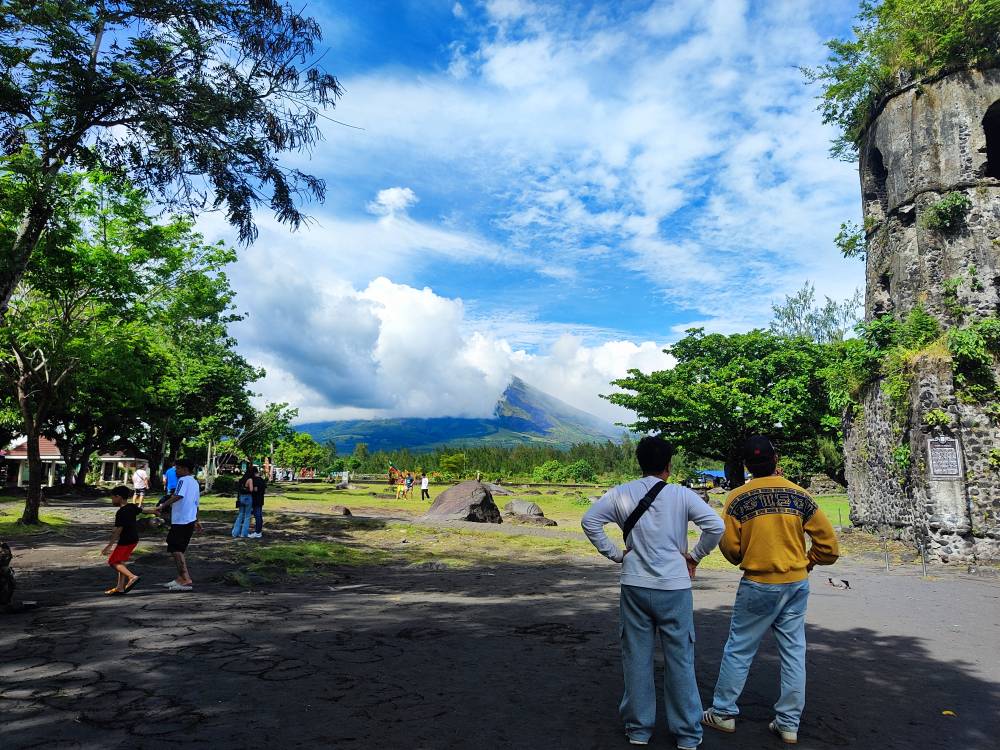
LEGAZPI CITY—Albay Gov. Noel Rosal has ordered the preemptive evacuation of almost 3,000 residents living within the 6-kilometer permanent danger zone (PDZ) around Mayon Volcano which displayed increased restiveness on Tuesday.
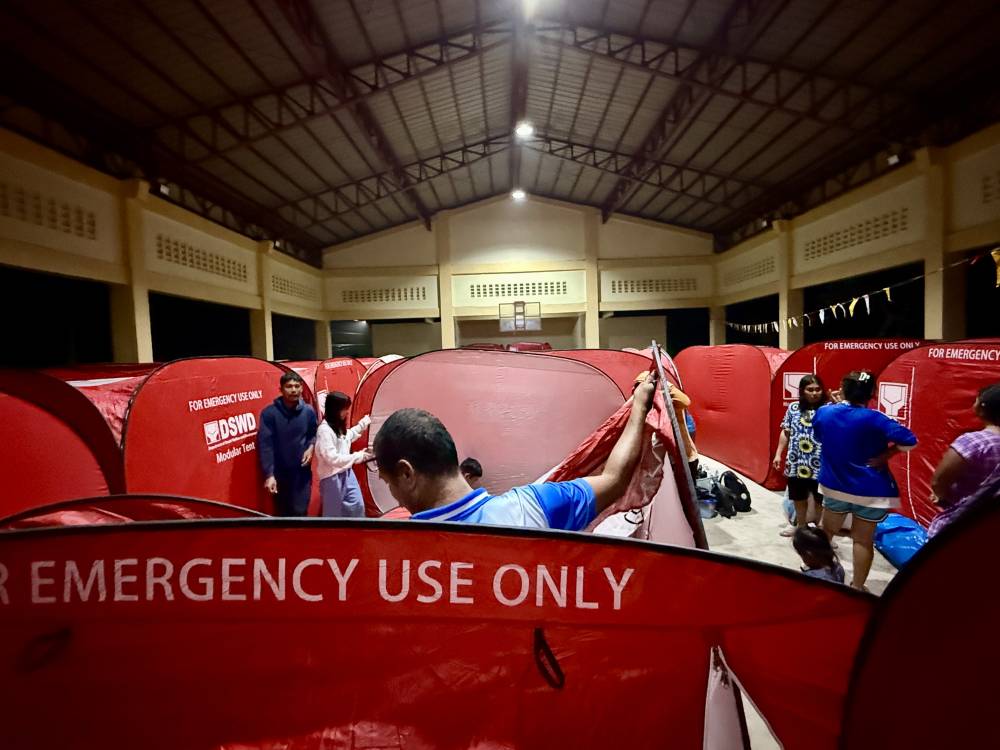
Rosal directed officials in the towns of Daraga, Camalig, Guinobatan and Malilipot, and the cities of Ligao and Tabaco to facilitate the immediate transfer of the residents to schools that were already designated as evacuation centers.
He assured the more than 700 affected families that the provincial government would provide them food and other basic necessities while temporarily taking shelter in the evacuation centers.
“We will give them all the basic supplies they need,” Rosal told the Inquirer on Tuesday.
Norman Laurio, the Bicol regional director of the Department of Social Welfare and Development, earlier said the agency had enough resources on standby to augment the relief supplies prepared by local governments.
Rosal instructed education officials in the province to implement alternative learning in schools that would be used as evacuation centers. Classes in schools located within the danger zone have already been suspended.
The governor also asked the police and Army soldiers to strictly implement security measures around the volcano to prohibit entry to the danger zone.
Rosal’s order came as the Philippine Institute of Volcanology and Seismology (Phivolcs) on Tuesday raised the alert on Mayon’s volcanic activity from level 2 (moderate level of volcanic unrest) to level 3 (high level of volcanic unrest), which means there is increased tendency toward a hazardous eruption.
In a bulletin released at 1:20 p.m. on Tuesday, Phivolcs noted the “increasing number and volume of rockfall events” traced to the “repeated collapse of the unstable summit dome of Mayon Volcano.”
Magmatic eruption
Since Jan. 1, Phivolcs recorded a total of 346 rockfall events and four volcanic earthquakes, which were a significant increase compared to the 599 rockfall events logged from November to December 2025.
A 24-hour seismic monitoring showed 85 rockfall events as of Tuesday, while sulfur dioxide emissions rose from 288 tons per day to 702 tons per day, indicating continued magma movement beneath the volcano, according to Doreen Abelinde, Phivolcs science research specialist at the Lignon Hill Mayon Observatory Station.
Phivolcs bulletin said the volume of discrete rockfall increased on Monday, signaling an “increase in the rate of dome growth and the onset of extrusion of new lava at the crater.”
With this, Mayon is “exhibiting a magmatic eruption of a summit lava dome,” it added.
Phivolcs observed that at 12:26 p.m. on Tuesday, pyroclastic density currents (PDCs or hot, fast-moving mixtures of volcanic particles and gas), locally known as “uson,” began generating on the Bonga (southeast) gully of Mayon “from the collapse of newly extruded lava” that flowed down some 2 km from the summit crater within three minutes.
At this level of unrest of Mayon, Phivolcs warned of “increased chances of lava flows and hazardous PDCs or uson affecting the upper to middle slopes of the volcano, and of potential explosive activity within days or weeks.”
Warning vs flying
“Based on the current prevailing wind pattern, ash fall events may most likely occur on the south side of the volcano,” it added.
Abelinde said that an effusive eruption (steady outflow of lava) may occur, similar to what transpired during the 2023 eruption.
The Department of Tourism (DOT) said tourist activity tends to increase during periods of volcanic activity, with many visitors coming to witness Mayon’s spectacle. The agency assured the public that areas open to tourists remain safe.
“We remind tourists to strictly follow local rules, especially the prohibition of entering the 6-km PDZ for their protection and safety,” Herbie Aguas, DOT regional director, told the Inquirer.
Apart from evacuation within the danger zone, Phivolcs also recommended for civil aviation authorities to “advise pilots to avoid flying close to the volcano’s summit as ash from any sudden eruption can be hazardous to aircraft.”
A few hours before the Phivolcs warning about Mayon, the Civil Aviation Authority of the Philippines (Caap) released an updated notices to airmen (Notam) advising flight operators to avoid flying over four active volcanoes. The advisory is effective from Jan. 6 to Jan. 7.
For Mt. Kanlaon on Negros Island, Caap set a vertical limit from the surface of up to 3,962.4 meters (13,000 feet); 3,048 meters (10,000 feet) over Mt. Bulusan in Sorsogon province; and 3,352.8 meters (11,000 feet) over Taal Volcano in Batangas province and over Mayon.

Kanlaon ash eruption
“All flight operators are strongly advised to avoid flying close to volcanic summits and to continuously monitor Notams and official advisories for updates,” Caap said in the advisory.
Meanwhile, an ash eruption at Mt. Kanlaon was observed on Tuesday, lasting for three hours and 30 minutes.
The weak ash emission began at 5:55 a.m. and ended at 9:25 a.m., said Mari-Andylene Quintia, Phivolcs resident volcanologist at the Kanlaon Observatory in La Carlota City, Negros Occidental.
The ash eruption generated a grayish plume that rose 350 meters from the crater in the southwest direction.
The ash emission was thin but there may be ash fall due to the strong winds in the area of Bago City and La Carlota City, Quintia said.
The most recent ash emissions at Kanlaon volcano were recorded on Jan. 3, she added.
Like in the past, ash emissions could be a precursor to an explosive eruption, Quintia said.
But Phivolcs director Teresito Bacolcol said the event was “not automatically a cause for alarm,” adding that it is consistent with the volcano’s alert level 2 status, which indicates increased or moderate levels of unrest.
Kanlaon emissions have been recurrent since its eruption in 2024.
“In fact, in the second half of 2025 alone, we observed more than 30 ash emission events, the highest rising to 1,000 meters,” Bacolcol said.
The emission, he said, does not indicate an upcoming stronger eruption, saying that Phivolcs is monitoring other volcanic activity to determine increasing pressure or magma movement. —WITH REPORTS FROM CARLA GOMEZ, DIANNE SAMPANG AND KEITH CLORES