









All eyes on bicam as Senate OKs draft ’26 budget

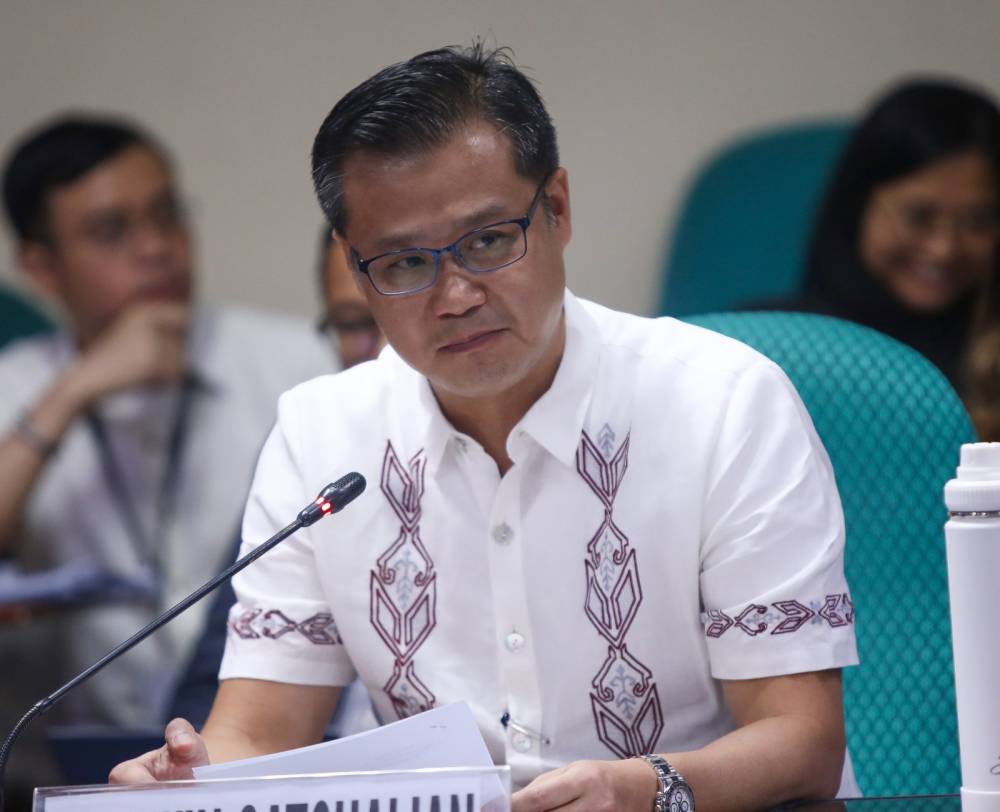
The Senate has approved the proposed P6.793-trillion national budget for 2026 described by finance committee chair Sen. Sherwin Gatchalian as a people-centered spending plan that “champions transparency and accountability.”
With 17 votes in favor, none against, and zero abstention, the chamber passed on third and final reading House Bill No. 4058, or the General Appropriations Act (GAA) of 2026, during Tuesday’s plenary session.
“Through our collective work, the 2026 budget is now more transparent, more disciplined, and more accountable than before,” Gatchalian noted.
He said the Senate’s version is essentially an education budget, with a total allotment of P1.37 trillion, P65.93 billion of which will be for the construction of more than 24,000 new classrooms nationwide and P28.66 billion for the implementation of school-based feeding programs.
The Senate reduced the budget for the Department of Public Works and Highways (DPWH) for 2026 to P570.48 billion from the P624.48 billion in the House version.
Following controversies over ghost and substandard flood control projects, the Senate also reduced the DPWH’s budget by P54.2 billion, based on recalibrated costing following President Marcos’ directive to drive down the cost of construction materials.
Noting that the reforms instituted in the budgeting process are a powerful deterrent against corruption and the misuse of public funds, Gatchalian said that all infrastructure projects must now have station numbers and specific coordinates as an added safeguard against ghost and anomalous projects.
Bicam livestream
Since the House has approved its version of the 2026 national budget last Oct. 13, all eyes are now on the notoriously secretive bicameral conference committee deliberations scheduled from Dec. 12 to Dec. 14 to hammer out the final version of next year’s spending plan.
The reconciled version in the bicam will then be returned to both chambers of Congress for ratification before it is transmitted to the President for his signature.
Senate President Vicente Sotto III said senators would insist on the livestream of the bicam hearings amid the reported opposition from some congressmen.
“I will disagree if it will not be livestreamed. House Speaker Bojie Dy was with us earlier and he did not say anything. The President already said it will be livestreamed,” he said.
“Livestreaming has nothing to do with the contents of the budget. We want the public to see who inserted the funding and how much was allocated to the three most important departments—DepEd, DOH, and agriculture,” he added.
President Marcos has directed both chambers of Congress to make sure that the bicam deliberations are livestreamed this year, which was later confirmed by Speaker Faustino “Bojie” Dy III.
Opposition
House committee on appropriations chair and Nueva Ecija Rep. Mikaela Suansing said she was already in talks with Gatchalian on how to fulfill their promise to livestream the bicam deliberations.
“The House has always been very firm on our commitment to opening the bicameral conference committee proceedings, more specifically livestreaming the bicam,” Suansing said in a video statement.
“As early as August, even before the budget deliberations, the House leadership has already made pronouncements with regard to opening and livestreaming the bicam,” she added.

But some members of the House have reportedly opposed the proposed livestreaming, according to Sen. Erwin Tulfo.
“There are those opposing it. Not here with us, but in the House, they don’t want it. As Senator Sotto said, it seems they had some sort of discussion. Because they said, ‘Why was it meddled with?’ Something like that. ‘Why was this suddenly slashed, slashed, slashed?’” he said in Filipino.
In an online interview also on Tuesday, Deputy Speaker Ronaldo Puno said the Senate’s version of the proposed 2026 budget supposedly slashed funding for the government’s social amelioration programs, among them the Assistance to Individuals in Crisis Situations (AICS), the Tulong Panghanapbuhay sa Ating Disadvantaged/Displaced Workers (Tupad), and the Medical Assistance to Indigent and Financially Incapacitated Patients (Maifip).
Contentious provisions
Meanwhile, civil society observers who were granted accreditation in the budget process concede that while the 2026 budget was much better than the 2025 GAA, they still flagged several contentious provisions in next year’s spending plan.
Among the most assailed parts of next year’s budget is the continued funding for pet social aid programs like the Department of Social Welfare and Development’s AICS; Department of Labor and Employment’s Tupad, and the DOH’s Maifip programs.
Both chambers of Congress also increased their own budgets without explanation: the House by P10 billion and the Senate by P1.4 billion.
One of the accredited groups, the Bantay Budget Network, challenged both the Senate and the House to immediately release to the public all pertinent budget documents related to the proposed national budget before the bicam convenes on Dec. 12.
“Secrecy in the budget process breeds corruption, patronage, and abuse of power. A democratic budget requires public scrutiny, citizen participation, and open access to information—not closed-door negotiations that conceal billions in questionable allocations,” they said. —WITH A REPORT FROM GABRIEL PABICO LALU


