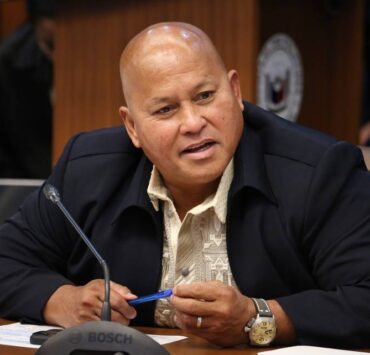









All Revilla coaccused in jail; but he’s still ‘VIP,’ says group

All seven accused in the criminal cases involving former Sen. Ramon “Bong” Revilla Jr. over a “ghost” flood control project are now in government custody with the arrest of a public works engineer late Tuesday.
Emelita Capistrano Juat, 64, was arrested in Obando, Bulacan, around 11 p.m. on Jan. 20, according to Interior Secretary Jonvic Remulla.
Capistrano, a resident of Barangay Panghulo, was served the warrant issued by the Sandiganbayan on Monday in the graft and malversation case filed by the Office of the Ombudsman against the ex-senator and six dismissed personnel of the Department of Public Works and Highways (DPWH).
They are accused of conspiring to release P76 million to a contractor using falsified documents that made it appear that a flood control project had been completed in Barangay Bunsuran, Pandi, also in Bulacan.
Revilla surrendered to the police on Monday night, while five coaccused from the DPWH—three engineers, an accountant and a cashier—were also taken in government custody on Tuesday.
“With Juat’s arrest, all of them are now accounted for,” Remulla said.
The Sandiganbayan initially ordered all of the accused to be detained at the New Quezon City Jail on Payatas Road, Quezon City.
On Wednesday, however, the court ordered the transfer of two of them—Juat and cashier Christina Mae del Rosario Pineda—to Camp Karingal, which has a jail for women. The camp serves as the headquarters of the Quezon City Police District.
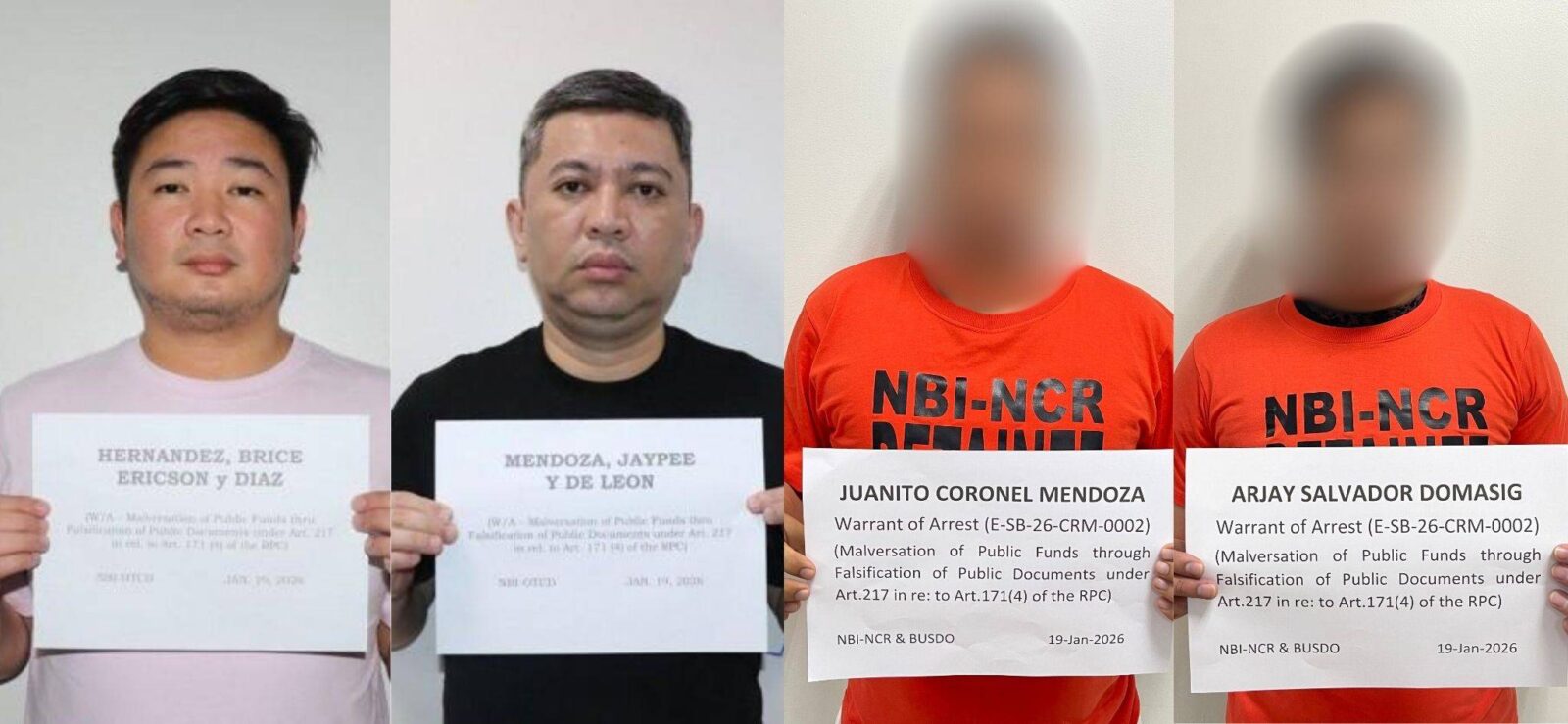
Along with Revilla, staying at the city jail are engineers Brice Hernandez, Jaypee Mendoza and Arjay Domasig, and accountant Juanito Mendoza, all of the DPWH Bulacan first engineering district.
Still no mug shot?
As of Wednesday afternoon, or nearly two days after Revilla surrendered to the police at Camp Crame, authorities have yet to release his mug shots to the public—something normally done especially in high-profile cases.
This became noticeable especially after the mug shots of Hernandez, Domasig and two Mendozas had been released and appeared in media outlets.
Asked why there was still no photo of Revilla, Remulla said the events leading to the ex-senator’s surrender late Monday night “happened too fast” to be documented properly.
Remulla explained “there was no order from my end not to release anything. In fact, I only found out just now that nothing had come out.”
The interior department chief earlier acknowledged his longtime friendship with the former senator since the 1980s. Both of them also have Cavite province as their political bailiwick.
But Remulla said “duty calls” for him to serve the warrant and have Revilla placed in custody.
“He is in a regular cell—no cell phone, no computer, no hot water—in the general population. If you’re talking about special treatment, there is really none,” Remulla said.
On the day Revilla presented himself to the court, his legal team immediately filed a motion seeking his transfer to the Philippine National Police Custodial Center at Camp Crame, citing security concerns arising from “gang-related activities’’ in the city jail.
The motion will be heard on Friday, Revilla’s arraignment.
Still ‘VIP treatment’
Posing an early objection to the request, the advocacy group Kapatid said keeping Revilla even at the New Quezon City Jail was still tantamount to “VIP treatment.”
Kapatid, a group fighting for the release of political prisoners, said the arrangements made for Revilla’s detention were still in stark contrast to “inhumane conditions endured by the majority of persons deprived of liberty (PDL), especially political prisoners and the poor.”
“Revilla’s detention quarters constitute VIP—Very Important Prisoner—treatment in a sea of suffering. This is detention by privilege, not by law. The corrupt are literally cushioned, even provided with mattresses, while the poor and political prisoners endure overcrowded jails in the most inhumane conditions,” Kapatid spokesperson Fides Lim said in a statement on Wednesday.
‘Their crime even worse’
His “current detention arrangement sends a dangerous signal: the law bends for the powerful while the poor bear its full force,” Lim said.
Across jails and penal facilities nationwide, “congestion routinely exceeds 300 percent, forcing inmates to sleep in shifts, survive on inadequate food and medical care, and endure unsanitary conditions due to lack of running water, compounded by unreasonable restrictions on food brought by families,” she noted.
“Equal justice means equal conditions. Revilla and other corrupt accused should be held in the same ordinary, congested cells as everyone else. The fact that they are government officials—and repeat offenders—makes their crime even worse. They should feel the full weight of the law, not enjoy special treatment,” Lim said.
Remulla earlier said Revilla was expected to stay in a 47-square-meter cell, furnished with bunk beds and to be shared with at least seven other inmates.