




Antidynasty bill advances in House on second hearing

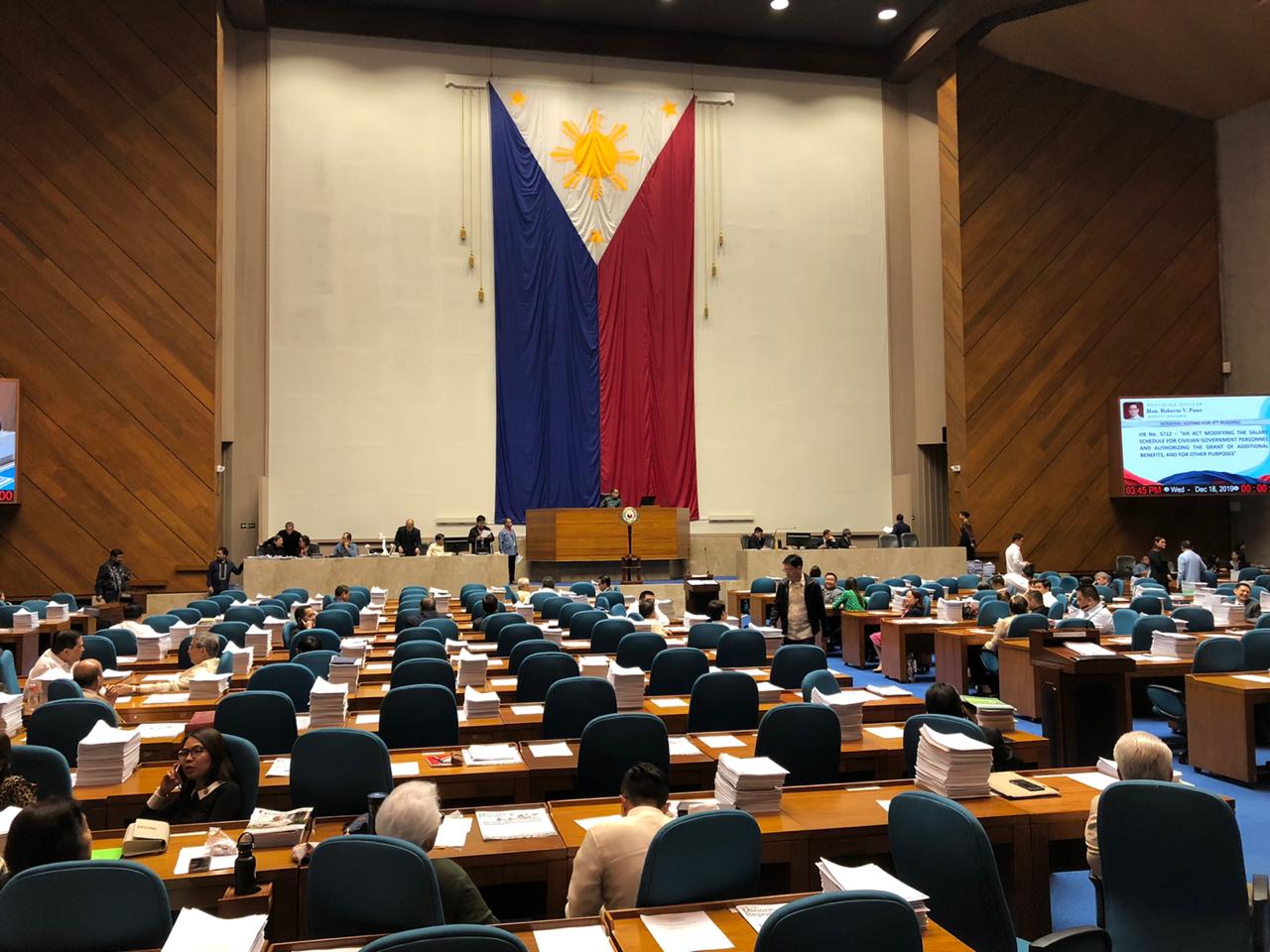
The House of Representatives on Wednesday approved on second reading a bill barring relatives within the second degree of consanguinity or affinity from holding public office at the same time, bringing the measure aimed at curbing political dynasties closer to becoming a law since the 1987 Constitution mandated such a ban.
In a voice vote, lawmakers passed House Bill No. 8389 at the stage where individual members can move to recommend changes, effectively blocking further amendments that critics say could have strengthened the measure.
The bill defines a political dynasty as the concentration, consolidation or dominance of elective political power by spouses or relatives within the second degree of consanguinity or affinity.
It prohibits them from simultaneously holding or running for elective posts in the national, provincial, city and municipal levels.
Sworn statement
If approved into the law, the ban will take effect in the next elections, with the Commission on Elections (Comelec) tasked to draft implementing rules and regulations within 90 days.
HB 8389 also requires candidates for elective office to submit a sworn statement to the Comelec declaring that their candidacy will not result in a prohibited dynastic relationship.
A copy of the amended bill was not immediately available, although the floor accepted changes to the proposal, including a tweak stating that if relatives run and win seats at the same political level, the candidate with the highest vote count will take the seat.
Under the 20th Congress, the House of Representatives currently has 317 members: 63 party list representatives and 254 district representatives.
The Comelec has not officially determined the number of House members who belong to political dynasties, but a recent study of the Philippine Center for Investigative Journalism suggest that about eight out of 10 representatives in 2024 came from political families.
On the other hand, eight or one-third of the 24 Senate seats are currently held by siblings: the Cayetanos, Estrada-Ejercitos, Tulfos and Villars.

Consolidation
Once approved by the House, HB 8389 is expected to be reconciled with the Senate version of the antipolitical dynasty bill which was passed at the committee level in February.
First and second degrees of consanguinity and affinity refer to the familial relationships between a person and his/her parents, children, siblings, grandparents, grandchildren, aunts, uncles, nieces, nephews, and half-siblings as well as those of the person’s spouse.
“We need to balance … the decongestion of power with that of the sovereign right of the people to elect their own leader,” said Lanao del Sur Rep. Zia Alonto Adiong, who sponsored HB 8389.
A scion of the Alonto and Adiong families of Lanao del Sur, the lawmaker is related by first and second degrees of consanguinity or affinity to several incumbent officials.
Speaker Faustino “Bojie” G. Dy III and Majority Leader Ferdinand Alexander “Sandro” Marcos, who also belong to political dynasties, are the principal authors of the measure, which has 173 other lawmakers as coauthors.