










Antidynasty bills differ on degree of kinship

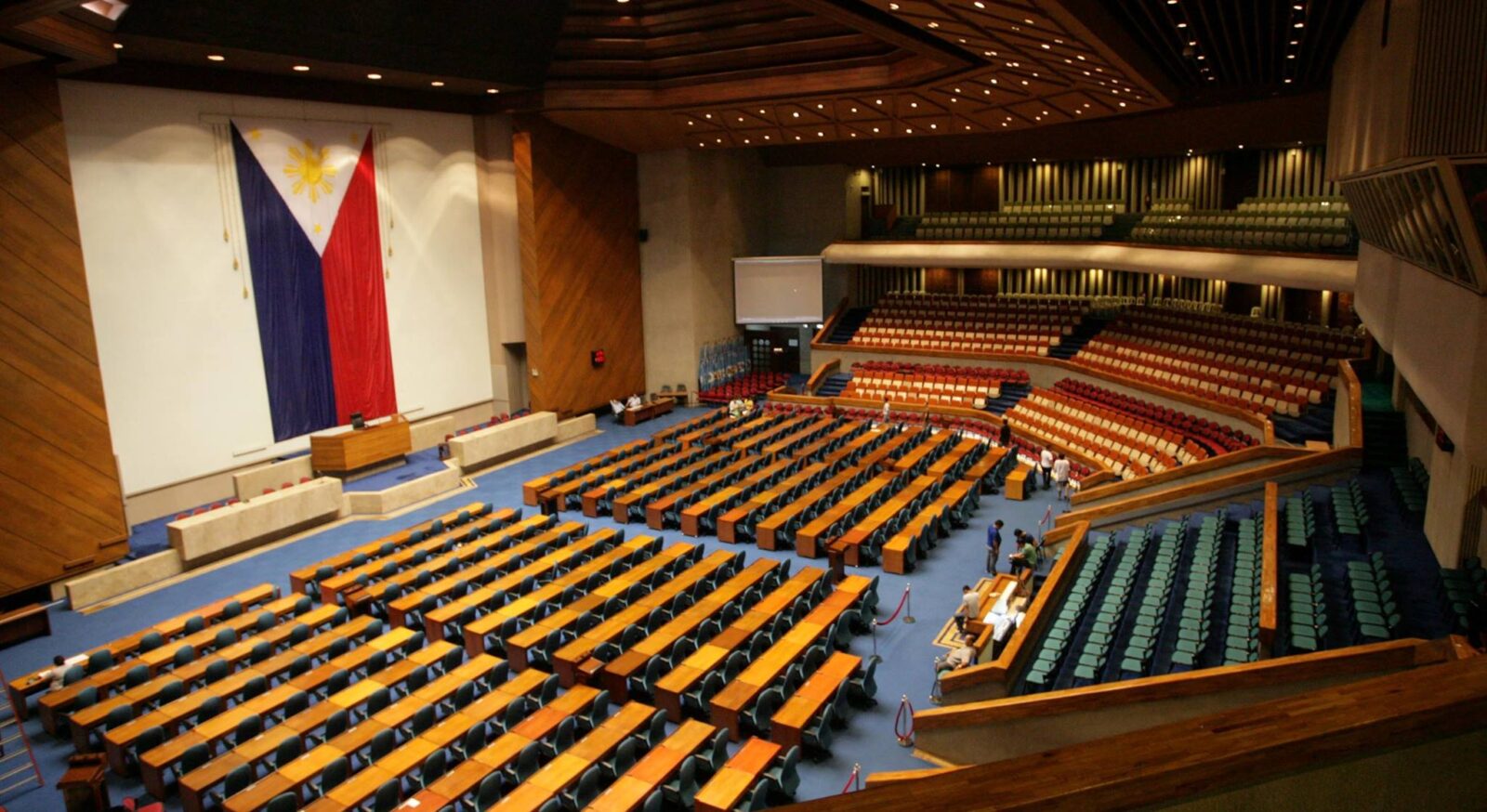
The House of Representatives is grappling with competing legislative proposals aimed at finally fulfilling the decades-old constitutional mandate to prohibit political dynasties, with key differences emerging over how wide the net should be cast on prohibiting family relationships in public offfice.
In the current 20th Congress alone, there are at least 13 bills filed by both House majority and minority lawmakers seeking to define and restrict political dynasties—or the concentration of political power among related persons.
Critics have long argued that the predominance of dynasties in politics have compromised the very idea of participatory democracy and the quality of public service as well as limited the economic, business and other opportunities in every locality to the families ruling over these areas and their associates. It is not uncommon to find that in almost any province, essential services—from electric power to public transportation—are also operated by the same political families.
While the proponents of all 13 measures agree that an enabling law for Article II, Section 26 of the 1987 Constitution is long overdue, their bills diverge significantly on the degree of kinship that should trigger disqualification.
‘Prohibition scenarios’
The majority of proposals, including that of Bukidnon Rep. Jonathan Keith Flores’ House Bill (HB) No. 381, Mamamayang Liberal Rep. Leila de Lima’s HB 2131, Caloocan Rep. Edgar Erice’s HB 2037, 1-Rider Rep. Ramon Rodrigo Gutierrez’s HB 5334 and Pasig Rep. Roman Romulo’s HB 5871, favor restricting relationships to the second civil degree of consanguinity or affinity.
This level typically covers immediate family members: spouses, siblings, children, grandparents, parents-in-law and siblings-in-law.
Flores said he believed these bills were the most feasible and have the most “pragmatic prohibition scenarios.” Ona Caritos of electoral watchdog Legal Network for Truthful Elections said this type of political dynasty bill was the version that often got the furthest in the legislative process, even though all antidynasty bills filed since the post-Edsa era have languished in Congress.
A stricter minority of bills, including the Makabayan bloc’s HB 209; Gabriela Rep. Sarah Elago’s HB 4784; Akbayan bloc’s HB 5905, and Speaker Faustino Dy III and Majority Leader Sandro Marcos’ HB 6771 propose extending the prohibition to the fourth degree of consanguinity or affinity.
Of all the bills, however, it was Dy’s and Marcos’ bills that have garnered the most criticism because of its unique configuration for political dynasties: Section 5 of their bill bans spouses, siblings, and relatives within fourth civil degree of affinity or consanguinity of a duly elected public officer from simultaneously holding the same elective levels.
While it sets the higher bar of fourth degree of consanguinity, this effectively meant that a single family “could still occupy several national and local positions at the same time, from Congress down to barangay posts,” according to De Lima.
“For example, relatives who are senators, congressmen, governors, and mayors, or presidents, congressmen, governors, and mayors, can sit together,” the Makabayan bloc said. “Relatives can also be congressmen from different districts. The only thing that is prohibited is relatives sitting together as senators or relatives sitting together as provincial or local officials.”
‘Constitutionally sound’
It also remains to be seen if the bill would truly gain traction in a Congress dominated by political families. Both Dy and Marcos themselves come from political dynasties: Dy hails from the most powerful clan in Isabela province and currently has two nephews in the 20th Congress, while Marcos himself is the son of President Marcos and a nephew of Sen. Imee Marcos, apart from having several other relatives in local positions.
Data by Inquirer Research show that at least 226 of the 318 members of Congress have relatives in public office.
There is also the problem of whether Congress must first amend the 1987 Constitution to allow for an antidynasty bill despite the existing constitutional provision—a view held by Ako Bicol Rep. Alfredo Garbin.
While the spirit of such bills were “noble and constitutionally inspired,” they effectively introduce additional disqualifications based on familial relationships and degrees of consanguinity or affinity, which are qualifications not found in the Constitution.

Garbin is referring to the qualifications for national elective offices already expressly and exhaustively laid down in the Constitution itself—for president and vice president under Article VII, Section 2; for senators under Article VI, Section 3; and for members of the House of Representatives under Article VI, Section 6.
For Congress, he noted, the Constitution clearly requires that a member be a natural-born Filipino citizen, at least 25 years of age, able to read and write, and, for district representatives, a registered voter and resident of the district for at least one year prior to the election.
“These qualifications are clear, categorical, and exclusive,” Garbin said, emphasizing that Congress has no authority to add to or subtract from them through ordinary legislation.
He pointed to the Supreme Court’s ruling in Albano v. Commission on Elections (G.R. No. 257610, Jan. 24, 2023), where the high court reiterated that any attempt by Congress to impose additional qualifications for elective office amounts to an unconstitutional amendment of the Constitution by statute.
Allowing such legislative action, the court explained, would violate constitutional supremacy and undermine the sovereign will of the people.
Without constitutional amendment, “even popular and sincere reform measures risk being struck down by the courts and reduced to political spectacle rather than lasting change,” he said.
For its part, the House committee on electoral reforms and suffrage led by Lanao del Sur Rep. Zia Alonto Adiong is expected to tackle the bills starting the third week of January next year, as he promised to come up with a “constitutionally sound” and “acceptable bill” that would finally allow Congress to pass an enabling law for Article II, Section 26 of the 1987 Constitution.