









Asean states working on fuel-sharing deal

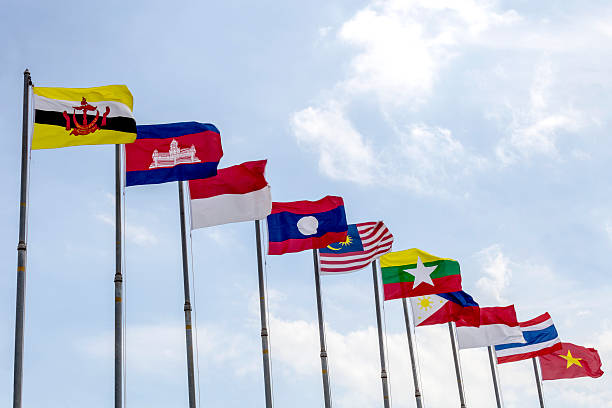
The Association of Southeast Asian Nations (Asean), which the Philippines currently chairs, will expedite the enforcement of an energy-sharing mechanism which will allow member states to support each other’s oil and gas needs during supply disruptions.
This measure, through which Asean countries can provide petroleum supplies to neighbors facing shortages of at least 10 percent of their requirement, comes as the conflict in the Middle East continues to escalate further.
In a press briefing following the 32nd Asean Economic Ministers’ (AEM) Retreat in Taguig City on Friday, Trade Undersecretary Allan Gepty said the AEMs agreed to hasten the completion of the Asean Petroleum Security Agreement (Apsa) ahead of this year’s summit in May.
Under Apsa, a member could give a distress notice to the secretariat of the Asean Council on Petroleum of the occurrence of a “critical shortage” in its petroleum supply due to an emergency.
Critical shortage happens when a country experiences a shortfall of at least 10 percent of its normal domestic requirement for a continuous period of at least 30 days.
Before requesting assistance from other Asean states, the distressed country shall implement short-term measures to reduce demand of its petroleum use, including demand restraint, fuel switching, price surge protection and information sharing.
Under Apsa’s Coordinated Emergency Response Measures, all member states shall endeavor to supply petroleum to the distressed country at the aggregate amount equal to 10 percent of its normal domestic requirement.
The terms and conditions of the sale of petroleum shall be negotiated among the parties “in the spirit of assistance and no undue advantage shall be taken by the Asean states.”
President Marcos earlier assured the public that the country has sufficient oil stockpiles to cover approximately 50 to 60 days of supply.
Specifically, the country’s available reserves cover diesel, which is sufficient for about 50.5 days; fuel oil and gasoline, each sufficient for about 51.5 days; kerosene, sufficient for around 67.5 days; jet fuel, sufficient for about 58 days; and liquefied petroleum gas, sufficient for around 29 days.
Voluntary basis
Sharing under Apsa, however, is done on a voluntary and commercial basis because these countries’ exports are often tied up in long-term commercial contracts. This means a distressed country such as the Philippines must still pay market rates which are currently spiked by the ongoing war.
Based on the Department of Energy-Oil Industry Management Bureau, petroleum product demand among the country’s different industries reached 184.5 million barrels in 2024.
Asean is highly vulnerable to Middle East tensions as most of its crude oil and a significant share of its liquefied natural gas are imported from that region.
Governments and businesses across Southeast Asia are scrambling to stave off energy shortages as the Strait of Hormuz remains shut to maritime traffic amid the Iran War.
While Asean governments have directly intervened by enforcing price caps to stabilize fuel prices, such was not the case for the Philippines whose oil industry remains deregulated in accordance with a 1998 law.
Local oil companies set their own prices based on global crude oil prices, foreign exchange rate, and shipping and refining costs.
Congress is rushing to pass a law giving the President emergency powers to suspend the excise on fuel products as crude prices continue to rise.
The move is projected to reduce the price of gasoline by P10 per liter, while the price of diesel could be reduced by P6 per liter.
‘Fundamentally regressive’
Policy think tank Action for Economic Reforms (AER), however, warned that suspending fuel taxes would mostly benefit higher-income households who account for a bulk of the country’s fuel consumption.
It said a better solution is for the government to provide targeted support to essential sectors.
“The government would be sacrificing large amounts of public revenue primarily to subsidize the fuel consumption of wealthier households,” AER said in a statement on Thursday. “The more sensible approach is targeted and temporary support for essential sectors that directly affect lower-income groups, particularly public transportation.”
Citing data from the Department of Finance (DOF), AER noted that suspending fuel excise could result in P135 billion worth of revenue losses from May to December alone, significantly weakening fiscal space “at a time when the country is already facing mounting budget pressures.”
The proposed suspension would also be “fundamentally regressive” since it would mostly benefit higher-income households who account for a “disproportionate” share of fuel consumption, according to the group.
DOF estimates show that the top 10 percent of the richest households account for around 48.8 percent of the country’s total fuel consumption, while the bottom 50 percent consume just about 13.9 percent.
Moreover, only around 6 percent of Filipino households own a car, which means the majority of the population would receive little direct benefit from the policy, AER said. —WITH REPORTS FROM GILLIAN VILLANUEVA AND INQUIRER RESEARCH
Sources: Inquirer archives, pco.gov.ph
******
Get real-time news updates: inqnews.net/inqviber


