







Baguio Ibaloys may bring ‘unjust displacement’ to international court

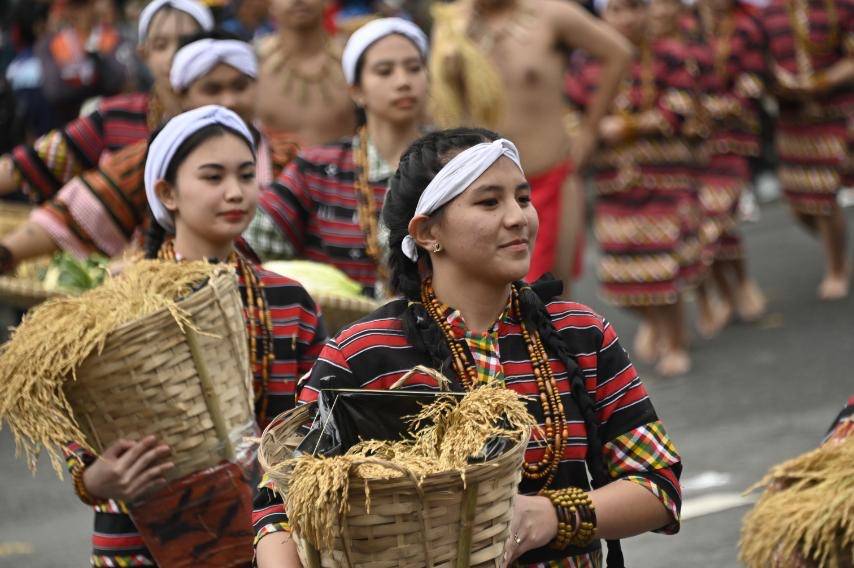
BAGUIO CITY—The Ibaloys, this city’s indigenous people group, may go to the world’s courts to seek redress for the “unjust” sequestration of their ancestral lands.
Ibaloy activist Joanna Cariño said her family may follow the footsteps of their patriarch Mateo Cariño and bring their case before an international tribunal because the government has not recognized their ancestral properties in spite of the 1909 ruling affirming that indigenous Filipinos have private rights to their ancestral lands.
Aggravating the nonrecognition of their land right is the special provision in the 1997 Indigenous Peoples Rights Act that exempts Baguio, and by extension, its Ibaloy residents from the law’s protection and benefits, such as recognition of their ancestral lands.
Joanna is the great granddaughter of Mateo Cariño, who won the 1909 United States Supreme Court decision recognizing his “native title” over lands that have now become Camp John Hay.
Mateo and his wife Bayosa owned vast tracks of pasture land because of a thriving Ibaloy cattle trade towards the end of the 19th century, when the Philippines was still a Spanish colony, before the 1898 Treaty of Paris transferred Spanish territories like the Philippines, Guam and Puerto Rico to the United States.
Joanna said her great grandfather acquired “possessory information” or “the equivalent of a land title” under the old Spanish crown rules in 1901. While Ibaloys were generally left alone under Spanish rule, the American colonial government took what they believed were public lands under the principle of the Regalian Doctrine (the policy that all lands belong to the Spanish king), including Mateo’s pasture lands called Ypit and Lubas (now Camp John Hay).
Landmark ruling
With the passage of new property rights laws, Mateo applied to register his lands only to be opposed by the American government.
The legal dispute reached the US high court, which in a landmark ruling, declared: “When as far back as testimony or memory goes, the land has been held by individuals under a claim of private ownership, it will be presumed to have been held in the same way from before the Spanish conquest and never have been public land.”
Mateo was among the pioneering Ibaloy clans who built lives in pre-American Baguio and who benefited from the decision, Joanna said.
And yet Mateo’s house was displaced from what the Americans decided would be the center of downtown Baguio, as stipulated in Act 636 issued in 1903 by the Philippine Commission, she said.
Joanna said the clans now challenge the Philippine government to officially uphold the native title doctrine, “recognize the grave injustice committed to the Ibaloys of Baguio” and negotiate reparations.
She stressed however that current Cariño generations are open to terms that would not harm modern Baguio, given competing claims over this “land-scarce city. “
Since 2014, the National Commission on Indigenous Peoples (NCIP) has registered 139 Baguio certificate of ancestral land titles, while 32 are subject to registration as of 2017, said Urbano Mirante, the agency’s Baguio desk officer at the forum. Around 166 claims are still being reviewed and validated, while 19 more claims have been submitted to the NCIP Baguio office for processing, he said. As many as 107 claims are inactive and have been archived.