


Before COVID-19, there was SARS

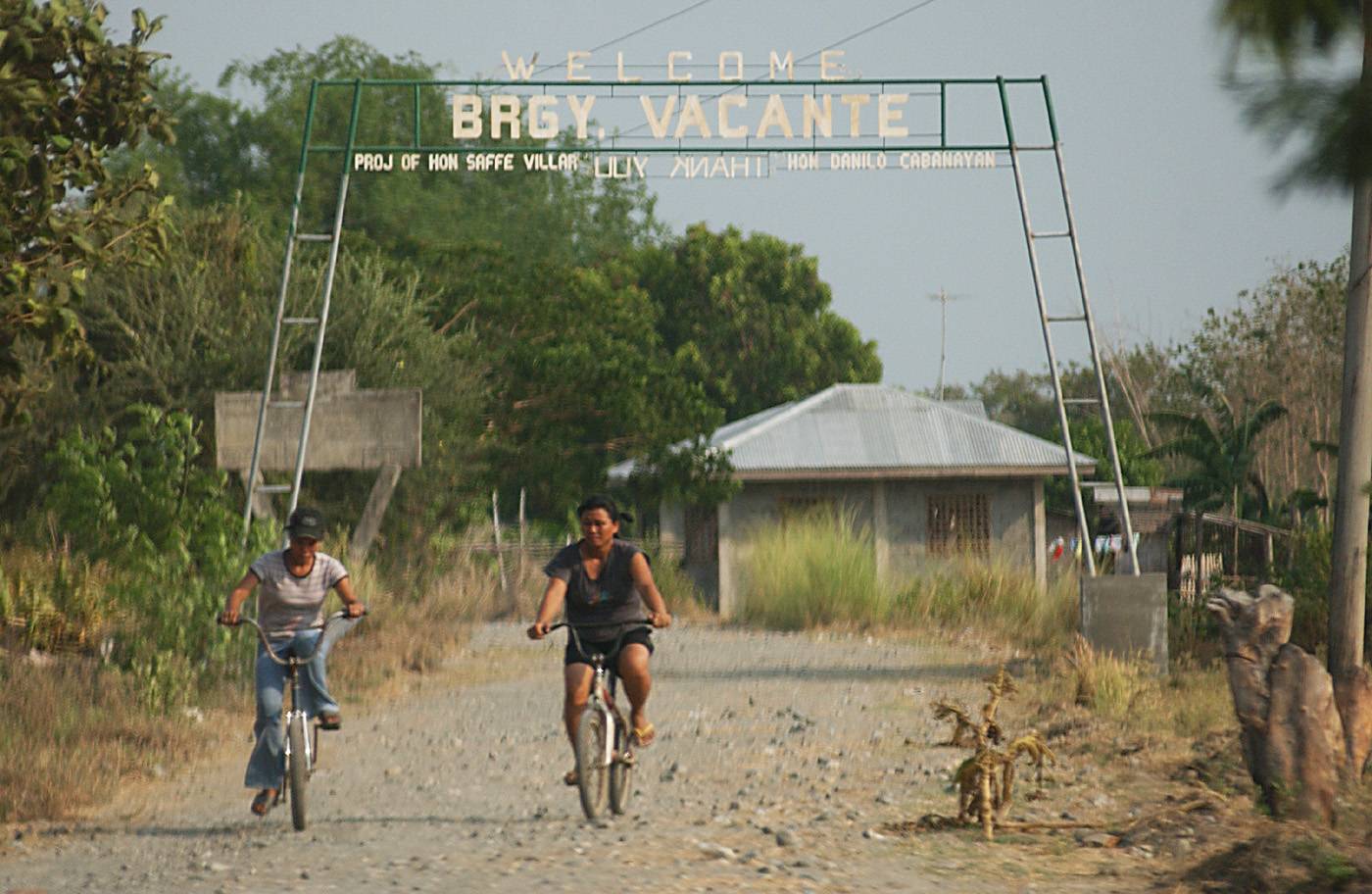
Long before COVID-19 upended the world, there was SARS—a smaller, earlier outbreak that never reached pandemic scale but carried the same fear, the same uncertainty, and the same invisible threat.
COVID-19 swept across continents; SARS, in contrast, gripped only pockets of communities.
Yet for the people of a bucolic village in Alcala, Pangasinan, in 2003—and for journalists like myself who covered this health issue—SARS felt every bit as terrifying as the crisis that would come nearly two decades later.
‘No man’s land’
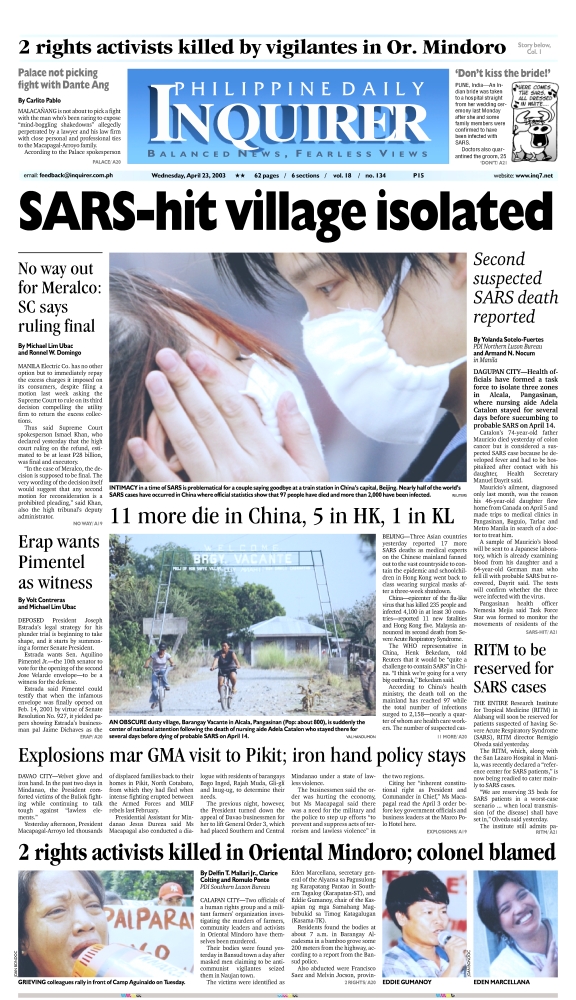
On April 21, 2003—the day the Department of Health (DOH) cordoned off parts of Barangay Vacante in Alcala after confirming two cases of Severe Acute Respiratory Syndrome (SARS)—I was assigned by the Inquirer’s Northern Luzon Bureau to report from the ground.
That month, the quiet agricultural town suddenly found itself at the center of a health emergency after a resident died of SARS, then a mysterious disease with no known cure.
Adela Catalon, a nursing assistant who had worked in Canada, arrived home on April 5. She died of SARS on April 14 at the Research Institute for Tropical Medicine in Metro Manila.
Her father, Mauricio, died on April 22, reportedly after contracting the disease from his daughter. The family, however, insisted that Mauricio died of cancer—the illness that had brought Adela home to care for him.
As soon as the Inquirer bureau relayed the assignment, I prepared for coverage. No hesitation. I asked a friend to drive me in my creaky old van to what felt like the “no man’s land” of Vacante.
Passing by the town hall, ghostly in the midday heat, I saw then Mayor Juanito Collado sending instructions through his mobile phone, worried about his townspeople who were “not getting sleep at night.”
“I plan to visit Vacante to interview residents,” I told him.
He hesitated, then reluctantly agreed after I promised to avoid the quarantined sitios (subvillages). He phoned the guards to let me through.
Armed only with a pen and notebook, I entered the isolated village. At the checkpoint, health workers stood in full PPE (personal protective equipment)—head gear, gloves, masks, foot covers—relying on layers of fabric and faith. They handed me my own PPE suit and sternly instructed me not to remove it while inside the village.
Full gear
Vacante was bright and sunny, but the atmosphere was thick with gloom and dread. Residents feared not only the virus but the stigma—neighbors and friends from nearby towns had begun avoiding them entirely.
I stayed away from the quarantined Catalon neighborhood.
Searching for someone willing to talk, I found a young mother on a swing with her two children. She recoiled when she saw me in full gear. Who could blame her? Her village had been humiliated, discriminated against, and its residents treated as if they were threats.
In a moment of instinct, I removed my face mask to show her I was not afraid. She softened, and her story spilled out.
“We can’t even go out,” she said. “Police guard all exits. Some men sneak through the fields to buy essentials, but most of us stay home.”
After that, no one else wished to speak.
A television reporter arrived, and together we wandered through the quiet village. A woman eventually opened her door and welcomed us, offering drinks. A dentist, she understood both our jobs and the residents’ fears. She urged us not to approach the Catalon area.
Despite the lockdown, she said, residents were being cared for: The provincial government and private groups were sending rice, chicken, and meat regularly.
Same ostracism
I stayed nearly three hours before heading home. I showered thoroughly outside the house and placed myself in voluntary quarantine.
The story appeared on the Inquirer’s front page the next day. And soon, I felt the sting of the same ostracism that the villagers had endured.
Dagupan City officials called for a press conference to declare the city SARS-free because my story had been datelined Dagupan. I declined the invitation. Later, I learned the press con had been canceled—other reporters feared I might come.
Text messages from friends chastised me for going to Vacante. A police official and former classmate scolded me, saying that unlike criminals who could be seen and shot, the SARS virus was invisible.
Four days later—still under my self-imposed quarantine—I received an invitation to cover a visit of then President Gloria Macapagal-Arroyo in Sual town.
An hour later, another message came: Reporters were no longer needed.
But the real reason, I later learned, was this: Every reporter asked if I had been invited. When informed that I would be there, each one declined.
Quarantine lifted
On the seventh day, feeling healthy, I went to the DOH regional office in San Fernando City in nearby La Union province to cover a SARS-related meeting. A radio reporter and I were interviewing health and provincial officials, but when they learned that we both went to Vacante, the officials literally scampered away.
On May 2, or two weeks after my Alcala coverage, President Arroyo went to Vacante to announce that the village was safe from SARS and officially lifted the quarantine imposed on the village.
It was as if a big rock was removed from the town’s collective “chest”; children were singing and dancing.
Still, it was not a totally happy presidential visit, as Alcala people greeted her with placards asking for help in selling their agricultural produce (tobacco and corn), which traders were shunning due to fears that the virus could be on the products despite the area being declared SARS-free.
But that is for another story.
As for me (and other journalists who covered the village at the height of the health scare), I was no longer treated as a pariah. I could finally return to press conferences.
Grim rehearsal
Less than 20 years later, another health emergency erupted—this time a pandemic caused by COVID-19—again testing our resolve as reporters.
Covering the pandemic was an entirely different story. Though my experience with SARS offered a kind of grim rehearsal, that earlier outbreak had been contained within a single agricultural village.
COVID-19, on the other hand, placed the entire country—indeed, the world—under a sweeping health emergency. Movement was prohibited; silence replaced the usual hum of daily life. Even the barangay road where I lived was shut. No one could enter, no one could leave.
But the news could not be quarantined. We still needed to gather reports.
Would calling authorities on mobile phones suffice? What about the stories beating quietly on the ground—the fears, the hope, the hunger? How were we to reach them?
Fortunately, weeks into the lockdown, media workers were finally deemed “essential” part of the workforce and granted identification cards by the Inter-Agency Task Force on COVID-19.
Small mercy
That powerful ID became my passport through almost-empty provincial and city roads, allowing me to visit municipal and city halls, to speak with health officials, and to capture images of people—faces half-hidden yet relieved—queuing at wet markets and supermarkets, grateful for a few moments outside the walls of their homes.
But even with the ID, a simple face mask became an obstacle. Supplies were scarce, and prices soared obscenely. What once cost P50 a box suddenly ballooned to P500 to P800, courtesy of opportunists who profited from fear.
Without a mask, I could not enter any office, and my already thin pocket strained further.
A Chinese-Filipino trader, a friend, eventually sold me two boxes for P1,000. It was a small mercy in a time defined by shortages.
I can only hope no similar health emergencies strike again. I may have covered SARS and COVID-19 and emerged unscathed, but advancing age and failing health are no longer as kind to this foot soldier—still walking, still writing, still listening to the quiet heartbeat of every story.