







BIR urged to probe Marcoleta

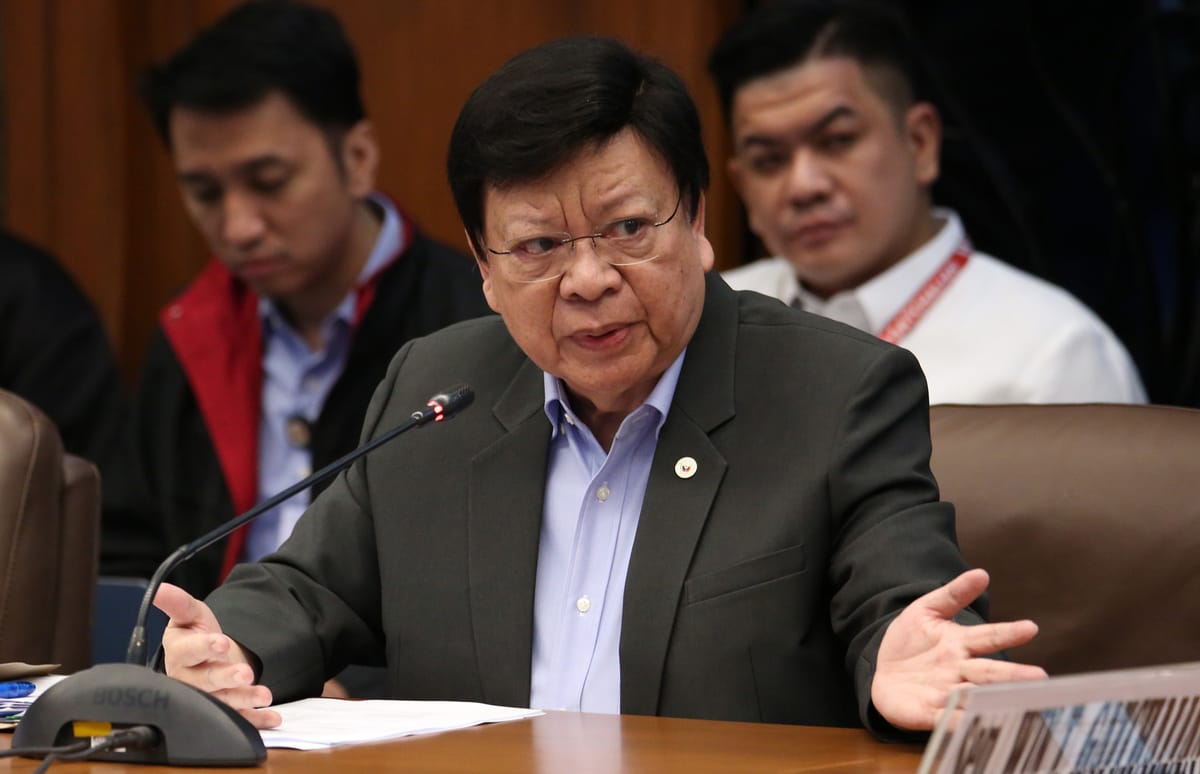
Groups led by clean election advocates have urged the Bureau of Internal Revenue (BIR) to probe Sen. Rodante Marcoleta’s admission about his undisclosed campaign contributions, which they said may have violated the National Internal Revenue Code (NIRC).
In a three-page letter dated Feb. 24, groups Kontra Daya, led by journalism professor Danilo Arao, and the Advocates of Public Interest Law, led by lawyer Alexander Lacson, urged BIR Commissioner Charlito Martin Mendoza to investigate possible tax fraud and donor’s tax violations by Marcoleta.
The groups cited the television interview of Marcoleta where he “openly admitted” receiving campaign donations but “deliberately failed to declare any amount” in his sworn statement of contributions and expenditures that he filed with the Commission on Elections.
“He explained that the nondisclosure was intentional, allegedly to avoid revealing the identities of his donors. Despite acknowledging receipt of campaign funds, he nonetheless declared zero contributions,” read the letter submitted by Arao and Lacson to the BIR.
“While this admission raises serious concerns under election laws and ethical standards, it likewise gives rise to substantial tax implications that fall squarely within the jurisdiction of the BIR,” they also said.
Arao and Lacson stressed that donations are generally subject to donor’s tax, under the NIRC, although this may be exempted by the law in some instances.
Strict exemption rules
However, campaign contributions are not exempted from donor’s tax, according to the groups, noting that exemptions apply only under “strict statutory conditions, including full disclosure and compliance with election laws.”
“The admitted and deliberate concealment of campaign donations raises a strong possibility that donor’s taxes were neither properly declared nor paid by the donors concerned, whether through nondeclaration or mischaracterization of the transactions,” they said.
They also stressed that any portion of the undeclared funds of Marcoleta, if it was diverted for personal use or otherwise was not used for legitimate campaign expenditures, the amounts may constitute taxable income on the senator’s part.
They also said that the “intentional nondisclosure” of Marcoleta or the concealment, may be tantamount to tax evasion, according to Arao and Lacson, particularly if it was done to avoid assessment and payment of donor’s tax or income tax.
“The public admission of deliberate nonreporting strongly suggests willfulness, an essential element of tax fraud under the NIRC,” Arao and Lacson added in their letter to the BIR.
They urged the BIR to conduct a fact-finding investigation into the receipt, use and disposition of the undeclared campaign contributions received by Marcoleta and determine whether donor’s taxes were properly declared and paid by the concerned donors.
The BIR was also asked to assess whether any portion of the funds constitutes “unreported taxable income” on Marcoleta’s part.
“The integrity of the tax system depends on the principle that all persons, regardless of rank or position, are equally bound by tax laws,” Arao and Lacson said. “Public confidence in tax administration is eroded when public officials openly admit to financial nondisclosure without accountability.”